Home » Posts tagged 'Brexit' (Page 47)
Tag Archives: Brexit

Brexit Begins: March 29
by John Brian Shannon | March 20, 2017
UK Prime Minister Theresa May says she intends to proceed to exit the EU on March 29. Brexit begins…
Theresa May will trigger EU withdrawal talks under Article 50 on March 29, Downing Street has announced
The Prime Minister’s letter officially notifying the European Council of the UK’s intention to quit will set in train a two-year negotiation process expected to lead to Britain leaving the EU on March 29 2019.
Britain’s ambassador to the EU, Sir Tim Barrow, informed the office of European Council president Donald Tusk on Monday morning of the Prime Minister’s plans.
The Brexit Bill – officially called the European Union (Notification of Withdrawal) Bill – was given the green light last week after being signed off by the Queen. — metro.co.uk
First on the agenda will be whether May can negotiate unrestricted access to EU markets for Britain, and how much access European Union citizens and industry will have to the United Kingdom. It’s likely to require a substantial amount of time, patience, and great diplomatic skill on both sides of the negotiating table.
Of secondary importance will be the decisions taken on customs and immigration. The EU has lost control of its external border as the Schengen Area borders effectively collapsed when millions of Syrian, Middle Eastern and African refugees began streaming into the southern European Union.
And the third negotiating point will likely relate to the status of EU citizens who live and work inside the UK, and of Britons who work or retired in the European Union.

Brexit Begins in Britain on March 29, 2017. Image created by Samankashwaha.
In total, some 3.3 million EU citizens live in Britain, but nobody has kept an accurate count of this (nobody!) nor has any government agency kept count. In the European Union it’s thought that 1.1 million Britons live or work on the EU side of the border. Except that nobody knows for sure. One side is just as broken as the other. Facepalm!
Experts and commentators unanimously agree that it will take years, perhaps 10-years or more to hammer out an agreement on all the current issues between the European Union and the United Kingdom. Let’s hope that cooler heads prevail and that we don’t add mountains of new issues to the existing list of items to be discussed and resolved. It’s going to be a monumental work as it is.
It’s important to remember that in a ‘Win-Win’ relationship, whatever gets solved, becomes a ‘Win-Win’ for the politicians involved. Which is handy, come the next election.
While the UK side has seemed apprehensive and tentative at times, particularly in the immediate aftermath of a June 23rd EU referendum result which saw 52% of voters choose to ‘Leave’ the European Union — the EU side has taken an increasingly hostile position — as if senior EU politicians have taken it personally that Britons voted to ‘Leave’ and as a voter attack on their cherished institutions.
However, if European Union membership were that wonderful, not one person would have considered leaving the EU… but the simple fact is, more than 17 million British voters elected to leave the EU governance architecture.
And no matter what — no matter what! — the will of voters always trumps the will of politicians. We’ve seen it time and again throughout history. Yes, totalitarian states can ‘hang on to power’ for a time using the full resources of the state, until such times as the state collapses and the strongman is overthrown, but such things are supposed to be impossible in democratic states.
Let’s hope that the European Union lives up to its high democratic ideals and allows nations to leave as easily as they join!
On the bright side, it could be that by voting to Brexit the citizens of the United Kingdom will have assisted the EU to take the concerns, disappointments and perceived slights of member-state citizens more seriously in the future. Otherwise, Brexit will simply become one part of a much larger process, resulting in the eventual dissolution of the Union. And that would be a shame.

Four Ways That Will Measure Brexit Success
by John Brian Shannon | February 2, 2017
A brilliant group of academics and professionals have published a list of four questions that should be foremost in the minds of those wanting to negotiate a successful Brexit result as they navigate through the process of leaving the European Union.
These economists, lawyers, sociologists, and political scientists suggest that four important metrics need to be considered for any final Brexit agreement to be termed a “success” by a majority of Britons.
- Will Britain be better off, compared to staying in the EU?
- Will it create a fairer society?
- Will it make Britain’s economy and society more or less open?
- Will it give governance back to the electorate?
These seem utterly reasonable questions the public and policymakers can use to guide their thinking about Brexit over the coming months and years.
With so much focus on GDP growth and the export economy it was heartening to hear the Prime Minister speak about addressing inequality in the country, a problem not unique to Britain, but one which represents a gathering socio-economic catastrophe that rarely gets the attention it deserves. Kudos there, Mrs. May!
“As Mrs May has pointed out, judging Brexit is not just about GDP numbers, it’s also about creating a ‘fairer’ Britain – closing the wealth gap and expanding wealth and opportunity beyond London and the Southeast, as well as taking back control of borders and law-making.” — The Telegraph
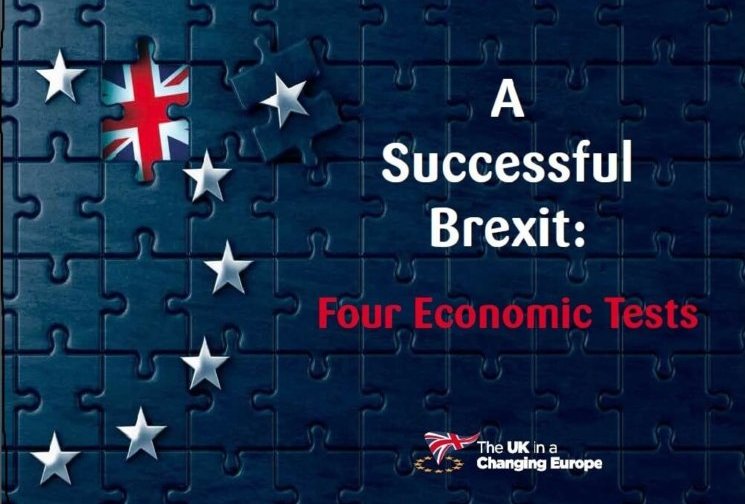
A Successful Brexit. Four Metrics to Guide UK Separation from the European Union. Image courtesy of The UK in a Changing Europe.
These are the right questions to be asking prior to the formal start of the Brexit process which Prime Minister Theresa May has said will commence March 2017 when the UK government triggers Article 50 of the EU constitution.
See: PM Theresa May’s Lancaster House speech

Key Brexit dates. Image courtesy of The Telegraph.
February 1, 2017: Supported by the Labour Party, House of Commons MP’s backed the government’s European Union Bill voting 498 votes to 114 (a majority of 384) to allow the Prime Minister to get Brexit negotiations underway. — Excellent BBC article here.
Next-up?
March 31, 2017: Self-imposed deadline set by the Prime Minister for informing the EU via the Article 50 clause that Britain wishes to exit the European Union.
After a long delay (which is typical in politics) things are going to get interesting, fast.
Once Prime Minister Theresa May triggers Article 50, the ball will be, as they say, in the European Union’s court.
Recommended Reading:
The UK in a Changing Europe is an impartial and independent organisation created to make the findings of the best academic research easily available to the widest possible audience. This report was written by the initiative’s director Anand Menon and senior fellows Angus Armstrong, Catherine Barnard, Iain Begg and Jonathan Portes. The report in its entirety is available for download here (PDF). [Worth the read. – Ed.]

Theresa May needs Parliamentary Approval for Brexit says Supreme Court
by John Brian Shannon | January 25, 2017
Britain’s Supreme Court ruled (8-3) today that the UK government must get parliamentary approval to begin the process of leaving the European Union.
Prime Minister Theresa May’s plans to trigger Article 50 of the Lisbon Accord in March 2017 to begin the Brexit process, could be delayed as a result of this ruling. However, the PM’s spokesman said that the plan to leave the EU remains unaffected and Brexit will proceed as planned.
Most Conservative MP’s have publicly stated they will support Brexit, and Labour Party leader Jeremy Corbyn said his party will vote to Brexit. (Read here)

List of Treaties and Acts signed without the benefit of a UK referendum, nor signed with any requirements set out by UK Supreme Court Judges.
The highest court in Britain also decided today (unanimously) that there’s no requirement to consult the governments of Northern Ireland, Scotland or Wales prior to invoking Article 50 because the United Kingdom entered the European Union as a single entity, therefore, the UK must leave the European Union as a single entity.
In defense of the high court, the Brexit referendum wasn’t a constitutional vote where the government was legally bound via a quid pro quo with voters to enforce Brexit, rather, it was a vote centered on finding the will of the public regarding continued EU membership.
British voters, after having voted in a referendum to tell the government of its wishes in regards to EU membership, are now informed by the UK Supreme Court that Parliamentary approval must also occur.
The bar keeps raising, but it’s only serving to make UK citizens more determined to have their voices heard and for Brexit to actually occur.
Although today’s ruling might be seen as a setback for the Prime Minister in some quarters, the Supreme Court ruling has caused Britons to demand even more vociferously for a ‘Hard Brexit’.
It seems the Supreme Court ruling requiring Parliamentary approval before Brexit might turn out to be good news after all for Prime Minister Theresa May and for millions of Brexiters.

Find more statistics at Statista – Click to enlarge the image
 Letter to Britain