Home » Articles posted by Letter to Britain (Page 86)
Author Archives: Letter to Britain

A Special EU Status for London?
by John Brian Shannon | February 14, 2017
It has become fashionable in recent weeks to talk about arranging some kind of special status for the City of London so that EU citizens can easily travel to London without the need to pass through UK customs.
Which would be convenient, wouldn’t it?
No pesky border guards to answer to, no briefcases opened and searched, and no wasted time for important EU-centric bankers and their European Union customers — and that applies whether they’re travelling for family vacations, to arrange financing for an EU business, or to meet their mistress in Calais.
Soon, bankers from every country will move to the UK to have all the advantages of EU access, combined with the privileges of living in Britain: A veritable banker’s paradise where the financial industry informs the UK government exactly how things will be.
Look now, it’s happening — just that it’s happening in slow-motion and nobody is seeing it for what it really is.
The Painfully Obvious Future of a ‘Special EU Status’ London
It’s so obviously in the EU’s interest to contrive a situation whereby London residents vote in a referendum to join the European Union, even as the rest of the UK continues to leave it (effectively sectioning-off London from the rest of the UK via the London Ring Road and Gatwick Airport) at which point the rest of the United Kingdom no longer held together by the economic gravity of London would probably dis-unite.
If Britain grants London ‘Special EU Status’ eventually it will become an EU City-state, Principality or Duchy, and Britons will need a passport to visit London.
Therefore, I can see why Brussels would want to contrive a ‘Special EU Status’ (SEUS) plan for the city of London, and I’m astonished at the innocent naiveté of Britons.

London, UK at night. Image courtesy of Leave.eu
Recently, German Chancellor Angela Merkel practically ‘mansplained’ to British Prime Minister Theresa May how “The UK will not be allowed to cherry-pick the bits of the EU it likes” — even as EU negotiators do their own cherry-picking — with London as the plumpest and richest cherry in all of Europe.
READ: EU negotiator wants ‘special’ deal over access to City post-Brexit
Allowing this plan to come to fruition will create a weaker and less-united United Kingdom and it will handover the ‘gold’ (London) to the EU. And there’s not a thing Britain can do to prevent it once the City of London is granted any kind of EU-centric special status.
Yes! It’s a wonderful plan if you’re a member-state of the European Union, a Europhile, or a London banker who wants to avoid the hassle of going through customs with the little people.
Apparently the thinking goes along these lines; The world already has a global ‘1 percent class’ who own more than 50 percent of the world’s wealth and will own 80 percent of the world’s total wealth by 2035, so it’s obvious that the world should have a distinct ‘banker class’ and their friends the global elites can accomplish that via alternately bullying and schmoozing the UK government into a customs-free zone with the EU. Which seems to be working.
“Oh, and a peon holiday every Monday in London, Elizabeth. We don’t like Monday morning traffic. Cancel their other holidays to make up for it. Sniff.”
I would like to ask the UK government; Where else in the world are bankers allowed to travel without passing through customs because the bankers arranged the passing of a law that allowed them to do so? And where else in the world would a country that is leaving a Union, leave behind their own capital city with most of the country’s wealth?
The answer is; Nowhere on Earth has this happened, and for obvious reasons!
Rather than incrementally handing Britain’s most historic and important city to the European Union, it would be smarter to simply invite the EU-centric part of London’s financial sector to leave. Ah, Paris in the spring!
READ: The language of love sweet-talks the City
Losing the EU-based financial sector that operates out of London is surely preferable to losing the entire city of London to the EU — which WILL happen over time if the Special EU Status zone is approved, resulting in the consequent dissolution of the United Kingdom.
Is There a Precedent for Integration that leads to Assimilation?
All law functions on precedent and there is a rather large precedent for this in business law — the case of the United States vs. General Motors in the 1960’s. It’s a fascinating story.
In the early part of the 20th-century many manufacturers built vehicles for the American public who were decidedly pro-automobile. Ford was the first company to utilize innovative automotive production line assembly techniques and the company grew exponentially — in fact, they couldn’t keep up with the demand for their car, the Model T.
At the time, General Motors built trucks and other vehicles for the U.S. military, and heavy industry vehicles for the mining and forestry sectors and GM was heavily subsidized by the U.S. government. Meanwhile, Chevrolet simply fed off the demand that Henry Ford’s company couldn’t meet.
It was a brilliant strategy for Chevrolet. They adopted Ford’s assembly line manufacturing innovations and met most of the consumer demand that Henry couldn’t.
So successful was the Chevrolet plan, that the first car to outsell the Model T was the 1934 Chevrolet Coupe, which was Chevy’s version of the Model T which was available in every colour imaginable — unlike the Model T that was only available in black. Henry Ford painted all his cars black because that allowed the largest number of cars to be built in the shortest amount of time and at the lowest cost-per-unit. (No fussing with colours)
Ford grew, Chevrolet grew, and General Motors grew.
By the 1950’s, Chevrolet decided to turn the tables on its main competitor (Ford) by taking a note from Henry Ford’s playbook — outsourcing. Chevrolet lowered costs by outsourcing some manufacturing to the massive General Motors Corporation which accommodated Chevy’s request to build a few hundred thousand engines per year at a lower cost than Chevrolet could have ever imagined.
GM even asked Chevy to send over their engine specs and said they would build Chevy’s engines exactly how Chevrolet wanted. And with higher manufacturing standards.
It worked so well for Chevrolet that they later asked GM to supply transmissions, window glass, seats and door panels, and finally car bodies for Chevrolet. And General Motors happily obliged.
One sunny morning, GM began a hostile takeover of Chevrolet. Chevrolet objected and so did the U.S. government — and understandably Ford, Chrysler, Studebaker and the other automakers strenuously objected to the hostile takeover.
But during the discovery process to verify which company owned what, and which company was most responsible for Chevrolet’s massive success — even Chevrolet’s legal team couldn’t make a clear distinction. Neither could the FBI or U.S. Department of Justice investigators. Nor could the U.S. Supreme Court judges deciding the case who were left with no recourse but to allow the merger to proceed, as nobody could tell them exactly what constituted Chevrolet and what constituted General Motors!
Everyone in the industry was furious. Yet Ford, Studebaker, Chrysler, the new American Motors Company (AMC) and others couldn’t do a thing about it. And the U.S. Department of Justice wasn’t happy either.
It took approximately 25 years for GM to absorb Chevrolet, but in retrospect they could have done it in 18 years if they weren’t so busy playing it safe. (To better ensure their assimilation plan worked)
Chevrolet became a victim of its own brilliant success, while General Motors had a stellar plan all along; Integrate until nobody can tell the difference.
Assimilate London is exactly what the European Union will do with a separate-customs-arrangement-London.
It would be criminally naive to think otherwise.

Britain’s Economy Firing on All Cylinders until 2050
by John Brian Shannon | February 10, 2017
Under the expert care of Exchequer Philip Hammond, Britain’s growth rate will outperform all developed nations until 2050
What a relief it must be for Prime Minister Theresa May that the UK economy is expected to grow strongly every year until 2050, with a growth rate that surpasses all developed nations.
Britain will grow faster than any other major advanced economy over the next three decades as the EU’s share of global output diminishes, according to PwC.
UK economic growth is predicted to outpace the US, Canada, France and Germany between 2016 and 2050, with average annual growth of 1.9pc.
This is also double the average annual pace of growth expected in Japan and Italy. — The Telegraph
The chart below shows the average annual real GDP growth rate of G7 countries from 2016 to 2050.

According to a forecast from PwC, Brexit is only going to prove a bump in the road for the UK’s economy. Even though it may take a significant financial hit as a result of it’s exit from the European Union, the UK’s economy is set to grow faster than any other major advanced economy up until 2050. PwC predicts an average annual growth of 1.9 percent over the next 30 years. That’s more than double the expected growth rate of Japan and nearly twice that of Italy.” — by Niall McCarthy | You will find more statistics at Statista
And to show where the UK ranks in terms of global GDP here is another graphic for you.

You will find more statistics at Statista
It seems that Brexit will barely register as an economic hiccup and that Britain’s economy will continue to thrive in a post-Brexit world — and that, after many dire reports to the contrary were published prior to, and since the June 23 2016 referendum on EU membership.
You see? The sky isn’t falling, it’s snowing. Get outside and enjoy it! The UK is going to be just fine.
Related Articles:
- Brexit will not affect UK economy’s long-term future (The Independent)
- The World in 2050: Will the shift in global economic power continue? (PriceWaterhouseCoopers)

Four Ways That Will Measure Brexit Success
by John Brian Shannon | February 2, 2017
A brilliant group of academics and professionals have published a list of four questions that should be foremost in the minds of those wanting to negotiate a successful Brexit result as they navigate through the process of leaving the European Union.
These economists, lawyers, sociologists, and political scientists suggest that four important metrics need to be considered for any final Brexit agreement to be termed a “success” by a majority of Britons.
- Will Britain be better off, compared to staying in the EU?
- Will it create a fairer society?
- Will it make Britain’s economy and society more or less open?
- Will it give governance back to the electorate?
These seem utterly reasonable questions the public and policymakers can use to guide their thinking about Brexit over the coming months and years.
With so much focus on GDP growth and the export economy it was heartening to hear the Prime Minister speak about addressing inequality in the country, a problem not unique to Britain, but one which represents a gathering socio-economic catastrophe that rarely gets the attention it deserves. Kudos there, Mrs. May!
“As Mrs May has pointed out, judging Brexit is not just about GDP numbers, it’s also about creating a ‘fairer’ Britain – closing the wealth gap and expanding wealth and opportunity beyond London and the Southeast, as well as taking back control of borders and law-making.” — The Telegraph
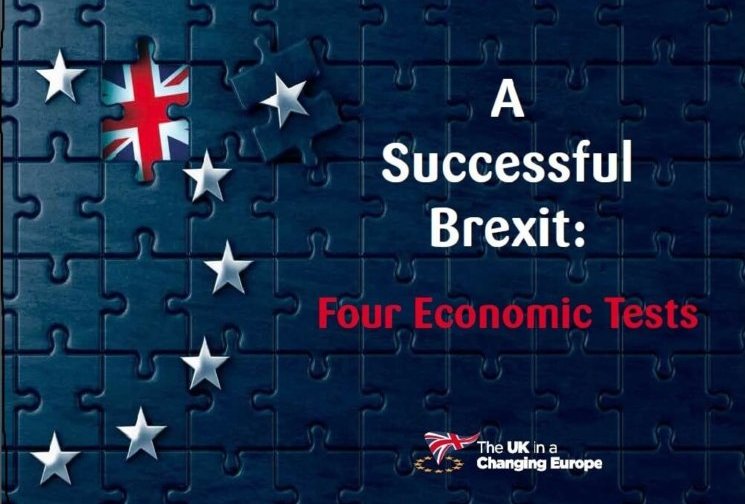
A Successful Brexit. Four Metrics to Guide UK Separation from the European Union. Image courtesy of The UK in a Changing Europe.
These are the right questions to be asking prior to the formal start of the Brexit process which Prime Minister Theresa May has said will commence March 2017 when the UK government triggers Article 50 of the EU constitution.
See: PM Theresa May’s Lancaster House speech

Key Brexit dates. Image courtesy of The Telegraph.
February 1, 2017: Supported by the Labour Party, House of Commons MP’s backed the government’s European Union Bill voting 498 votes to 114 (a majority of 384) to allow the Prime Minister to get Brexit negotiations underway. — Excellent BBC article here.
Next-up?
March 31, 2017: Self-imposed deadline set by the Prime Minister for informing the EU via the Article 50 clause that Britain wishes to exit the European Union.
After a long delay (which is typical in politics) things are going to get interesting, fast.
Once Prime Minister Theresa May triggers Article 50, the ball will be, as they say, in the European Union’s court.
Recommended Reading:
The UK in a Changing Europe is an impartial and independent organisation created to make the findings of the best academic research easily available to the widest possible audience. This report was written by the initiative’s director Anand Menon and senior fellows Angus Armstrong, Catherine Barnard, Iain Begg and Jonathan Portes. The report in its entirety is available for download here (PDF). [Worth the read. – Ed.]
 Letter to Britain