Home » Posts tagged 'United Kingdom' (Page 8)
Tag Archives: United Kingdom

A Special EU Status for London?
by John Brian Shannon | February 14, 2017
It has become fashionable in recent weeks to talk about arranging some kind of special status for the City of London so that EU citizens can easily travel to London without the need to pass through UK customs.
Which would be convenient, wouldn’t it?
No pesky border guards to answer to, no briefcases opened and searched, and no wasted time for important EU-centric bankers and their European Union customers — and that applies whether they’re travelling for family vacations, to arrange financing for an EU business, or to meet their mistress in Calais.
Soon, bankers from every country will move to the UK to have all the advantages of EU access, combined with the privileges of living in Britain: A veritable banker’s paradise where the financial industry informs the UK government exactly how things will be.
Look now, it’s happening — just that it’s happening in slow-motion and nobody is seeing it for what it really is.
The Painfully Obvious Future of a ‘Special EU Status’ London
It’s so obviously in the EU’s interest to contrive a situation whereby London residents vote in a referendum to join the European Union, even as the rest of the UK continues to leave it (effectively sectioning-off London from the rest of the UK via the London Ring Road and Gatwick Airport) at which point the rest of the United Kingdom no longer held together by the economic gravity of London would probably dis-unite.
If Britain grants London ‘Special EU Status’ eventually it will become an EU City-state, Principality or Duchy, and Britons will need a passport to visit London.
Therefore, I can see why Brussels would want to contrive a ‘Special EU Status’ (SEUS) plan for the city of London, and I’m astonished at the innocent naiveté of Britons.

London, UK at night. Image courtesy of Leave.eu
Recently, German Chancellor Angela Merkel practically ‘mansplained’ to British Prime Minister Theresa May how “The UK will not be allowed to cherry-pick the bits of the EU it likes” — even as EU negotiators do their own cherry-picking — with London as the plumpest and richest cherry in all of Europe.
READ: EU negotiator wants ‘special’ deal over access to City post-Brexit
Allowing this plan to come to fruition will create a weaker and less-united United Kingdom and it will handover the ‘gold’ (London) to the EU. And there’s not a thing Britain can do to prevent it once the City of London is granted any kind of EU-centric special status.
Yes! It’s a wonderful plan if you’re a member-state of the European Union, a Europhile, or a London banker who wants to avoid the hassle of going through customs with the little people.
Apparently the thinking goes along these lines; The world already has a global ‘1 percent class’ who own more than 50 percent of the world’s wealth and will own 80 percent of the world’s total wealth by 2035, so it’s obvious that the world should have a distinct ‘banker class’ and their friends the global elites can accomplish that via alternately bullying and schmoozing the UK government into a customs-free zone with the EU. Which seems to be working.
“Oh, and a peon holiday every Monday in London, Elizabeth. We don’t like Monday morning traffic. Cancel their other holidays to make up for it. Sniff.”
I would like to ask the UK government; Where else in the world are bankers allowed to travel without passing through customs because the bankers arranged the passing of a law that allowed them to do so? And where else in the world would a country that is leaving a Union, leave behind their own capital city with most of the country’s wealth?
The answer is; Nowhere on Earth has this happened, and for obvious reasons!
Rather than incrementally handing Britain’s most historic and important city to the European Union, it would be smarter to simply invite the EU-centric part of London’s financial sector to leave. Ah, Paris in the spring!
READ: The language of love sweet-talks the City
Losing the EU-based financial sector that operates out of London is surely preferable to losing the entire city of London to the EU — which WILL happen over time if the Special EU Status zone is approved, resulting in the consequent dissolution of the United Kingdom.
Is There a Precedent for Integration that leads to Assimilation?
All law functions on precedent and there is a rather large precedent for this in business law — the case of the United States vs. General Motors in the 1960’s. It’s a fascinating story.
In the early part of the 20th-century many manufacturers built vehicles for the American public who were decidedly pro-automobile. Ford was the first company to utilize innovative automotive production line assembly techniques and the company grew exponentially — in fact, they couldn’t keep up with the demand for their car, the Model T.
At the time, General Motors built trucks and other vehicles for the U.S. military, and heavy industry vehicles for the mining and forestry sectors and GM was heavily subsidized by the U.S. government. Meanwhile, Chevrolet simply fed off the demand that Henry Ford’s company couldn’t meet.
It was a brilliant strategy for Chevrolet. They adopted Ford’s assembly line manufacturing innovations and met most of the consumer demand that Henry couldn’t.
So successful was the Chevrolet plan, that the first car to outsell the Model T was the 1934 Chevrolet Coupe, which was Chevy’s version of the Model T which was available in every colour imaginable — unlike the Model T that was only available in black. Henry Ford painted all his cars black because that allowed the largest number of cars to be built in the shortest amount of time and at the lowest cost-per-unit. (No fussing with colours)
Ford grew, Chevrolet grew, and General Motors grew.
By the 1950’s, Chevrolet decided to turn the tables on its main competitor (Ford) by taking a note from Henry Ford’s playbook — outsourcing. Chevrolet lowered costs by outsourcing some manufacturing to the massive General Motors Corporation which accommodated Chevy’s request to build a few hundred thousand engines per year at a lower cost than Chevrolet could have ever imagined.
GM even asked Chevy to send over their engine specs and said they would build Chevy’s engines exactly how Chevrolet wanted. And with higher manufacturing standards.
It worked so well for Chevrolet that they later asked GM to supply transmissions, window glass, seats and door panels, and finally car bodies for Chevrolet. And General Motors happily obliged.
One sunny morning, GM began a hostile takeover of Chevrolet. Chevrolet objected and so did the U.S. government — and understandably Ford, Chrysler, Studebaker and the other automakers strenuously objected to the hostile takeover.
But during the discovery process to verify which company owned what, and which company was most responsible for Chevrolet’s massive success — even Chevrolet’s legal team couldn’t make a clear distinction. Neither could the FBI or U.S. Department of Justice investigators. Nor could the U.S. Supreme Court judges deciding the case who were left with no recourse but to allow the merger to proceed, as nobody could tell them exactly what constituted Chevrolet and what constituted General Motors!
Everyone in the industry was furious. Yet Ford, Studebaker, Chrysler, the new American Motors Company (AMC) and others couldn’t do a thing about it. And the U.S. Department of Justice wasn’t happy either.
It took approximately 25 years for GM to absorb Chevrolet, but in retrospect they could have done it in 18 years if they weren’t so busy playing it safe. (To better ensure their assimilation plan worked)
Chevrolet became a victim of its own brilliant success, while General Motors had a stellar plan all along; Integrate until nobody can tell the difference.
Assimilate London is exactly what the European Union will do with a separate-customs-arrangement-London.
It would be criminally naive to think otherwise.

A Majority of CANZUK Citizens Favour Closer Ties Between CANZUK Nations
This page is under construction. Thank you for your patience!
Letter to Britain is looking for authours to post CANZUK-related blogs (opinion piece) or articles (fact-based) on this page.
If you’re a supporter of a CANZUK organization, large or small, and you want to post your articles, blog posts or essays, or other CANZUK-related work such as images, please use the Contact Page to inform the Letter to Britain editor.
The CANZUK movement wants to more closely align Anglosphere nations that have traditional and historic links with the United Kingdom.
The CANZUK nations are: Canada, Australia, New Zealand, United Kingdom.
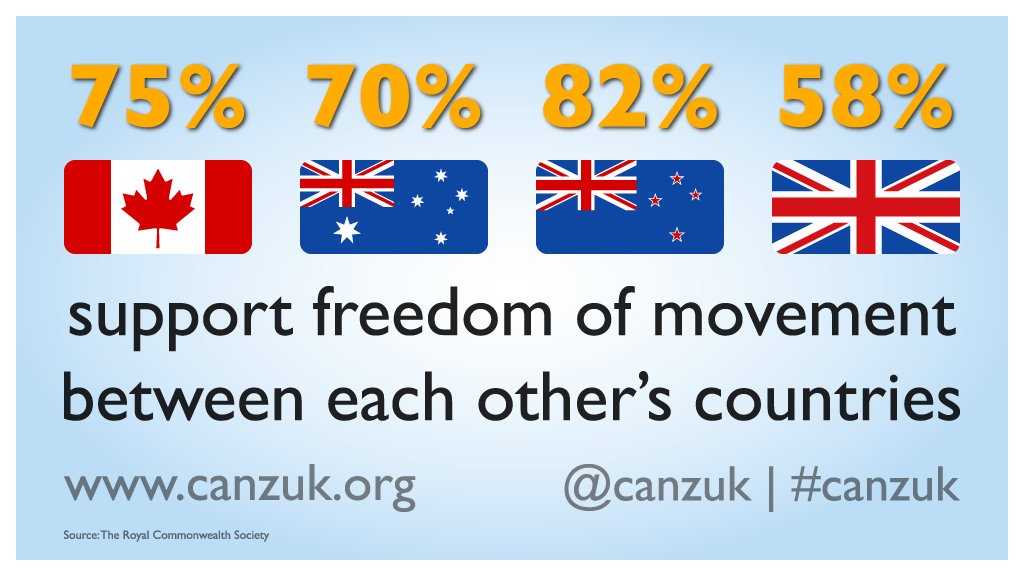
A majority of citizens from Canada, Australia, New Zealand and the UK support closer ties between CANZUK nations. Visit www.canzuk.org or The Royal Commonwealth Society for more information.

Why Scotland needs the UK
by John Brian Shannon | December 22, 2016
If Scotland chose to become an independent nation it would become a prohibitively expensive operation in very short order, and Scotland would need to find a big brother to pay its bills — as Scotland isn’t economically viable on its own.
The first thing that any country must consider (whether it’s a brand new and independent country or not) is national defence and public security. It’s the historical reason that nation-states were formed in the first place and without national defence and public security, a country is nothing. It then becomes the target of a hostile takeover.
Therefore, Scotland would require its own (viable) military from the first day of independence. Requiring immediate and large-scale expenditures and an annual operating budget.
The operating budget would be equal to $10 billion per year to properly maintain the force. But the first year especially, would be very costly — as a brand-new and fully-functioning from Day One military, would need to be created from scratch.
First purchase: An entire Navy – $5.6 billion for hardware alone

Pictured here is the highly regarded French Navy destroyer FS Forbin (D620) in the Arabian Sea. (U.S. Navy photo by Mass Communication Specialist 2nd Class Rafael Figueroa Medina/Released)
If Scotland separated from the United Kingdom, it would require four modern Navy Destroyers in order to protect its far-flung islands, sea-lanes and regional interests, and such vessels typically cost $250 million to $1 billion each, depending upon the type and capability level.
An independent Scotland would spend $2 billion on new destroyers alone
That’s before training and hiring the crews, and provisioning those ships with food, fuel, and ammunition (all combined, these provisions are called ‘ship’s stores’) and building the necessary naval port facilities, and training and hiring of onshore maintenance and security staff — all of which would come from the annual defence budget.

If Scotland became independent from Britain, Scotland would need 10 Navy frigates comparable to the highly capable Royal Netherlands Navy HNLMS Holland, a modern warship that won’t become obsolete anytime soon. Image courtesy of navyrecognition.com
An independent Scotland would also need many frigates, perhaps 10 of them; Some frigates would be rigged as minesweepers, others as destroyer escorts, others as anti-submarine warfare (ASW) ships, while others would be rigged for anti-piracy and interdiction roles.
And all of them would need to have so-called ‘wet bays’ where small, fast boats can quickly exit the main ship and race out to board any suspected ship or to conduct rescue missions, or to assist green water patrol boats in their respective missions, and all of them would need onboard helicopters and crews. Frigates with wet bays and helicopters usually cost in the neighbourhood of $200 million to $400 million apiece.
Scotland would be looking at $2 billion just to buy the empty, but brand-new frigates
That’s before training and hiring crews, and provisioning those ships and building naval port facilities, let alone training and hiring onshore maintenance and security staff, which would come out of the annual defence budget.

If Scotland were to separate from the UK, the first purchase would need to be 20 Svalbard-class (or equivalent) light-icebreaker offshore patrol vessels. Norwegian Coast Guard vessel KV Svalbard (W303) pictured. Norwegian Coast Guard photo.
And, Scotland would need (almost more than anything) about 20 Svalbard-class light icebreaker, coastal patrol vessels. Although no longer in active production, the Svalbard-class ships operate in the same region and have an excellent service record.
Ka-Ching! That’s $1.6 billion, just for green water defence craft
That’s before training and hiring crews, and provisioning those ships and building naval port facilities, let alone training and hiring onshore maintenance and security staff, which would come out of the annual defence budget.
Note: Although some articles reported that these ships cost the equivalent of $20 million apiece when they were being produced, it’s only because Norway simply built the new Svalbard hulls, then took everything they needed (engines, radars and sonars, warfare electronics and weapons systems, and almost everything else from their recently retired naval ships) and installed them on the new Svalbard ships. This lowered Svalbard costs from (approx.) $80 million, to $20 million per unit.
Second purchase: An entire Air Force – $1 billion please!

The SAAB Gripen fighter-bomber jet is the obvious choice if Scotland becomes independent, as these jets are famous for their low maintenance cost and high performance.
“Gripen has stable, affordable acquisition and low life cycle costs. This gives air forces a reliable basis on which to budget for operations and fleet sustainment over the long term. Gripen’s inherent reliability and low maintenance footprint boosts force levels and operational effectiveness.” — from the SAAB Gripen website.
Scotland would also need to acquire an Air Force from the very first day of independence. It would need at the minimum, 20 SAAB Gripen fighter-bomber jets and seven long-range search and rescue, and reconnaissance aircraft, like the Aurora. And five KC-135 airborne refueling tankers to ensure those aircraft don’t run out of fuel over the North Sea.
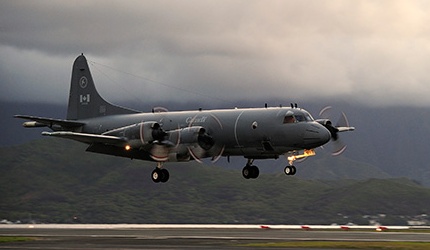
In case of Scottish independence, Scotland would need five CP-140 Aurora Maritime Surveillance Aircraft, which are considered the Gold Standard among maritime surveillance aircraft. Image of Royal Canadian Air Force Aurora.
The Gripen fighter jets cost $40 million per unit. And for surveillance aircraft, the Lockheed CP-140 Aurora is the automatic choice for any Western military at $25 million per copy, and for refuelling tankers the undisputed king is the $35 million per unit KC-135.
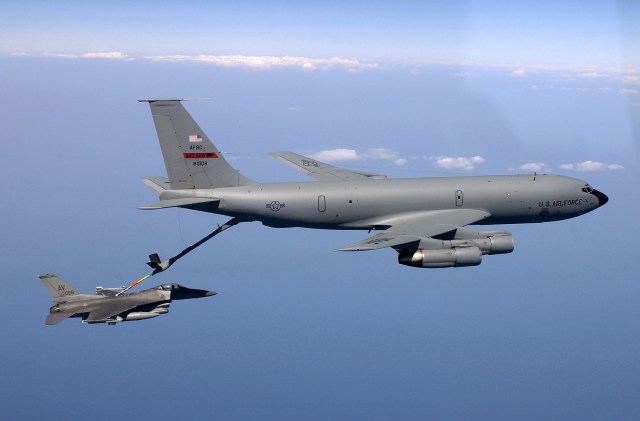
If Scotland leaves Britain, the ability to refuel its military aircraft in-flight is paramount. A Boeing KC-135 Stratotanker refuels an F-16 Fighting Falcon. (U.S. Air Force photo by Tech. Sgt. Mike Buytas)
Scotland would be looking at $1 billion just to buy the various aircraft
That’s before training and hiring crews, and provisioning (bombs and bullets) and building airfield facilities, let alone training and hiring maintenance and security staff, which would come out of the annual defence budget.
Third purchase: An entire Army – $1 billion+ for hardware only

Britain’s legendary Challenger 2 tanks escorted by stealthy (ultra-quiet) Westland helicopters in wargames at Salisbury Plain.
Oh, I forgot to mention that Scotland would need a 10,000-person Army, and due to financial constraints, those soldiers might need to be shunted between the Scottish Army, the Air Force and the Navy, on a daily, weekly, or monthly basis (as required) to keep all positions covered. The weakest link in any chain, is the link that isn’t there.
That’s before the provisioning of army bases, the hiring and training of infantry and tank and other military vehicles personnel, let alone hiring and training on-base maintenance and security staff, which would come out of the annual defence budget.
Note: The Army, Air Force, and Navy cost estimates assume the Scottish government donates at no cost to the military, the necessary land for naval port facilities, for military airfields, and for army bases and training areas.
Military-only costs for a newly independent Scotland
In the first year, Scotland would need $30 billion (conservative estimate) just to field a small, but respectable, Navy, Air Force, and Army. All of those would be required from the very first day of independence, you simply can’t leave a country unprotected while you spend a couple of years shopping for and having navy ships built.
And it would cost $10 billion per year thereafter, across the entire Scottish military, just to keep all seats filled, wearing appropriate military uniforms, military personnel fed and sheltered, with all regular pay and pensions paid, and never find themselves out of fuel or ammunition. (Want your army to quit en-masse? Run them short of ammo)
Other Independence Costs
Thus far, and we’ve only talked about defending Scotland, we’ve yet to talk about creating a national currency were Scotland to be truly independent, a federal reserve-type banking system, a Scottish police force and an MI4 (GCHQ) an MI5 and MI6-equivalent role security agencies, nor have we talked about the creation of a Scottish foreign affairs office to promote Scottish trade abroad and to assist and protect inward investors, and to assist and protect Scottish companies doing business in other countries. All of that must be paid-for by Scottish taxpayers.
Where to find that money? In the markets? The IMF? If so, what’s the collateral?
Scottish debt-to-GDP would be 100% in the first year, and get worse every year from that point… unless the oil price happened to skyrocket to $140 barrel, stayed there permanently, and huge oilfields were suddenly found in Scottish waters. Not likely.
If Scots want true independence, Scottish taxpayers will pay three-times more tax
Remember, the true cost of Scottish independence from the UK could easily surpass $20 billion annually, in addition to the first year start-up costs. And, if it’s true independence that Scots want it will be Scottish taxpayers footing the bill, via much higher personal, sales, and corporate tax rates.
But if Scots want EU membership, their economic overlords would be the European Parliament
Why do I say ‘economic overlords’?
Because, based on the principle of ‘No taxation without representation’ I suppose reverse taxation (subsidizing an entire country, where the money flows from the EU to Scotland) the Scots wouldn’t receive much representation for their tax payments.
In fact, as the EU would be funding Scotland’s budget deficits, the EU would get to make the majority of Scotland’s decisions from the safety of Brussels. Which is quite a-ways down the road for Scottish citizens if they ever felt the need to stage a peaceful protest.
If Scots want continued UK membership, the present paradigm continues
At present, Scotland receives 16 billion pounds sterling more, than it contributes to the UK economy, on an annual basis. Not a bad deal for Scotland! But yes, some decisions are made in London for the betterment of all Britons. That can seem unfair if you’re a Scottish citizen and your heart was set on a certain policy or outcome. Still, it’s the best deal on offer.
(But if you find a better offer, take it!)
Imagine Scotland no longer having that 16 billion pound annual subsidy from the UK, and needing to pay $20 billion USD for one-time costs to create a brand-new armed forces, and thenceforth having to pay $10 billion USD annually to keep the armed forces fed, clothed, sheltered, trained, paid, and a with reliable supply of fuel and ammo.
Without the UK contribution, Scottish independence (military costs only) amount to an annual difference of $29.7 billion USD. Something important to note; The first year of independence (military costs only) amount to $49.7 billion USD.
What Scotland and the devolved regions really need are people selected from their own region to be employed as Cabinet Ministers in the Westminster government (not only a UK Cabinet Minister for Scotland, Northern Ireland, and Wales, but a Cabinet Minister for England too) who represent the interests of their particular region within the UK central government.
In this way, devolved governments and their taxpayers will have better representation and more engaged relationships with the central UK government, and thereby receive superior governance outcomes from the UK government.
And isn’t that what fair government is all about?
Related Quote: “If I had asked people what they wanted, they would’ve said faster horses.” — Henry Ford
 Letter to Britain