Home » Posts tagged 'United Kingdom' (Page 5)
Tag Archives: United Kingdom

The Problem with Immigration
Immigration policy continues to appear in British headlines and excessive annual immigration loads in the UK are cited by many citizens as one of the main reasons Britons voted to Brexit the European Union.
Immigration has been a factor in Britain going all the way back to Roman times, and without it the United Kingdom wouldn’t be the thriving country it is today.
As with so many things in life it’s all about balance. The other important factor in this discussion is the implementation of immigration policy.
Some Immigration Stats for You
Britain has a population of 66 million people and it received 650,000 economic migrants and refugees in 2016 alone. Yes, it’s like that every year. Of course, people in favour of higher immigration levels will always refer you to the net migration number, which was 335,000 in 2016.
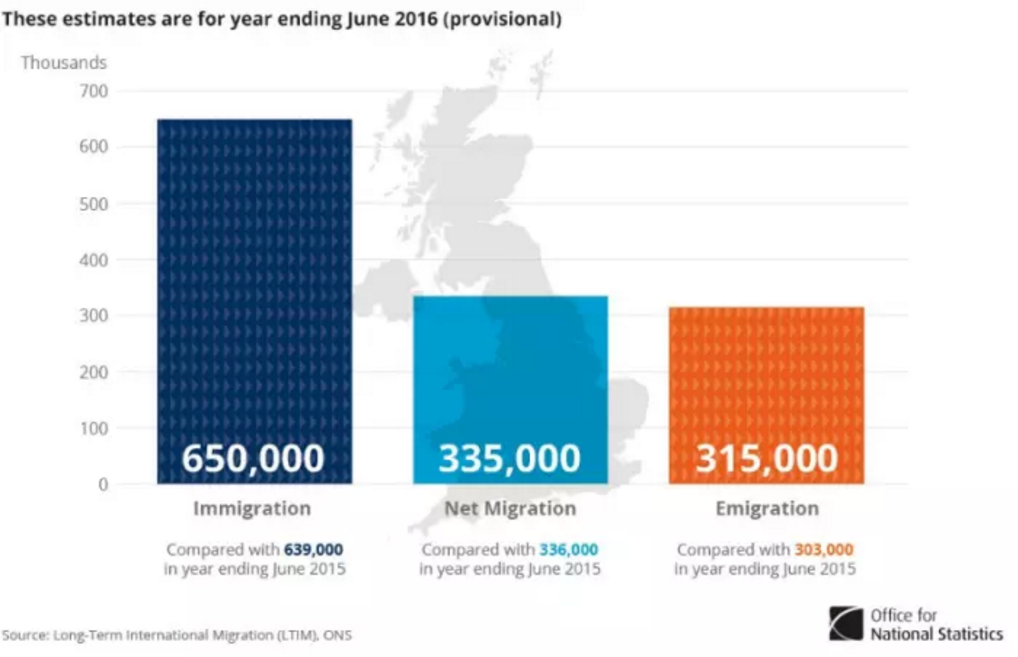
Immigration to Britain for year ending June 2016. UK Office for National Statistics.
Regardless of how you choose to calculate UK immigration, millions of Britons have a negative view on the topic and blame scarce jobs, higher infrastructure costs, longer wait times for government services and higher taxes on unprecedented immigration.
High numbers of migrants aside, the UK economy continues to grow and companies are making better profit due to the lower wages paid to immigrant workers.
No economist on the planet will dispute these two points; Higher immigration results in improved corporate profit and growing GDP.
Although it needs to be said that the economy can still grow with lower or even zero immigration when government economic policy is perfect and all the stars are aligned.
By now you’re concluding that high immigration loads are the lazy politicians way of improving the annual GDP statistic, increasing corporate profits, and (probably) increasing donations to their political party. Yes, every economist agrees with you.
Your Economic Status Determines Your Worldview
If increased profits for companies, higher GDP, and donations to your political party are all that matter to you — you’ve hit a home-run! as they say in America. Congrats to you.
Others disagree and cite quality of life issues — real life problems like increased unemployment among native Britons, longer wait times for government services, and the higher personal taxes that pay for the rapidly growing infrastructure required to sustain increased demand.
Your view no doubt, depends on which side of the unemployment line you’re standing on and your tolerance for higher taxes.
It’s easy to see where all this is heading in a decade or two; Those who view immigration negatively will join new, right-wing, anti-immigrant parties similar in concept to Germany’s nationalist AfD party, while big business and (some) politicians will morph towards Trump-style politics — resulting in a quantum shift to the right of the political spectrum among a majority of voters (but very important to note here) that shift will split between many factions.
And isn’t that exactly what has recently happened in Germany, Hungary, Austria, Poland and America?
Is Multiculturalism a Failure, or is Implementation to Blame?
It’s interesting to note that Canada has maintained a multicultural policy since the late 1960’s and that it’s been an astonishing success story with few Canadian detractors.
Led by former Prime Minister Pierre Elliott Trudeau, multiculturalism was sold to Canadians as a silver bullet to;
1) fix a falling Canadian birthrate,
2) to increase aggregate demand in the economy,
3) to attract the highly skilled workers that Canada desperately needed,
4) to access the low wage workers to do the jobs Canadians no longer wanted.
It was also touted to diversify the social fabric of the country and work to subsume the extremely stark (and sometimes hostile) divide between Francophones and Anglophones in eastern Canada.
The level of skepticism was high, but because multiculturalism in Canada was properly and thoroughly sold to Canadians and because it really did accomplish all that Pierre Trudeau said it would, multiculturalism succeeded across the country.
- NOTE: Canada’s population of 36 million is augmented by 300,000 new arrivals annually, while Britain’s population of 66 million is augmented by 650,000 new arrivals per year. (Remember, these are gross total immigration numbers that have little in common with *net* migration numbers)
In recent months, Statistics Canada has reported the number of visible minorities (people from other countries and their Canadian-born offspring) living in Canada now outnumber Caucasian citizens of European descent. And nobody cares.
In Canada, the colour of your skin, your choice of religion, or your cultural bias, simply don’t matter. If you’re there to work, raise a family, and agree to abide by Canadian laws, Canadians are happy to have you along for the ride.
And in Canada émigrés tend to do what is expected of them because everything about becoming a ‘landed-immigrant’ and (after a significant probationary period) a Canadian citizen, is explained to them prior to their acceptance by Citizenship and Immigration Canada.
Unlike in Britain, migrants to Canada are walked through the process every step of the way and because of that, they are far more likely to understand Canadian values and Canadian culture, and are therefore more likely to assimilate well and become part of the Canadian mosaic.
The importance of informing future British citizens about what is allowed and what is expected of them cannot be underestimated — and the same importance must be attached to informing today’s British citizens how to work with new arrivals. It’s everything in this discussion.
In Canada, the federal government wanted multiculturalism to work and that’s why it worked. Full stop.
Where Do We Go From Here?
It’s taken decades for the UK to get to this point and every party represented in the House of Commons has been a part of the process. Playing the blame game is a waste of time, so let’s just focus on what’s to be done from here.
There is little Britain can do about the 9 million foreign-born residents already in the country. Of course, the argument could be made that they could all be deported to their countries of origin, but that isn’t a realistic solution to a perceived problem; “perceived” because less than half of Britons report being concerned about the number of immigrants in the country.

In 2016, the total number of foreign-born residents in the UK surpassed 9 million. UK Office for National Statistics.
‘Scofflaws Not Welcome’
Some have made the case that UK expats convicted of any crime more serious than a parking ticket should be deported to their country of origin, forthwith. There are plenty of people already breaking laws in the United Kingdom, the country shouldn’t be importing more of them!
And at an annual cost of £110,000 per year/per prisoner to incarcerate lawbreakers, Britain could save itself millions of pounds sterling annually for the cost of a few hundred airline tickets. Doing so would set a precedent, the kind of precedent that gets noticed for all the right reasons, and work to a) convince certain types to not relocate to the UK in the first place, or b) convince those already in the UK and considering committing crimes to choose an alternate lifestyle — either way, it’s a win-win for Britain.
Foreign Resident Tax
Prime Minister Theresa May has indicated that foreigners living in the UK will be paying an annual fee to help pay a tiny portion of the infrastructure, services, and security costs on a per capita basis — likely around £100 per year, per expat. The PM in a recent PMQ period mentioned the fee would be “about the cost of a passport” but would be due on an annual basis.
Post-Brexit Immigration Policy
One great thing about Brexit is the government will be able to choose its own immigration policy.
Britain should cap total immigration at 200,000 per year, but it should favour highly skilled individuals from the Commonwealth and America who should be moved to the front of the line.
If there are any additional spaces to fill, then and only then should Britain consider allowing people from other countries to migrate to the United Kingdom.
Better Multiculturalism Guidance for both Immigrants and Citizens Going Forward
Proper guidance to help prospective immigrants choose whether Britain really is the country for them, whether they are willing to live by the laws and (Western) culture of Britain, and guidance on how to integrate into British society would smooth the path for migrants and citizens alike.
It’s not only new arrivals that need guidance. A bit of knowledge, understanding and sensitivity can go a long way to keep small irritations small, rather than to have them burst into the media spotlight in a way that makes all sides look mean-spirited, uncultured and uneducated.
Canada has a verifiable track record of success in helping both their new arrivals and their citizens to get along together and keep them focused on working for the good of the country and its goals.
If the Home Office hired one experienced Canadian multiculturalism / immigration officer per UK immigration office location (as an advisor) it could make the difference between a successful immigration policy and a failed immigration policy.
And that Canadian multicultural officer should assist in cases involving both new arrivals to the UK and long-time expats with unresolved issues.
Summary
Brexit affords the United Kingdom the opportunity to start with a clean sheet and design any immigration policy it chooses.
Incorporating some Canadian success seems appropriate, as does deporting criminal expats within a fortnight.
And an expat tax reminds expats it’s their privilege not their divine right to live in the United Kingdom — although if they’re contributing to the good of the country about as well as anyone else, the UK government and its people should be respectful of their commitment.
Related Articles:
- Canadians in the Dark About Immigration: Survey (Ottawa Citizen)
- Canadians Increasingly Comfortable with Diversity: Survey (Ottawa Citizen)
- CBC’s The National – report on the Changing Face of Canada (CBC TV News)
- Canada immigration explained: Answers to 9 common questions (CBC TV News)

Why the UK Must Steer Brexit & Not be Steered
As the UK is a net contributor to the EU, there’s no incentive for European Parliament negotiators to want an early deal
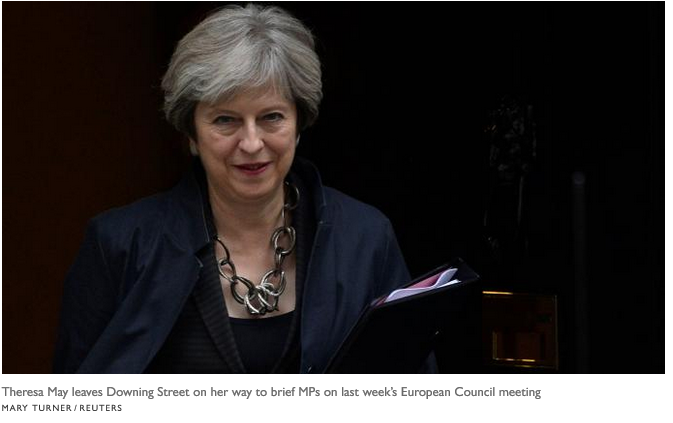
However, yesterday Prime Minister Theresa May ‘called time’ on never-ending Brexit negotiations by informing the EU that October 29, 2018 is the last day to avert a WTO-style Brexit, commonly called a ‘No Deal’ Brexit
To understand why there is any debate at all about the UK leaving the European Union, one must understand that the United Kingdom contributes more to the EU than it receives. Over £8 billion (net) per year flows from the United Kingdom to the European Union and people are wondering why the EU Parliament is opposed to Brexit?
That’s a lot of money even by European standards, a continent of 504 million people.
£8 billion is the difference between a rich EU and a cash-starved EU that can’t afford all of its legitimate programmes and its excesses. To wit; The alcohol budget for the EU Parliament is in the tens of millions (euros) per year.
Yes, every government has a wine and spirits budget, but the EU Parliament alcohol budget is bigger than the next ten countries alcohol budgets combined. And it’s not just the alcohol budget that we’re talking about here.
The only country that contributes more to the EU budget is Germany — which pays even more than the UK! — and not a word of thanks to either Britain or Germany for subsidizing almost every policy and almost every country in the 28 member bloc.
Ready for some numbers?
Britain’s population is 65 million, so the net contribution of £8 billion works out to £123. per Briton, per year.
If you want to figure it by workers, who after all are the ones paying this bill, there are about 33 million workers in the UK, and 30 million of them are Britons.
So, let’s do the math; £8 billion, divided by 30 million, equals £266 per worker, per year. Over ten years, that’s £2660 per British-born worker.
What could that amount of money done for each British worker over the past decade? We’ll never know.
So far, so good?
Let’s look at the UK contribution over the past decade, which means we are simply multiplying those numbers by ten.
The net contribution of the United Kingdom over ten years is £80 billion.
Let’s see what the UK could’ve done with that money:
- 26 Queen Elizabeth class aircraft carriers, completely fitted-out. (or)
- 100 more Wembley Stadiums. (or)
- 146 state-of-the-art UK hospitals such as the Queen Elizabeth Hospital in Birmingham. (or)
- 183 copies of The Shard, an iconic building in London. (or)
- 2285 brand-new Academy schools, or 5333 brand-new state-run Secondary schools. (or)
- Every UK high school graduate could receive a tuition-free PhD education and a new small car.
That’s just the past ten years…
What could be better than any one of those things? Is there anything better? Let us know in the comments section below!
Really, for all the (net) billions that go to the European Union courtesy of the British taxpayer what do Britons get in return?
Not one thing. Because it’s the net amount, not the gross amount. Which by definition means that Britons are getting nothing for that particular £8 billion (annual) or £80 billion (decade) net payment to the union. It’s the net amount. Get it?
Obviously, there’s nothing in Brexit for the EU
How could there be? It’s all in their favour.
Every year that the EU can stretch Brexit out is another £8 billion (net) for the European Union to fund its good and necessary budgets and their unconscionable, wasteful spending programmes. (Bad for Britain, but good for the EU!)
Only the most foolish and irresponsible British government would allow the EU to stretch this out for as long as possible (and who could blame the EU for doing so?) and that’s why Prime Minister Theresa May must be shown respect here.
In Theresa May’s UK, Britain is No Longer the EU’s Cash Cow
Love her or hate her, everyone knew that Margaret Thatcher truly loved Britain — and we’re starting to see a renewed and more confident Theresa May rising to meet the challenges of her time, as did Maggie in her era.
Theresa May has wisely informed the EU that there is a ‘Best Before’ date for Brexit negotiations and that October 29, 2018 is the absolute last date that the proposed 2-year implementation deal can be offered to the European Union.
In the absence of such a signed agreement Brexit negotiators will have no other option but to prepare for a full-blown WTO-based Brexit. (Which won’t be half as traumatic as it sounds as most of the world operates on WTO rules and have done so since 1995)
Therefore, smart EU negotiators will string it along for as long as they can as it’s (obviously) the logical way for their side to proceed. But now that the Prime Minister has provided a timeline to work toward, expect the 2-year implementation deal to be signed one day before the deadline, because that gets the European Union the most British taxpayer cash without actually missing the October 29, 2018 deadline.
Calling ‘time’ on the EU’s negotiating tactics (delay, obstruct, delay some more) is the single best, and strongest thing Theresa May has done since becoming Britain’s Prime Minister — and when combined with her Florence speech where she reached-out to EU leaders and to the European people as never before by a British PM — Mrs. May will earn and thereby guarantee her place in British history as the UK’s Brexit Prime Minister.
Well done on all counts, Theresa!
Related Articles:
- My mission is a two-year bridge to a final Brexit deal, Theresa May tells MPs (The Times)
- Brexit divorce lawyers eye up EU’s wine list (Financial Times)

If There Were Ever a Time for an Anglosphere Summit – it’s Now!
International summits are wonderful events. Heads of state, cabinet officers and their staffs, CEO’s, various think tanks and special guest speakers get together to discuss policies and innovative solutions to common problems faced by their group. Yet, in over two-hundred years of the modern political era, Anglosphere nations have never held a summit dedicated to Anglo nations. Inexplicable!
It’s time for the leaders of the United Kingdom and the United States to reach out to all English-speaking nations such as Canada, Australia, New Zealand and other primarily English-speaking nations to invite them to an Anglosphere Summit this year. (Yes! THIS year!)
Announcing the First Annual Anglosphere Summit: Anglosphere Summit 1.0 (Synergy)
A simple three-day format could be employed for the first annual Anglosphere Summit where the first day (1/3 of the programme) could help broaden the understanding of what the Anglosphere as a whole has contributed in the 20th-century (and more to the point, what it has accomplished in the 21st-century) via gigantic video projections and guest speakers on each topic, the second day (1/3 of the programme) could be devoted to present-day challenges for Anglosphere nations, while the final day could suggest conventional and innovative solutions to problems faced by Anglosphere nations, complete with photo opportunities, signing ceremonies, along with an award for the most-improved Anglo economy over the previous year.
And finally, the greatest strengths of Anglo nations have always been their respective economies, their combined economic power, and their per capita economic power, backed by their always-loyal military institutions. A deep commitment to international trade and a powerful but well-disciplined military are a world-beating combination that can’t ever be taken for granted by Anglo political leaders. That’s what made us who we are.
The Venue
Each year, one Anglosphere nation could offer to host the Anglosphere Summit and tailor the experience so that each attendee can learn about the host country’s successes and failures in governance, policies, social structures, and industry, allowing attendees to take home that knowledge and build a better country.
Such luminaries as Bill Gates (computing) Bill Ford Jr. (automotive industry) Richard Branson (airlines, tourism) Jim Rogers (energy) Arnold Schwarzenegger (governance, movie industry, renewable energy) Elon Musk (TESLA, Space-X, SolarCity, PayPal, Ebay) and other entrepreneurs could deliver compelling presentations to participants, bringing them up-to-the-minute information on their fields of expertise.
Such resources the Anglosphere has available to them(!!!) but the experience and reach of these stellar people are criminally underutilized by Anglosphere politicians and policymakers. Unforgivable!
After the summit concludes, everything could remain in place for two weeks to allow the public to hear the recorded speeches and see the exhibits at the venue, and to watch the same informational videos in the same setting as Anglosphere leaders.
Summary
Leaders of Anglosphere countries need to lead. They need to synergize their efforts to compete in the global marketplace. And they need the support of all English-speaking countries to confront common domestic and international problems. There has never been a better time to work together!
Related Articles:
- La Francophonie website — La Francophonie is a great organization dedicated to the betterment of all people living in French-speaking nations and it does incredible development work around the globe, much of it focused on poverty-stricken and up-and-coming French-speaking nations. Je salue la Francophonie!
- The Commonwealth of Nations website — an organization dedicated to the United Kingdom and its historical colonies that are now full-fledged nations, and some new member countries. (Some are English-speaking nations, while others aren’t) “The Commonwealth is an association of sovereign nations which support each other and work together towards international goals. With their common heritage in language, culture, law, education and democratic traditions, among other things, Commonwealth countries are able to work together in an atmosphere of greater trust and understanding than generally prevails among nations.”
- The CANZUK nations website — a group dedicated to increased cooperation between the ‘CANZUK’ countries — Canada, Australia, New Zealand and the United Kingdom (hence the abbreviation, CANZUK) that extends its membership to other like-minded nations. “CANZUK International (CI) is the leading group advocating closer ties between Canada, Australia, New Zealand and the United Kingdom, known amongst diplomats at the United Nations as the ‘CANZUK Group’. These four countries have shared commercial ties, geopolitical aspirations and a venerable constitutional tradition over centuries. Amongst CI’s aims is freedom of movement within the CANZUK Group for the citizens of Canada, Australia, New Zealand and the United Kingdom. In addition, it regards loyalty to the same monarch as an essential symbol of a common heritage and the cornerstone of constitutional democracy. More specifically, it is envisaged that the CANZUK Group would collaborate in the following areas: – Free Trade – Foreign Policy – Constitutional Affairs. The four leading Commonwealth realms could build upon existing economic, diplomatic and institutional ties to forge a cohesive alliance of nation-states with a truly global outlook.”
- Trump says he is working on ‘very big and exciting’ trade deal with UK (Sky News)
 Letter to Britain