Home » Posts tagged 'UK' (Page 83)
Tag Archives: UK
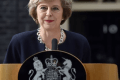
Theresa May: ‘Build a Better Britain’ – July 2016
Transcript and video of Prime Minister Theresa May’s ‘Build a Better Britain’ speech delivered on July 13, 2016 at the Prime Minister’s residence, London, on the topic of building a better United Kingdom
“I have just been to Buckingham Palace, where Her Majesty the Queen has asked me to form a new government, and I accepted.
In David Cameron, I follow in the footsteps of a great, modern Prime Minister. Under David’s leadership, the Government stabilised the economy, reduced the budget deficit, and helped more people into work than ever before.
But David’s true legacy is not about the economy, but about social justice. From the introduction of same-sex marriage, to taking people on low wages out of income tax altogether, David Cameron has led a ‘one nation’ government, and it is in that spirit that I also plan to lead.
Because not everybody knows this, but the full title of my party is the Conservative and Unionist Party. And that word unionist is very important to me.
It means we believe in the union, the precious, precious bond between England, Scotland, Wales and Northern Ireland. But it means something else that is just as important, it means we believe in a union not just between the nations of the United Kingdom, but between all of our citizens, every one of us, whoever we are and wherever we are from.
That means fighting against the burning injustice that if you’re born poor you will die on average nine years earlier than others. If you’re black, you’re treated more harshly by the criminal justice system than if you’re white. If you’re a white working class boy, you’re less likely than anybody else in Britain to go to university. If you’re at a state school, you’re less likely to reach the top professions than if you’re educated privately. If you’re a woman, you will earn less than a man. If you suffer from mental health problems, there’s not enough help to hand. If you’re young, you’ll find it harder than ever before to own your own home.
But the mission to make Britain a country that works for everyone means more than fighting these injustices. If you’re from an ordinary working class family, life is much harder than many people in Westminster realise.
You have a job but you don’t always have job security. You have your own home but you worry about paying the mortgage. You can just about manage, but you worry about the cost of living and getting your kids into a good school. If you’re one of those families, if you’re just managing, I want to address you directly.
I know you’re working around the clock, I know you’re doing your best and I know that sometimes life can be a struggle. The Government I lead will be driven, not by the interests of the privileged few, but by yours. We will do everything we can to give you more control over your lives.
When we take the big calls, we’ll think not of the powerful, but you. When we pass new laws, we’ll listen not to the mighty, but to you. When it comes to taxes, we’ll prioritise not the wealthy, but you. When it comes to opportunity, we won’t entrench the advantages of the fortunate few, we will do everything we can to help anybody, whatever your background, to go as far as your talents will take you.
We are living through an important moment in our country’s history. Following the referendum, we face a time of great national change. And I know because we’re Great Britain that we will rise to the challenge. As we leave the European Union, we will forge a bold, new, positive role for ourselves in the world, and we will make Britain a country that works not for a privileged few, but for every one of us.
That will be the mission of the Government I lead. And together, we will build a better Britain. — UK Prime Minister Theresa May July 13, 2016

Visit the Letter to Britain Facebook Page
Click the image to visit the Letter to Britain Facebook page to read Brexit related posts and to interact with others interested in Brexit.

Merit Order ranking: How Utility Companies Select from a Myriad of Power Producers in Realtime
Merit Order ranking is a system used by most electric utilities to allow different types of electrical power producers to add power to the electric grid. Thanks to a computerized grid, this occurs on a minute-by-minute basis every day of the year.
Price variability: This is what Merit Order ranking is All About
In Germany, electricity rates drop by up to 40 per cent during the hours in which solar or wind are active, and this is what Merit Order ranking is all about; Using the cheapest available electricity source FIRST — and then filling the gaps with more expensive electrical power generation.
Solar and wind electricity are rated at 0 (default) on the Merit Order scale making them the default choice for utility companies when the Sun is shining or when the wind is blowing, or both.
Why? No fuel cost. That’s the difference. And bonus, no environmental nor healthcare hazards with solar and wind either.
Once all of the available solar and wind Merit Order ranking (0) capacity is brought online by the utility company to meet demand, only then are, (1) nuclear, (2) coal, and (3) hydroelectric power ramped to match demand, according to the marginal cost of each type of energy. (German Merit Order rankings)
NOTE: In the U.S. the normal Merit Order rankings are; default (0) for solar and wind, (1) coal, (2) nuclear, (3) hydroelectric, (4) natural gas, although this order can change in some parts of the United States and around the world, depending upon what energy types are available in a given market.
Merit Order ranking represents the per kWh Cost of Wholesale Electricity
The Fraunhofer Institute found – as far back as 2007 – that as a result of the Merit Order ranking system, solar power had reduced the price of electricity on the EPEX exchange by 10 per cent on the average, with reductions peaking at up to 40 per cent in the early afternoon when the most solar power is generated.
Here’s how the Merit Order works:
All available sources of electrical generation are ranked by their marginal costs, from cheapest to most expensive, with the cheapest having the most merit.
The marginal cost is the cost of producing one additional unit of electricity. Electricity sources with a higher fuel cost have a higher marginal cost. If one unit of fuel costs $X, 2 units will cost $X times 2. This ranking is called the order of merit of each source, or the Merit Order.
Using Merit Order to decide means the source with the lowest marginal cost must be used first when there is a need to add more power to the grid – like during sunny afternoon peak hours.
Using the lowest marginal costs first was designed so that cheaper fuels were used first to save consumers money. In the German market, this was nuclear, then coal, then natural gas.
But 2 hours of sunshine cost no more than 1 of sunshine: therefore it has a lower marginal cost than coal – or any source with any fuel cost whatsoever.
So, under the Merit Order ranking of relative marginal costs, devised before there was this much fuel-free energy available on the grid, solar always has the lowest marginal cost during these peaks because two units of solar is no more expensive than one. — Susan Kraemer
It’s as simple as this; With no fuel cost, solar and wind cost less.
Although solar and wind are expensive to construct initially (though not as expensive as hydroelectric dams or nuclear power plants) there are no ongoing fuel costs, no fuel transportation costs, no fuel supply disruptions, nor lack of rainfall in the case of hydroelectric dams to factor into the final electricity price.
As solar panel and wind turbine prices continue to drop thereby encouraging more solar and wind installations, we will hear more about Merit Order ranking and less about the variability of renewable energy. And that’s as it should be, as all types of grid energy face at least one variability factor or more.
 Letter to Britain