Home » Posts tagged 'UK' (Page 75)
Tag Archives: UK

How to Fix Britain’s NHS
Britain’s National Health Service is famous for being two things: One of the highest rated healthcare services in the world, and for being chronically underfunded.
It isn’t about politics, Prime Ministers or technology — it’s about how costly it is these days to operate a modern healthcare system. Every Western country is grappling with the same issues, the UK isn’t extraordinary at all in this regard.
Here’s what one British Prime Minister said about the NHS
“One of the wonderful things about living in this country is that the moment you’re injured or fall ill — no matter who you are, where you are from or how much money you’ve got — you know that the NHS will look after you.” — former UK Prime Minister David Cameron
For all the griping that goes on about the NHS it continues to excel, turning in first-place performances in prestigious healthcare surveys.
Quite obviously the problem is funding a National Health Service that is tasked with caring for a growing and aging population.
How does the NHS stack up against other Western nation healthcare systems?

How does Britain compare against other Western healthcare systems? Image courtesy of the 2013 Commonwealth Fund International Health Policy Survey.
Five ways to improve Britain’s NHS
- Lower healthcare costs by improving the environment
- Lower healthcare costs via healthy activity programmes
- Increase NHS revenue via public/private partnerships
- Increase NHS revenue and lower demand on certain healthcare services
- Augment NHS revenue via resident-payer healthcare premiums for those earning £25,000+ annually
Lower healthcare costs by improving the air we breathe
Of all the ways to lower NHS healthcare spending — improving the environment that Britons live in is easily the most cost-effective.
A highly regarded Harvard Medicine study informs us that coal-burning is responsible for up to $500 billion per year in additional healthcare, infrastructure and agricultural spending in the U.S. — so yes, up to half a trillion ‘externality’ dollars (annually) in America from burning coal alone. In the United States, coal accounts for 33% of America’s total electricity generation although coal-burning used to provide 70% of America’s primary energy demand.
In the UK, coal-fired power generation is also falling. In 2016 we saw wind power generation surpass coal-fired power generation for the first time. Coal provided 9.2% of the UK’s total electrical demand in 2016, but for decades it provided more than 50% of UK electrical demand. As coal-burning in the UK continues to be replaced by clean energy (wind power = 11.5% of total UK demand in 2016) respiratory and related ailment rates continue to fall.
It would be nice to think that leaving coal behind would lower NHS spending to an affordable amount. But that would be overly optimistic. Howevermuch Britain leads America in the race to leave coal behind, toxic air pollution from the thousands of diesel-powered lorries that pass through UK cities daily more than make up for it. In fact, air quality in London, Birmingham and Manchester is so bad that alarms are beginning to sound in many quarters.
Air Pollution in London Means 16,000 People Die Prematurely Every Year (Wired.com)
Some might underestimate the healthcare impacts of petrol and diesel-fueled vehicle pollution within cities. However, in 1974 it was common knowledge that an average of 80 people per day died in the city of Los Angeles alone as a result of air pollution from cars and transport vehicles during so-called ‘smog days’. People were dying on the sidewalk as they waited for the Ambulance to arrive.
Fortunately, California implemented the first of many clean air laws and soon set the global standard for cars and truck emissions. And it has been a stunning success! With a population more than double since 1974, daily premature deaths due to air pollution in Los Angeles are practically unknown in 2017. And the L.A. economy continues to grow — no longer held back by an ailing population (who didn’t realize they were ‘that’ ailing until the new clean air standards kicked in) and everyone began to feel much better, and consequently found themselves outdoors and enjoying the fresh air more often.
Due to topography and weather patterns in London, smog is a serious problem and has a measurable effect on the NHS budget. Manchester isn’t any better, nor is Bristol. Therefore, the UK must pass clean air legislation that exceeds even L.A.’s stringent air quality regulations.
And the easiest way to do that is to lower coal-fired burning to a maximum of 5% of total UK electrical demand and ban diesel lorries from any city with more than one million residents. With the existing technology in hand these aren’t difficult targets.
Many trucks (lorries) in the United States are now converting to compressed natural gas (CNG) in an effort to meet modern air quality standards. The trucks continue to run on diesel fuel, but CNG is injected into the engine any time the vehicle in under load (climbing a hill, getting up to speed, etc) and during times of city travel the vehicle can run on CNG exclusively which emits zero pollutants and zero particulate matter. CNG-burning produces carbon dioxide and water vapour only (neither is toxic) with a small penalty in overall power output. And such engines last longer than diesel-only engines.
Lower healthcare costs via healthy activity programmes
In Canada, former Prime Minister Pierre Eliot Trudeau passed legislation on a novel programme called ParticipACTION. It was a programme designed to get people walking, moving, exercising and it created awareness among citizens — that activity, especially outdoor activity, was a prerequisite for good health and long life.
It was a popular government programme complete with kooky TV adverts that compelled an entire generation to get up off the couch and exercise. Government officials from all provinces handed out placards and Participaction lapel buttons, and flags with the Participaction logo emblazoned on them. If you couldn’t make it from your comfortable television viewing position out to the street in one minute — no cheap Participaction prize for you! And your neighbours thenceforth suspected you were somewhat less than a loyal Canadian on account of it.
Participaction ended after years of success with many studies attributing Canadians good health to the Participaction programme. It produced measurable results and the politicians loved meeting citizens and giving them tacky Participaction merchandise in completely random and impromptu settings.
Long after the programme ended, then-Prime Minister Stephen Harper restarted the Participaction programme and it continues to save all levels of government in Canada billions of healthcare dollars annually.
All it took was simple legislation, some committed politicians from all levels of government, catchy TV adverts and tacky Participaction merchandise, to save billions of dollars in healthcare spending per year! Who’da thunk it?
Increase NHS revenue via public / private partnerships
Many businesses are excellent corporate citizens, they just need to be asked.
In many cases, corporations will fund a new construction (say, a new wing of a Hospital) in exchange for their corporate logo appearing prominently on the building, in the building lobby, or etched in concrete among the property landscaping. Sometimes it’s a tax write-off for a corporation involved in the construction of the project, sometimes it’s a corporation donating funding in lieu of paying tax on their profits. Either way, large corporations can become part of the solution. It doesn’t hurt to ask corporations how to make that happen more often (Perhaps a minor tax change?) You never know until you ask.
In a time of obscene excess liquidity (multi-billions sitting in banks, doing nothing productive for the economy) a minor tax adjustment could trigger billions of pounds sterling to hit the NHS budget allowing it to add entire new wings to existing Hospitals, adding new technologies to Emergency Room facilities, or it could be used to purchase more Ambulances and train more Paramedics.
A minor corporate tax change could free-up billions of pounds in sponsorship funding for NHS facilities.
Increase NHS revenue and lower demand on certain healthcare services
Way back in the 1990’s, Ralph Klein, then-Premier of the Canadian province of Alberta, decided to allow private (for profit) MRI clinics.
Due to long wait times to get an Alberta government MRI scan in Alberta it was thought that private companies might take the risk, invest in the expensive and relatively new technology, and open MRI clinics for walk-in clients.
It was expected that Alberta doctors would discuss with their patients the expected wait time for a government provided MRI (long wait, but no cost to the patient) vs. a private MRI clinic (an $800. fee, and typically a 1 hour wait) and it was the patient’s choice where they would get their scan.
The liberal media went into a frenzy. Asking people to PAY for an MRI? Outrageous! And, anyhow, no one in their right mind would pay for an MRI, when the government-funded MRI’s were available at no cost to the patient!
It was such a bad idea that it’s now the de facto state of affairs in Canada.
In the final analysis, what the private MRI clinics did more than anything was to dramatically reduce the wait times at government MRI locations.
Thousands of relatively wealthy citizens decided to pay out-of-pocket to access the results of their MRI scan more quickly. Which, until you’ve actually had cancer or some other serious ailment or injury, seems quite illogical. But waiting months to find out ‘how bad it really is’ just isn’t what patients prefer. Imagine that!
Not only did private MRI clinics lower wait times for relatively wealthy Albertans, the clinics also lowered wait times for patients waiting in the government-funded MRI lineup — consequently, many seriously ill people were able to receive their treatment sooner and at much lower cost to the government healthcare system in the case of progressive diseases, due to sooner diagnostic access.
The end of this story is that private MRI clinics saved Alberta Healthcare so much money, the Premier of Alberta later ordered that anyone who had paid for their own MRI at a private clinic, be partially reimbursed by Alberta Healthcare. Instead of an $800. bill for the patient, it became a $200. bill or even less, depending upon the exact MRI procedure.
In Canada, it’s no longer MRI clinics only that function as private (for-profit) clinics. Many procedures or treatments can be arranged more quickly at the patient’s option, at a private medical facility.
Augment NHS revenue via resident-payer healthcare premiums for those earning £25,000+ annually
The by far simplest and easiest way to increase NHS revenue is to charge each UK resident £20 each month for an NHS healthcare premium, and operate it like any other insurance plan (car insurance, home insurance, etc.) and provide a discount for those who pay in advance, instead of monthly. (‘Resident’ in this case, means all UK citizens, expats, foreign students, and anyone else living in the country longer than one month)
Not only that, but this additional premium (‘additional’ for those that already pay NHS premiums) could be deducted via automatic payroll deductions, while some banks might offer mortgages with NHS premiums built right into the loan, as they sometimes do with life insurance.
Assuming that 40 million UK residents earn over £25,000 annually, the total yearly revenue added to the NHS would be in the range of £9 billion annually!
Which would cover the NHS’s £450 million annual shortfall nicely, wouldn’t it?
Instead of ‘just getting by’ on the national healthcare front, Britain could build one new Hospital per year, fill them with even more of the world’s best medical professionals, and add free dental work up to £200 per year to the many benefits of Britain’s National Health Service.
That’s what I call a sustainable NHS budget plan.
But imagine if all of the above suggestions — #1 through #5 — were implemented throughout the UK. Not only would NHS budget deficits disappear, stable and long-term funding would become the norm, and the result would be better healthcare and shorter wait times for everyone.
Bonus Graphic

Britain National Health Service: Share of GDP expenditure on the National Health Service (NHS) and adult social care in the United Kingdom from 2015/16 to 2030/31* | Statista
Find more statistics at Statista

China to UK rail link to revolutionize trade
by John Brian Shannon | January 4, 2017
The biggest boon to UK trade in this century has just arrived in London with astonishingly little fanfare.
China, the largest exporter on the planet, has just linked its rail system to the UK as part of its One Belt, One Road initiative to promote global trade.
“China launched its first freight service to the United Kingdom on New Year’s day, according to the China Railway Corporation.
The service runs from the Chinese city of Yiwu, in the country’s eastern Zhejiang province, to Barking in London. The journey lasts for an average of 18 days and more than 12,000 kilometers, according to a Chinese government website.
The route will “revolutionize the way freight is moved from China,” Mike White, director of its U.K.-based arm, Brunel Shipping, told CNBC via telephone.
He explained that freight transport by sea from China to the U.K. can take twice the time of the new rail link. Also, it offers the potential for “huge savings” on existing air routes.” — Justina Crabtree MSNBC
For China, the One Belt, One Road initiative will eventually surpass even Chairman Mao’s Great Leap Forward where 600 million people were lifted out of abject poverty in a herculean effort that lasted 40 years. China’s trade with Europe and the rest of Asia is about to leap forward by one order of magnitude, and every economy the rail line passes through will advance accordingly because of it.

UK – China trade will be revolutionized by China’s One Belt and One Road initiative first unveiled by Chinese leader Xi Jinping in 2013.
For the UK, there’s no excuse good enough (no, not even Brexit!) to miss the opportunity to become a major player in this global rail link. The Prime Minister should drop everything and phone President Xi Jinping to congratulate him on this vision that is EurAsia’s newest and most hope-filled reality.
UK government should purchase advertising rights TODAY on 20% of those rolling billboards
Theresa May should very politely but assertively ask for the rights to purchase advertising on at least 20% of the railcars that travel that rail line in the interests of promoting British tourism, British universities, British products, and to advertise the great development work that The Commonwealth does around the globe.
Let’s get the website URL’s painted on those railcars this month!
We can worry about adding fancy graphics, later.
And when people visit those sites let’s ensure that every language is available on the website, especially the languages that are spoken in the countries those railcars pass through. (Otherwise, what’s the point of advertising?)
Getting the UK Brand out there
Such railcars can be travelling billboards for the UK, with the message painted directly on the sides of rail tankers, boxcars, and other types of railcars. These travelling billboards will be seen by many millions of people every day of the year as they pass through cities, towns, and rural countrysides in 8 countries.
Instead of letting government departments and UK businesses approach China’s Yiwu Timex Industrial Investment Co. (the owner-operators of the rail service) in a piecemeal approach, this is the time for LEADERSHIP by a great Prime Minister!
“President Xi, I’ll take 20% of the boxcar advertising that travel along that route. Alright with you? Wonderful, here’s the money. I have the graphics specs for you now. We’d also like an option for a further 20% of your China-to-UK railcar advert space for our Commonwealth partners. Back to you in a week on that.”
THAT’S how you get things done! THAT’S how you Build a Better Britain!
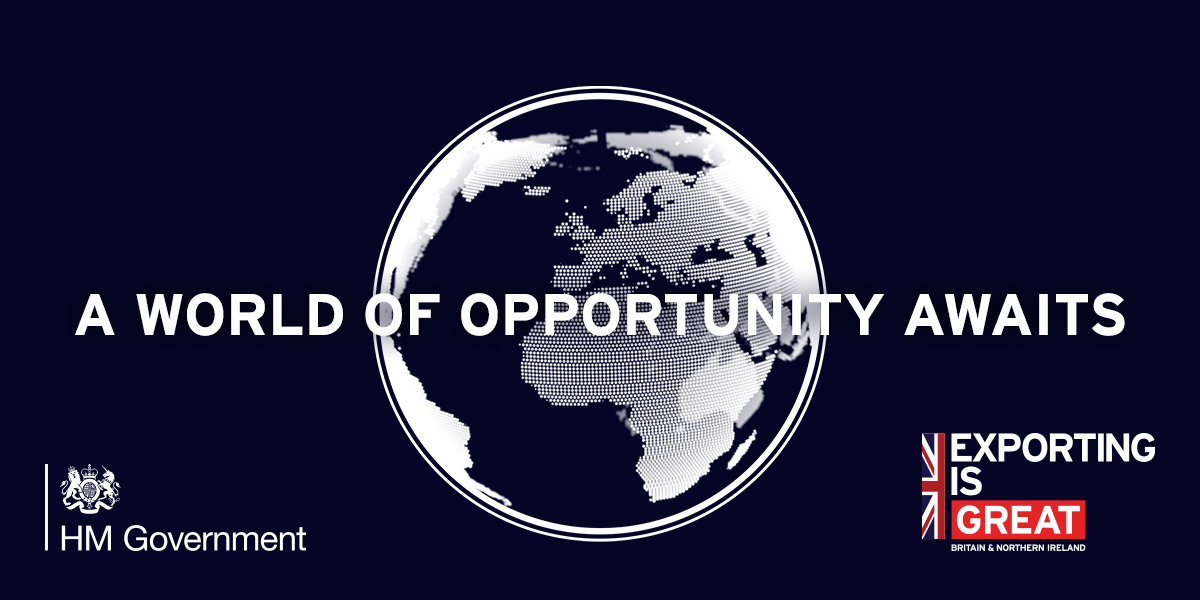
China – UK trade. Instead of “Exporting is Great” it could just as easily read “Aston Martin cars are Great” or “UK Tourism is Great” or “British Universities are Great” along with the relevant website URL.
Here’s another example of a splashy graphic that could be painted on the sides of China-bound railcars that depart from the UK. Of course, the text on the railcars should be written in every language spoken along the rail route.

UK Tourism – Heritage is Great! And so is advertising on the side of China-bound railcars.
Even the railcar advertising from earlier generations was effective. The following photo shows a railcar that hauled wheat and legumes with 1970’s-era Canadian government advertising painted onto the side of the railcar.

Britain could purchase advertising space to promote British industry and tourism on the side of China to UK railcars. — Image courtesy of Bill Grandin
It’s great to be diplomatic, and it’s great to have G20 meetings — but it’s opportunities like this that can result in virtuous cycles (economic multipliers) that drive an economy forward.
It’s the sort of thing that’s so important you must push yourself into the lineup, instead of being a wallflower and letting every other country get the prime advertising space, first. And we know that’s not the way politicians usually proceed, but as Winston Churchill used to say, “If you can’t get something done yourself, hire the best to get it done for you.”
With the greatest respect Ms. Prime Minister, you don’t need permission from the EU, you don’t need permission from America, you don’t need permission from British MP’s, and you don’t need permission from British business; This must be your top priority everyday until January 20, 2017 when U.S. President-elect Donald Trump is sworn into office.

Why Britain Needs an Optional Private Unemployment Insurance Scheme
by John Brian Shannon | January 1, 2017
Like all developed nations, Britain has a government-backed unemployment insurance scheme where workers pay fractional amounts of every pound sterling they earn to a national unemployment insurance fund during their working years.
Consequently, whenever a British worker becomes unemployed due to lay-off, that worker begins to collect unemployment insurance which pays them a portion of the wage they earned while they were employed, as a weekly benefit.
It’s a system that prevents millions of workers from experiencing the worst financial duress during periods of unemployment, or from spending their life savings during extended periods of unemployment.
In the interests of helping British workers, were the British government to pass legislation requiring the national unemployment insurance scheme to pay British workers a full 90% of a worker’s normal wage during his/her unemployment, there would be howls of protest from various quarters and the present unemployment insurance premiums paid by British workers would rise dramatically.
Though such legislation would benefit hundreds of thousands or even millions of British workers (at any given time there are likely to be 1.1 to 2.0 million unemployed people in the UK) many more millions of citizens would rail against such a plan — even though (unbeknownst to them) their own employer might be writing out their pink slip at this very moment. Which is to say, you never know what the future holds.
Almost everyone becomes unemployed at some point in their life. For seasonal workers it can be a few weeks to a few months every year. And it can occur suddenly, to anyone.
But none of the foregoing precludes the British government from passing legislation allowing private insurance companies to sell optional, additional, private unemployment insurance coverage to workers — over and above the national unemployment insurance scheme which pays only a small portion of a worker’s wage as benefits during times of unemployment.
In the interests of writing ‘a simple blog’ instead of ‘a large book’ I have dramatically simplified the Swedish example below, as it could be a complicated explanation, as different plans are offered by different companies over and above the legal minimums required by Swedish labour law (2007)
In Sweden, beyond what is mandated by Swedish law to be paid to workers during periods of unemployment (80% of the worker’s previous employment income) workers can buy any amount of optional, additional, private unemployment insurance for any amount of coverage (up to 99% of their normal wage) and as the insurance premiums are automatically deducted from their monthly wage, there’s no need for them to worry about forgetting to pay their private unemployment insurance premium payments.
- To provide a hypothetical example, Swedes can opt to pay the equivalent of one cent per dollar while employed to the private unemployment insurance provider, allowing them to receive up to 90% of their normal pay during unemployment
- Again, (a hypothetical example) to move up to 99% coverage, Swedes can choose to pay the equivalent of two cents per dollar.
It should be noted that actuaries for each private insurance company choose their particular factors, meaning that these things are never calculated by the equivalent of exactly one or two cents, etc. but rather by fractions of cents.
NOTE: In Sweden, the private insurers pay on a weekly schedule due to decades-long tradition there. Also, the Swedish government don’t care where private insurers are investing unemployment insurance premium revenues, as long as every unemployed worker gets his/her payments on time.
In Canada, a simple to understand and administer unemployment insurance system (called EI) provides government unemployment insurance that pays workers some 66% of their previous wage after getting laid-off (but not fired) from their job.
In Canada, both employers and employees contribute to the EU scheme and the per dollar contributions are set at a high enough rate to allow the entire scheme to earn a small profit for the government. In fact, Canada has again revised the rate downward as the scheme was too profitable! (It’s the second time in recent years that the rate has been revised downward as the entire EI scheme was embarrassingly profitable for the Canadian government)
It would be so easy for private companies in North America to offer optional, additional unemployment insurance coverage for only pennies on the dollar.
In fact, there has been some baby-steps toward that goal in the U.S. However, in the United States, optional, additional, private unemployment insurance coverage is a new thing, consequently, insurance companies are extremely cautious, are charging high rates, and have few applicants. At least until they get some experience with the new-ish business model.
For Canadian and U.S. insurance companies, it would be simple to add optional, additional, private unemployment insurance coverage (on top of the government unemployment insurance scheme that usually calculates benefits based on 66% of the worker’s previous wage) thereby allowing workers to top-up their unemployment insurance coverage at their discretion — to 80%, 90%, or even 99% of their previous wage. As each worker’s financial situation is different it must be the workers’ decision how much additional insurance coverage they purchase.
It might cost 1 or 2 cents on the dollar for each worker to obtain such additional coverage for themselves during periods of unemployment. But in an era when it seems everyone is spending every dollar they earn just to stay afloat, it makes sense to boost unemployment insurance benefits up to 99% of a worker’s previous wage when combined with the government benefit, and to do so via private insurers so that governments don’t need to spend more on unemployed workers. And all of that for only pennies on the dollar.
At first blush, workers might ask; ‘Why would a company want to sell additional unemployment insurance to workers over and above the national unemployment insurance plan?’
And the answer is; It’s profitable for them for two reasons.
One, the worker premiums (payments) allow the insurance company to make a small, but respectable profit.
Two, all the money paid to the private insurer by workers is invested in the stock market where the private insurance companies can make very significant profits.
It’s a business that allows private insurers to ‘have their cake and eat it too’ — the cake is the revenue generated via the normal payroll deductions of workers enrolled in the private insurance plan — and the icing is the revenue that private insurers earn by investing that huge pool of money in the markets. Which adds up to a great business model.
To Build a Better Britain, it behooves the UK government to allow private insurers to sell optional, additional private unemployment insurance over and above the government unemployment insurance plan, as it would allow workers (who have no control over the unemployment rate, nor of the overall economy) to continue to pay their bills on time, to live their lives normally, and to continue with their particular life plan — with much less personal upset and financial distress during periods of unemployment.
Building a Better Britain means strengthening worker supports during times of unemployment without it costing the government a single pence.
It signifies responsible government that places the needs of workers and their families at a higher level, while concomitantly creating a new, useful, and valuable product for British insurers to sell, thereby adding billions of pounds sterling every month to the London financial sector.
See, it really is ‘Win-Win’ when government places the needs of workers and their families first.
 Letter to Britain