Home » Posts tagged 'UK' (Page 70)
Tag Archives: UK

PM Theresa May Calls Snap Election for June 8th
In a surprise statement from Number 10 Downing Street, UK Prime Minister Theresa May announced her courageous decision to go to the polls on June 8, 2017 which will ensure stability as Brexit negotiations begin.
“I have just chaired a meeting of the Cabinet, where we agreed that the Government should call a general election, to be held on June 8.
I want to explain the reasons for that decision, what will happen next and the choice facing the British people when you come to vote in this election.
Last summer, after the country voted to leave the European Union, Britain needed certainty, stability and strong leadership, and since I became Prime Minister the Government has delivered precisely that.
Despite predictions of immediate financial and economic danger, since the referendum we have seen consumer confidence remain high, record numbers of jobs, and economic growth that has exceeded all expectations.
We have also delivered on the mandate that we were handed by the referendum result.
Britain is leaving the European Union and there can be no turning back. And as we look to the future, the Government has the right plan for negotiating our new relationship with Europe. We want a deep and special partnership between a strong and successful European Union and a United Kingdom that is free to chart its own way in the world.
That means we will regain control of our own money, our own laws and our own borders and we will be free to strike trade deals with old friends and new partners all around the world.
This is the right approach, and it is in the national interest. But the other political parties oppose it. At this moment of enormous national significance there should be unity here in Westminster, but instead there is division. The country is coming together, but Westminster is not.
In recent weeks Labour has threatened to vote against the deal we reach with the European Union.
The Liberal Democrats have said they want to grind the business of government to a standsill.
The Scottish National Party say they will vote against the legislation that formally repeals Britain’s membership of the European Union.
And unelected members of the House of Lords have vowed to fight us every step of the way.
Our opponents believe that because the Government’s majority is so small, our resolve will weaken and that they can force us to change course. They are wrong.
They underestimate our determination to get the job done and I am not prepared to let them endanger the security of millions of working people across the country.” — Prime Minister of the United Kingdom, Theresa May (April 18, 2017)

UK-born Children of Foreign parents: UK Citizens, or Not?
by John Brian Shannon | April 17, 2017
It seems logical that when a child is born in a given country that he or she should automatically be awarded citizenship in that country — while the parents obviously continue to be citizens of their own country. But in a surprising number of countries that’s not how it works.
As in Saudi Arabia and other countries, so it is in the United Kingdom — as recently and publicly reaffirmed by the Home Office in the case of a Dutch couple whose child was born in the UK.
Once a baby decides they want to be born, where the Mother and Father happen to be at that point in time is completely irrelevant. Some of you may have had that experience.
It seems counter-intuitive in the extreme to deny a person born in a country… citizenship in that country.
Imagine what it would’ve been over the past 100-years if every British parent had to travel to the appropriate UK government office with reams of paperwork to prove the entire family tree, thereby allowing the child to have the right of British citizenship?
The population of Britain would’ve never reached 65-million. Ever! People would’ve thought twice about having children, some would’ve decided to not have any at all, while other kids would’ve been adopted to foster-parents in other countries. That’s not the way to grow an economy!
You’re either born in the country and therefore automatically a citizen of the country with all the rights and responsibilities thereof, or you’re born outside of the country and are a visitor, student, diplomat, or an invited worker with impressive credentials who was offered citizenship by the government.
But being a citizen isn’t all about the rights and privileges of citizenship, there are also the responsibilities of citizenship.
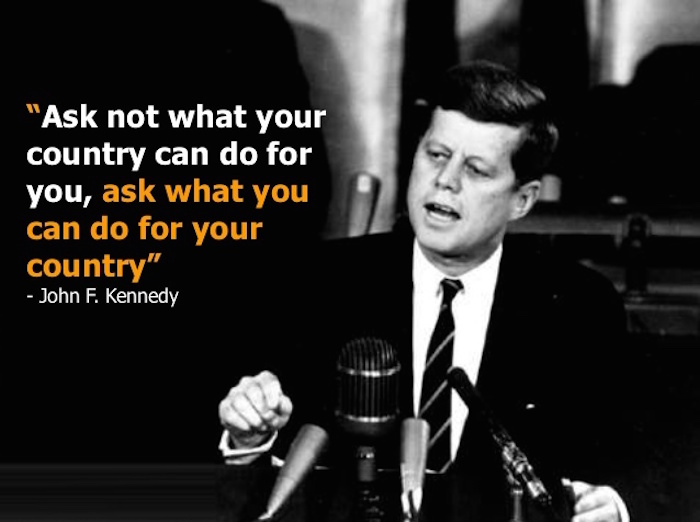
Citizen Rights and Responsibilities
For one; Every citizen is a potential ‘brand ambassador’ for their country; Whether a tourist in the UK asks for directions from a Briton, or if the British ‘brand ambassador’ is travelling outside the country, they are representing Britain 24/7 to the people around them in every word and every action whether they like it or not. Such words and actions are carefully watched in many countries. And it could occur that they are called upon to verbally discuss or defend a certain policy, or even the distant history of Britain — something at which all UK citizens should be exceptionally skilled. Training for this should begin at a young age and continue throughout their education.
Two; During wartime, able-bodied people are expected to shoulder some amount of burden to defend the country. This can range from flying a warplane as the great flying ace Billy Bishop did for Britain and Canada (he was a Canadian who flew for the RAF in WWI) or, as in the American example, ‘Rosie the Riveter’ who left housewifely duties behind for 8-12 hours per day to rivet aircraft frames together as part of the WWII effort.
If you are willing to fight for Britain during wartime, then unquestionably, you are worthy of British citizenship. If you’re unwilling to fight for the UK, you’re unworthy of UK citizenship. It’s the ultimate citizenship litmus test!

‘Rosie the Riveter’ — Hundreds of thousands of American women assembled aircraft and manufactured weapons 8-12 hours per day during WWII. U.S. government poster.
Third; Able-bodied people are expected to become educated and contribute to the overall economy of the UK. Of course, they’re free to choose their university education and their career. But at the end of the day it’s not unreasonable to expect their choices will result in a net gain for the country, whether a cultural gain (an artist or homeless shelter worker, for example) or a true economic gain (a typical blue-collar or white-collar worker) or a clerical gain. It may be that they choose to serve their country in academia or in government. In any event, citizenship carries with it the obligation to contribute to the country that provided them with relative peace and prosperity, and a good education.
Fourth; The UK government should enact legislation that requires one year of compulsory military service to be served by age 25. If you’re a British citizen enjoying all of the rights and privileges of British society it’s completely reasonable to expect some sort of contribution to the national defense.
Of course, such gap-year military cadets may well find themselves helicoptered into flood ravaged regions to assist local authorities, or they may be learning how to fly a light aircraft, or working on a national infrastructure project where the military corps of engineers are building or rebuilding part of the national motorway system.

Personnel from RAF High Wycombe recreate the iconic Beatles Abbey Road album cover, parading the Armed Forces Day Flag on Armed Forces Day which falls on June 24th in 2017. Image courtesy of AECOM
During their gap-year military service, all of their necessities should be covered including free medical and dental coverage, food and shelter, and many recreational activities could be included.
In short, they should be encouraged to — learn hard, work hard and play hard — which the most successful nations have always done. And the least successful, haven’t.
At the end of their gap-year military service each cadet should receive a generous scholarship to the UK college or university of their choice. For those who wish to continue serving their country in the military, they should receive an equally generous scholarship that leads them toward a higher rank.
By creating a young cohort of military conscripts who can choose when to serve their gap-year military service, every young Briton will emerge from that military training as significantly brighter, bolder and more experienced citizens with skills that the young people of most countries won’t ever have.
That’s the way to build a smarter, stronger and more capable UK society, on the way to Building a Better Britain!

UK Leads G7 in the Combined Metric of Economic Growth + Carbon Cuts
A new Energy & Climate Intelligence Unit report confirms that Britain has been the most successful G7 nation over the last 25 years on the combined metric of growing its economy and reducing greenhouse gas emissions.
In the 25-years since 1992 when clean air and the corresponding lowering of healthcare spending became an important policy for the United Kingdom, the country grew its per capita GDP by 130% while lowering GHG emissions 33% — proving that a country can simultaneously grow their economy AND lower greenhouse gas emissions.
In the same timeframe, Japan grew its per-capita GDP by 83% while increasing its per-capita emissions by 10.5% — making it the worst performer of all the G7 nations. (Not to pick on Japan which has the most difficult population pyramid demographic problem of any nation on the planet)
“It’s really time to slay once and for all the old canard that cutting carbon emissions means economic harm.
As this report shows, if you have consistent policymaking and cross-party consensus, it’s perfectly possible to get richer and cleaner at the same time. Britain isn’t the only country that’s done it – it’s true for most of the G7 – but we’ve clearly been the best of the bunch.
There are signs that these successes are now transferring to the rest of the world. Globally, emissions have been flat for three years while world GDP has grown by 8%. But science indicates this isn’t enough to fulfil the objective of the UN Convention and prevent ‘dangerous’ climate change – for that, emissions need to start falling soon. This study should give confidence that with good policies, it’s achievable.” — Richard Black, director of the Energy and Climate Intelligence Unit
And in the United Kingdom, Scotland has led the way on the switch from coal to renewable energy and it rightly deserves much of the praise handed to the UK over the ongoing clean air success story, while England and Wales deserve much of the credit for growing the UK economy. As usual, Northern Ireland is ‘holding its own’ and although it is presently caught in the middle of an election cycle it seems that it might ramp-up to follow Scotland’s environmental success, post-election.
Scotland sets 50% renewable energy target (BBC)
Pre-Brexit, UK Leads G7 In ‘Conscious Decoupling’ Of Economic Growth & Carbon Cuts (CleanTechnica)
The Road to Decoupling: 21 Countries Are Reducing Carbon Emissions While Growing GDP (World Resources Institute)
By far, the biggest reason UK emissions have dropped in every decade since WWII is a HUGE shift away from coal. At one time almost 100% of Britain’s electricity was sourced by brown or black coal. Some of which was replaced by hydro-power, and later, by nuclear. Eventually, even more coal-fired capacity was replaced by natural gas, and most recently, by renewables.
The inexorable march away from coal-fired generation in the UK has resulted in cleaner air. It is by far the biggest factor in Britain’s ongoing clean air success story.
Still, it’s not enough progress. Scotland has set the standard that the rest of the UK should follow — which will take strong leadership in the House of Commons.
The Way Forward for Clean Air, Lower Healthcare Spending, and a Thriving Economy for Britain
There are many ways to accomplish those goals and everything has its own particular cost. But two pathways jump out as the most beneficial per pound sterling.
ONE: Continue to replace coal-fired power generation with any other power generator. Yes, everything else burns cleaner than coal! Burning home heating fuel is cleaner than coal. Natural gas-fired power generation can be up to 1-million times cleaner than burning some grades of brown coal. Even upgrading coal-fired power generation from brown coal ‘lignite’ fuel to black coal ‘anthracite’ fuel results in astonishing improvements in air quality.
Fortunately, this is the (unevenly applied) default in the United Kingdom, which, when combined with the solid and thoughtful policies of Scotland and Wales, results in cleaner air, lower healthcare costs, and boosts economic growth via lower energy prices.
Record UK wind generation lowers electricity prices (Power Engineering)
TWO: In addition to everything mentioned above, the other low-hanging fruit leading towards cleaner air, to lower healthcare spending, and to boost economic output (by lowering energy costs) is via energy-efficiency.
Prime Minister Theresa May should recognize that no matter how cleanly we can generate one GigaWatt of electricity — energy-efficiency savings (demand reduction) that are equal to one GigaWatt are many times cleaner — and energy-efficiency improvements are typically simple and cost-effective.
Imagine a UK government policy that lowers primary energy consumption (demand) by 30% across-the-board over the next 5-years.
That’s possible with the right policy, and infinitely cheaper than adding the exact same amount of energy production capacity to the grid.
Cheaper, by orders of magnitude. In fact, the Hinkley Point C nuclear power plant construction could be cancelled AND other proposed power plant projects could be shelved for at least a decade with that much efficiency added to the grid.
Simple programmes get the best results
If the UK government added an energy-efficiency programme shared between three government entities, costs and (importantly) accolades would be shared.
The Department of Energy & Climate Change, the Secretary of State for Business, Energy and Industrial Strategy, and the Department for Communities and Local Government, would gain support from voters and expats by supporting a national energy-efficiency programme consisting of a £100 per capita credit on energy-saving electronics and materials.
For a business that employs 5 people, that’s a one-time credit of (up to) £500 towards energy-efficiency at that business, which will buy A TON of efficiency and thereby lower energy consumption/energy bills for that company.
All else being equal; Are those business owners more likely to vote Conservative in the next election? I would have to say, Yes.
Obviously, those 5 employees also live near their workplace and use electricity at home. Therefore, they too should receive a one-time (up to) £100 per capita credit at the hardware store for the purchase of LED or other energy-saving lights, smart thermostats, weather-stripping, insulation, receptacle gaskets and other energy-saving electronics or materials.
Each of those 5 people will now save significant amounts on their monthly electricity bill.
Again, all else being equal; Are those homeowners or tenants more likely to vote Conservative in the next election? The answer is likely to be affirmative if the present government decides to save each one of them, tens or hundreds of pounds per year on their annual electricity bill.
It sounds expensive until you consider the cost of adding 30 GigaWatts to the UK grid to cover wasted energy vs. spending a much smaller amount to conserve the same amount of energy.
There is simply no comparison. Energy-efficiency wins every time, and is dirt cheap in relation to the costs of building new power generation capacity.
A £100 per capita energy-efficiency credit is the way forward for clean air, lower healthcare spending, and a thriving economy for Britain (via lower energy costs) and pound for pound, nothing else comes close to accomplishing those goals at such a comparatively low spend.
 Letter to Britain