Home » Posts tagged 'Theresa May' (Page 35)
Tag Archives: Theresa May

Theresa May: ‘A Global Britain’ speech – January 2017
Transcript and video of Prime Minister Theresa May’s ‘A Global Britain’ speech delivered January 17, 2017 at Lancaster House, London, on the topic of Brexit
“A little over six months ago, the British people voted for change.
They voted to shape a brighter future for our country.
They voted to leave the European Union and embrace the world.
And they did so with their eyes open: accepting that the road ahead will be uncertain at times, but believing that it leads towards a brighter future for their children – and their grandchildren too.
And it is the job of this Government to deliver it. That means more than negotiating our new relationship with the EU. It means taking the opportunity of this great moment of national change to step back and ask ourselves what kind of country we want to be.
My answer is clear. I want this United Kingdom to emerge from this period of change stronger, fairer, more united and more outward-looking than ever before. I want us to be a secure, prosperous, tolerant country – a magnet for international talent and a home to the pioneers and innovators who will shape the world ahead. I want us to be a truly Global Britain – the best friend and neighbour to our European partners, but a country that reaches beyond the borders of Europe too. A country that goes out into the world to build relationships with old friends and new allies alike.
I want Britain to be what we have the potential, talent and ambition to be. A great, global trading nation that is respected around the world and strong, confident and united at home.
That is why this Government has a Plan for Britain. One that gets us the right deal abroad but also ensures we get a better deal for ordinary working people at home.
It’s why that plan sets out how we will use this moment of change to build a stronger economy and a fairer society by embracing genuine economic and social reform.
Why our new Modern Industrial Strategy is being developed, to ensure every nation and area of the United Kingdom can make the most of the opportunities ahead. Why we will go further to reform our schools to ensure every child has the knowledge and the skills they need to thrive in post-Brexit Britain. Why as we continue to bring the deficit down, we will take a balanced approach by investing in our economic infrastructure – because it can transform the growth potential of our economy, and improve the quality of people’s lives across the whole country.
It’s why we will put the preservation of our precious Union at the heart of everything we do. Because it is only by coming together as one great union of nations and people that we can make the most of the opportunities ahead.
The result of the referendum was not a decision to turn inward and retreat from the world.
Because Britain’s history and culture is profoundly internationalist.
We are a European country – and proud of our shared European heritage – but we are also a country that has always looked beyond Europe to the wider world. That is why we are one of the most racially diverse countries in Europe, one of the most multicultural members of the European Union, and why – whether we are talking about India, Pakistan, Bangladesh, America, Australia, Canada, New Zealand, countries in Africa or those that are closer to home in Europe – so many of us have close friends and relatives from across the world.
Instinctively, we want to travel to, study in, trade with countries not just in Europe but beyond the borders of our continent. Even now as we prepare to leave the EU, we are planning for the next biennial Commonwealth Heads of Government meeting in 2018 – a reminder of our unique and proud global relationships.
And it is important to recognise this fact. June the 23rd was not the moment Britain chose to step back from the world. It was the moment we chose to build a truly Global Britain.
I know that this – and the other reasons Britain took such a decision – is not always well understood among our friends and allies in Europe. And I know many fear that this might herald the beginning of a greater unravelling of the EU.
But let me be clear: I do not want that to happen. It would not be in the best interests of Britain. It remains overwhelmingly and compellingly in Britain’s national interest that the EU should succeed. And that is why I hope in the months and years ahead we will all reflect on the lessons of Britain’s decision to leave.
So let me take this opportunity to set out the reasons for our decision and to address the people of Europe directly.
It’s not simply because our history and culture is profoundly internationalist, important though that is. Many in Britain have always felt that the United Kingdom’s place in the European Union came at the expense of our global ties, and of a bolder embrace of free trade with the wider world.
There are other important reasons too.
Our political traditions are different. Unlike other European countries, we have no written constitution, but the principle of Parliamentary Sovereignty is the basis of our unwritten constitutional settlement. We have only a recent history of devolved governance – though it has rapidly embedded itself – and we have little history of coalition government. The public expect to be able to hold their governments to account very directly, and as a result supranational institutions as strong as those created by the European Union sit very uneasily in relation to our political history and way of life.
And, while I know Britain might at times have been seen as an awkward member state, the European Union has struggled to deal with the diversity of its member countries and their interests. It bends towards uniformity, not flexibility. David Cameron’s negotiation was a valiant final attempt to make it work for Britain – and I want to thank all those elsewhere in Europe who helped him reach an agreement – but the blunt truth, as we know, is that there was not enough flexibility on many important matters for a majority of British voters.
Now I do not believe that these things apply uniquely to Britain. Britain is not the only member state where there is a strong attachment to accountable and democratic government, such a strong internationalist mindset, or a belief that diversity within Europe should be celebrated. And so I believe there is a lesson in Brexit not just for Britain but, if it wants to succeed, for the EU itself.
Because our continent’s great strength has always been its diversity. And there are two ways of dealing with different interests. You can respond by trying to hold things together by force, tightening a vice-like grip that ends up crushing into tiny pieces the very things you want to protect. Or you can respect difference, cherish it even, and reform the EU so that it deals better with the wonderful diversity of its member states.
So to our friends across Europe, let me say this.
Our vote to leave the European Union was no rejection of the values we share. The decision to leave the EU represents no desire to become more distant to you, our friends and neighbours. It was no attempt to do harm to the EU itself or to any of its remaining member states. We do not want to turn the clock back to the days when Europe was less peaceful, less secure and less able to trade freely. It was a vote to restore, as we see it, our parliamentary democracy, national self-determination, and to become even more global and internationalist in action and in spirit.
We will continue to be reliable partners, willing allies and close friends. We want to buy your goods and services, sell you ours, trade with you as freely as possible, and work with one another to make sure we are all safer, more secure and more prosperous through continued friendship.
You will still be welcome in this country as we hope our citizens will be welcome in yours. At a time when together we face a serious threat from our enemies, Britain’s unique intelligence capabilities will continue to help to keep people in Europe safe from terrorism. And at a time when there is growing concern about European security, Britain’s servicemen and women, based in European countries including Estonia, Poland and Romania, will continue to do their duty.
We are leaving the European Union, but we are not leaving Europe.
And that is why we seek a new and equal partnership – between an independent, self-governing, Global Britain and our friends and allies in the EU.
Not partial membership of the European Union, associate membership of the European Union, or anything that leaves us half-in, half-out. We do not seek to adopt a model already enjoyed by other countries. We do not seek to hold on to bits of membership as we leave.
No, the United Kingdom is leaving the European Union. And my job is to get the right deal for Britain as we do.
So today I want to outline our objectives for the negotiation ahead. 12 objectives that amount to one big goal: a new, positive and constructive partnership between Britain and the European Union.
And as we negotiate that partnership, we will be driven by some simple principles: we will provide as much certainty and clarity as we can at every stage. And we will take this opportunity to make Britain stronger, to make Britain fairer, and to build a more Global Britain too.
1. Certainty
The first objective is crucial. We will provide certainty wherever we can.
We are about to enter a negotiation. That means there will be give and take. There will have to be compromises. It will require imagination on both sides. And not everybody will be able to know everything at every stage.
But I recognise how important it is to provide business, the public sector, and everybody with as much certainty as possible as we move through the process.
So where we can offer that certainty, we will do so.
That is why last year we acted quickly to give clarity about farm payments and university funding.
And it is why, as we repeal the European Communities Act, we will convert the “acquis” – the body of existing EU law – into British law.
This will give the country maximum certainty as we leave the EU. The same rules and laws will apply on the day after Brexit as they did before. And it will be for the British Parliament to decide on any changes to that law after full scrutiny and proper Parliamentary debate.
And when it comes to Parliament, there is one other way in which I would like to provide certainty. I can confirm today that the Government will put the final deal that is agreed between the UK and the EU to a vote in both Houses of Parliament, before it comes into force.
A Stronger Britain
Our second guiding principle is to build a stronger Britain.
2. Control of our own laws
That means taking control of our own affairs, as those who voted in their millions to leave the European Union demanded we must.
So we will take back control of our laws and bring an end to the jurisdiction of the European Court of Justice in Britain.
Leaving the European Union will mean that our laws will be made in Westminster, Edinburgh, Cardiff and Belfast. And those laws will be interpreted by judges not in Luxembourg but in courts across this country.
Because we will not have truly left the European Union if we are not in control of our own laws.
3. Strengthen the Union
A stronger Britain demands that we do something else – strengthen the precious union between the four nations of the United Kingdom.
At this momentous time, it is more important than ever that we face the future together, united by what makes us strong: the bonds that unite us as a people, and our shared interest in the UK being an open, successful trading nation in the future.
And I hope that same spirit of unity will apply in Northern Ireland in particular over the coming months in the Assembly elections, and the main parties there will work together to re-establish a partnership government as soon as possible.
Foreign affairs are of course the responsibility of the UK Government, and in dealing with them we act in the interests of all parts of the United Kingdom. As Prime Minister, I take that responsibility seriously.
I have also been determined from the start that the devolved administrations should be fully engaged in this process.
That is why the Government has set up a Joint Ministerial Committee on EU Negotiations, so ministers from each of the UK’s devolved administrations can contribute to the process of planning for our departure from the European Union.
We have already received a paper from the Scottish Government, and look forward to receiving a paper from the Welsh Government shortly. Both papers will be considered as part of this important process. We won’t agree on everything, but I look forward to working with the administrations in Scotland, Wales and Northern Ireland to deliver a Brexit that works for the whole of the United Kingdom.
Part of that will mean working very carefully to ensure that – as powers are repatriated from Brussels back to Britain – the right powers are returned to Westminster, and the right powers are passed to the devolved administrations of Scotland, Wales and Northern Ireland.
As we do so, our guiding principle must be to ensure that – as we leave the European Union – no new barriers to living and doing business within our own Union are created,
That means maintaining the necessary common standards and frameworks for our own domestic market, empowering the UK as an open, trading nation to strike the best trade deals around the world, and protecting the common resources of our islands.
And as we do this, I should equally be clear that no decisions currently taken by the devolved administrations will be removed from them.
4. Maintain the Common Travel Area with Ireland
We cannot forget that, as we leave, the United Kingdom will share a land border with the EU, and maintaining that Common Travel Area with the Republic of Ireland will be an important priority for the UK in the talks ahead.
There has been a Common Travel Area between the UK and the Republic of Ireland for many years. Indeed, it was formed before either of our two countries were members of the European Union. And the family ties and bonds of affection that unite our two countries mean that there will always be a special relationship between us.
So we will work to deliver a practical solution that allows the maintenance of the Common Travel Area with the Republic, while protecting the integrity of the United Kingdom’s immigration system.
Nobody wants to return to the borders of the past, so we will make it a priority to deliver a practical solution as soon as we can.
The third principle is to build a fairer Britain. That means ensuring it is fair to everyone who lives and works in this country.
5. Control of immigration
And that is why we will ensure we can control immigration to Britain from Europe.
We will continue to attract the brightest and the best to work or study in Britain – indeed openness to international talent must remain one of this country’s most distinctive assets – but that process must be managed properly so that our immigration system serves the national interest.
So we will get control of the number of people coming to Britain from the EU.
Because while controlled immigration can bring great benefits – filling skills shortages, delivering public services, making British businesses the world-beaters they often are – when the numbers get too high, public support for the system falters.
In the last decade or so, we have seen record levels of net migration in Britain, and that sheer volume has put pressure on public services, like schools, stretched our infrastructure, especially housing, and put a downward pressure on wages for working class people. As Home Secretary for six years, I know that you cannot control immigration overall when there is free movement to Britain from Europe.
Britain is an open and tolerant country. We will always want immigration, especially high-skilled immigration, we will always want immigration from Europe, and we will always welcome individual migrants as friends. But the message from the public before and during the referendum campaign was clear: Brexit must mean control of the number of people who come to Britain from Europe. And that is what we will deliver.
6. Rights for EU nationals in Britain, and British nationals in the EU
Fairness demands that we deal with another issue as soon as possible too. We want to guarantee the rights of EU citizens who are already living in Britain, and the rights of British nationals in other member states, as early as we can.
I have told other EU leaders that we could give people the certainty they want straight away, and reach such a deal now.
Many of them favour such an agreement – one or two others do not – but I want everyone to know that it remains an important priority for Britain – and for many other member states – to resolve this challenge as soon as possible. Because it is the right and fair thing to do.
7. Protect workers’ rights
And a fairer Britain is a country that protects and enhances the rights people have at work.
That is why, as we translate the body of European law into our domestic regulations, we will ensure that workers rights are fully protected and maintained.
Indeed, under my leadership, not only will the Government protect the rights of workers’ set out in European legislation, we will build on them. Because under this Conservative Government, we will make sure legal protection for workers keeps pace with the changing labour market – and that the voices of workers are heard by the boards of publicly-listed companies for the first time.
But the great prize for this country – the opportunity ahead – is to use this moment to build a truly Global Britain. A country that reaches out to old friends and new allies alike. A great, global, trading nation. And one of the firmest advocates for free trade anywhere in the world.
8. Free trade with European markets
That starts with our close friends and neighbours in Europe. So as a priority, we will pursue a bold and ambitious Free Trade Agreement with the European Union.
This agreement should allow for the freest possible trade in goods and services between Britain and the EU’s member states. It should give British companies the maximum freedom to trade with and operate within European markets – and let European businesses do the same in Britain.
But I want to be clear. What I am proposing cannot mean membership of the Single Market.
European leaders have said many times that membership means accepting the “four freedoms” of goods, capital, services and people. And being out of the EU but a member of the Single Market would mean complying with the EU’s rules and regulations that implement those freedoms, without having a vote on what those rules and regulations are. It would mean accepting a role for the European Court of Justice that would see it still having direct legal authority in our country.
It would to all intents and purposes mean not leaving the EU at all.
And that is why both sides in the referendum campaign made it clear that a vote to leave the EU would be a vote to leave the Single Market.
So we do not seek membership of the Single Market. Instead we seek the greatest possible access to it through a new, comprehensive, bold and ambitious Free Trade Agreement.
That Agreement may take in elements of current Single Market arrangements in certain areas – on the export of cars and lorries for example, or the freedom to provide financial services across national borders – as it makes no sense to start again from scratch when Britain and the remaining Member States have adhered to the same rules for so many years.
But I respect the position taken by European leaders who have been clear about their position, just as I am clear about mine. So an important part of the new strategic partnership we seek with the EU will be the pursuit of the greatest possible access to the Single Market, on a fully reciprocal basis, through a comprehensive Free Trade Agreement.
And because we will no longer be members of the Single Market, we will not be required to contribute huge sums to the EU budget. There may be some specific European programmes in which we might want to participate. If so, and this will be for us to decide, it is reasonable that we should make an appropriate contribution. But the principle is clear: the days of Britain making vast contributions to the European Union every year will end.
9. New trade agreements with other countries
But it is not just trade with the EU we should be interested in. A Global Britain must be free to strike trade agreements with countries from outside the European Union too.
Because important though our trade with the EU is and will remain, it is clear that the UK needs to increase significantly its trade with the fastest growing export markets in the world.
Since joining the EU, trade as a percentage of GDP has broadly stagnated in the UK. That is why it is time for Britain to get out into the world and rediscover its role as a great, global, trading nation.
This is such a priority for me that when I became Prime Minister I established, for the first time, a Department for International Trade, led by Liam Fox.
We want to get out into the wider world, to trade and do business all around the globe. Countries including China, Brazil, and the Gulf States have already expressed their interest in striking trade deals with us. We have started discussions on future trade ties with countries like Australia, New Zealand and India. And President Elect Trump has said Britain is not “at the back of the queue” for a trade deal with the United States, the world’s biggest economy, but front of the line.
I know my emphasis on striking trade agreements with countries outside Europe has led to questions about whether Britain seeks to remain a member of the EU’s Customs Union. And it is true that full Customs Union membership prevents us from negotiating our own comprehensive trade deals.
Now, I want Britain to be able to negotiate its own trade agreements. But I also want tariff-free trade with Europe and cross-border trade there to be as frictionless as possible.
That means I do not want Britain to be part of the Common Commercial Policy and I do not want us to be bound by the Common External Tariff. These are the elements of the Customs Union that prevent us from striking our own comprehensive trade agreements with other countries. But I do want us to have a customs agreement with the EU.
Whether that means we must reach a completely new customs agreement, become an associate member of the Customs Union in some way, or remain a signatory to some elements of it, I hold no preconceived position. I have an open mind on how we do it. It is not the means that matter, but the ends.
And those ends are clear: I want to remove as many barriers to trade as possible. And I want Britain to be free to establish our own tariff schedules at the World Trade Organisation, meaning we can reach new trade agreements not just with the European Union but with old friends and new allies from outside Europe too.
10. The best place for science and innovation
A Global Britain must also be a country that looks to the future. That means being one of the best places in the world for science and innovation.
One of our great strengths as a nation is the breadth and depth of our academic and scientific communities, backed up by some of the world’s best universities. And we have a proud history of leading and supporting cutting-edge research and innovation.
So we will also welcome agreement to continue to collaborate with our European partners on major science, research, and technology initiatives.
From space exploration to clean energy to medical technologies, Britain will remain at the forefront of collective endeavours to better understand, and make better, the world in which we live.
11. Cooperation in the fight against crime and terrorism
And a Global Britain will continue to cooperate with its European partners in important areas such as crime, terrorism and foreign affairs.
All of us in Europe face the challenge of cross-border crime, a deadly terrorist threat, and the dangers presented by hostile states. All of us share interests and values in common, values we want to see projected around the world.
With the threats to our common security becoming more serious, our response cannot be to cooperate with one another less, but to work together more. I therefore want our future relationship with the European Union to include practical arrangements on matters of law enforcement and the sharing of intelligence material with our EU allies.
I am proud of the role Britain has played and will continue to play in promoting Europe’s security. Britain has led Europe on the measures needed to keep our continent secure – whether it is implementing sanctions against Russia following its action in Crimea, working for peace and stability in the Balkans, or securing Europe’s external border. We will continue to work closely with our European allies in foreign and defence policy even as we leave the EU itself.
12. A smooth, orderly Brexit
These are our objectives for the negotiation ahead – objectives that will help to realise our ambition of shaping that stronger, fairer, Global Britain that we want to see.
They are the basis for a new, strong, constructive partnership with the European Union – a partnership of friends and allies, of interests and values. A partnership for a strong EU and a strong UK.
But there is one further objective we are setting. For as I have said before – it is in no one’s interests for there to be a cliff-edge for business or a threat to stability, as we change from our existing relationship to a new partnership with the EU.
By this, I do not mean that we will seek some form of unlimited transitional status, in which we find ourselves stuck forever in some kind of permanent political purgatory. That would not be good for Britain, but nor do I believe it would be good for the EU.
Instead, I want us to have reached an agreement about our future partnership by the time the two-year Article Fifty process has concluded. From that point onwards, we believe a phased process of implementation, in which both Britain and the EU institutions and member states prepare for the new arrangements that will exist between us will be in our mutual self-interest. This will give businesses enough time to plan and prepare for those new arrangements.
This might be about our immigration controls, customs systems or the way in which we cooperate on criminal justice matters. Or it might be about the future legal and regulatory framework for financial services. For each issue, the time we need to phase-in the new arrangements may differ. Some might be introduced very quickly, some might take longer. And the interim arrangements we rely upon are likely to be a matter of negotiation.
But the purpose is clear: we will seek to avoid a disruptive cliff-edge, and we will do everything we can to phase in the new arrangements we require as Britain and the EU move towards our new partnership.
So, these are the objectives we have set. Certainty wherever possible. Control of our own laws. Strengthening the United Kingdom. Maintaining the Common Travel Area with Ireland. Control of immigration. Rights for EU nationals in Britain, and British nationals in the EU. Enhancing rights for workers. Free trade with European markets. New trade agreements with other countries. A leading role in science and innovation. Cooperation on crime, terrorism and foreign affairs. And a phased approach, delivering a smooth and orderly Brexit.
This is the framework of a deal that will herald a new partnership between the UK and the EU.
It is a comprehensive and carefully considered plan that focuses on the ends, not just the means – with its eyes fixed firmly on the future, and on the kind of country we will be once we leave.
It reflects the hard work of many in this room today who have worked tirelessly to bring it together and to prepare this country for the negotiation ahead.
And it will, I know, be debated and discussed at length. That is only right. But those who urge us to reveal more – such as the blow-by-blow details of our negotiating strategy, the areas in which we might compromise, the places where we think there are potential trade-offs – will not be acting in the national interest.
Because this is not a game or a time for opposition for opposition’s sake. It is a crucial and sensitive negotiation that will define the interests and the success of our country for many years to come. And it is vital that we maintain our discipline.
That is why I have said before – and will continue to say – that every stray word and every hyped up media report is going to make it harder for us to get the right deal for Britain. Our opposite numbers in the European Commission know it, which is why they are keeping their discipline. And the ministers in this Government know it too, which is why we will also maintain ours.
So however frustrating some people find it, the Government will not be pressured into saying more than I believe it is in our national interest to say. Because it is not my job to fill column inches with daily updates, but to get the right deal for Britain. And that is what I intend to do.
I am confident that a deal – and a new strategic partnership between the UK and the EU – can be achieved.
This is firstly because, having held conversations with almost every leader from every single EU member state; having spent time talking to the senior figures from the European institutions, including President Tusk, President Juncker, and President Schulz; and after my Cabinet colleagues David Davis, Philip Hammond and Boris Johnson have done the same with their interlocutors, I am confident that the vast majority want a positive relationship between the UK and the EU after Brexit. And I am confident that the objectives I am setting out today are consistent with the needs of the EU and its Member States.
That is why our objectives include a proposed Free Trade Agreement between Britain and the European Union, and explicitly rule out membership of the EU’s Single Market. Because when the EU’s leaders say they believe the four freedoms of the Single Market are indivisible, we respect that position. When the 27 Member States say they want to continue their journey inside the European Union, we not only respect that fact but support it.
Because we do not want to undermine the Single Market, and we do not want to undermine the European Union. We want the EU to be a success and we want its remaining member states to prosper. And of course we want the same for Britain.
And the second reason I believe it is possible to reach a good deal is that the kind of agreement I have described today is the economically rational thing that both Britain and the EU should aim for. Because trade is not a zero sum game: more of it makes us all more prosperous. Free trade between Britain and the European Union means more trade, and more trade means more jobs and more wealth creation. The erection of new barriers to trade, meanwhile, means the reverse: less trade, fewer jobs, lower growth.
The third and final reason I believe we can come to the right agreement is that cooperation between Britain and the EU is needed not just when it comes to trade but when it comes to our security too.
Britain and France are Europe’s only two nuclear powers. We are the only two European countries with permanent seats on the United Nations Security Council. Britain’s armed forces are a crucial part of Europe’s collective defence.
And our intelligence capabilities – unique in Europe – have already saved countless lives in very many terrorist plots that have been thwarted in countries across our continent. After Brexit, Britain wants to be a good friend and neighbour in every way, and that includes defending the safety and security of all of our citizens.
So I believe the framework I have outlined today is in Britain’s interests. It is in Europe’s interests. And it is in the interests of the wider world.
But I must be clear. Britain wants to remain a good friend and neighbour to Europe. Yet I know there are some voices calling for a punitive deal that punishes Britain and discourages other countries from taking the same path.
That would be an act of calamitous self-harm for the countries of Europe. And it would not be the act of a friend.
Britain would not – indeed we could not – accept such an approach. And while I am confident that this scenario need never arise – while I am sure a positive agreement can be reached – I am equally clear that no deal for Britain is better than a bad deal for Britain.
Because we would still be able to trade with Europe. We would be free to strike trade deals across the world. And we would have the freedom to set the competitive tax rates and embrace the policies that would attract the world’s best companies and biggest investors to Britain. And – if we were excluded from accessing the Single Market – we would be free to change the basis of Britain’s economic model.
But for the EU, it would mean new barriers to trade with one of the biggest economies in the world. It would jeopardise investments in Britain by EU companies worth more than half a trillion pounds. It would mean a loss of access for European firms to the financial services of the City of London. It would risk exports from the EU to Britain worth around £290bn every year. And it would disrupt the sophisticated and integrated supply chains upon which many EU companies rely.
Important sectors of the EU economy would also suffer. We are a crucial – profitable – export market for Europe’s automotive industry, as well as sectors including energy, food and drink, chemicals, pharmaceuticals, and agriculture. These sectors employ millions of people around Europe. And I do not believe that the EU’s leaders will seriously tell German exporters, French farmers, Spanish fishermen, the young unemployed of the Eurozone, and millions of others, that they want to make them poorer, just to punish Britain and make a political point.
For all these reasons – and because of our shared values and the spirit of goodwill that exists on both sides – I am confident that we will follow a better path. I am confident that a positive agreement can be reached.
It is right that the Government should prepare for every eventuality – but to do so in the knowledge that a constructive and optimistic approach to the negotiations to come is in the best interests of Europe and the best interests of Britain.
We do not approach these negotiations expecting failure, but anticipating success.
Because we are a great, global nation with so much to offer Europe and so much to offer the world.
One of the world’s largest and strongest economies. With the finest intelligence services, the bravest armed forces, the most effective hard and soft power, and friendships, partnerships and alliances in every continent.
And another thing that’s important. The essential ingredient of our success. The strength and support of 65 million people willing us to make it happen.
Because after all the division and discord, the country is coming together.
The referendum was divisive at times. And those divisions have taken time to heal.
But one of the reasons that Britain’s democracy has been such a success for so many years is that the strength of our identity as one nation, the respect we show to one another as fellow citizens, and the importance we attach to our institutions means that when a vote has been held we all respect the result. The victors have the responsibility to act magnanimously. The losers have the responsibility to respect the legitimacy of the outcome. And the country comes together.
And that is what we are seeing today. Business isn’t calling to reverse the result, but planning to make a success of it. The House of Commons has voted overwhelmingly for us to get on with it. And the overwhelming majority of people – however they voted – want us to get on with it too.
So that is what we will do.
Not merely forming a new partnership with Europe, but building a stronger, fairer, more global Britain too.
And let that be the legacy of our time. The prize towards which we work. The destination at which we arrive once the negotiation is done.
And let us do it not for ourselves, but for those who follow. For the country’s children and grandchildren too.
So that when future generations look back at this time, they will judge us not only by the decision that we made, but by what we made of that decision.
They will see that we shaped them a brighter future.
They will know that we built them a better Britain.” — UK Prime Minister Theresa May January 17, 2017
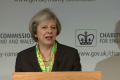
Theresa May: ‘The Shared Society’ – January 2017
The Shared Society speech by UK Prime Minister Theresa May at the Charity Commission’s annual public meeting on January 9, 2017. She set out her vision for the shared society, the government’s role within it and her plans to transform mental health supports in Britain.
“Thank you for inviting me to be here this morning to deliver the prestigious Charity Commission annual lecture.
I am delighted to have this opportunity to express my appreciation for all those who work in our charity sector and for those who freely give their time, money and expertise in the service of others. We are a country built on the bonds of family, community and citizenship and there is no greater example of the strength of those bonds than our great movement of charities and social enterprises.
But the strength of that civil society – which I believe we should treasure deeply – does not just depend on the ingenuity, generosity and commitment of countless volunteers, social entrepreneurs and philanthropists. As with other parts of our economy, it also depends on the practices that our charities and social enterprises adopt; and above all on the public trust they command.
That is why the work that William, Paula and their team at the Charity Commission are doing is so important. Because the reforms they are leading are strengthening the sector – and together with the new Fundraising Regulator – ensuring public confidence in our charities and the contribution they make in helping to meet some of the greatest social challenges of our time.
The challenge of our time
And let’s be clear that some of those challenges are significant and long-standing.
We live in a country where if you’re born poor, you will die on average 9 years earlier than others. If you’re black, you’re treated more harshly by the criminal justice system than if you’re white. If you’re a white, working-class boy, you’re less likely than anybody else in Britain to go to university. If you’re at a state school, you’re less likely to reach the top professions than if you’re educated privately. If you’re a woman, you’re likely to be paid less than a man. If you suffer from mental health problems, there’s not enough help to hand. If you’re young, you’ll find it harder than ever before to own your own home.
There are not easy answers to these problems, but it is vital that we come together to address them. For they are all burning injustices that undermine the solidarity of our society and stunt our capacity to build the stronger, fairer country that we want Britain to be.
But the challenges don’t end there. Governments have traditionally been good at identifying – if not always addressing – such problems. However, the mission I have laid out for the government – to make Britain a country that works for everyone and not just the privileged few – goes further. It means more than fighting these obvious injustices. It means acknowledging and addressing the everyday injustices that too many people feel too.
Because while the obvious injustices receive a lot of attention – with the language of social justice and social mobility a staple of most politicians today – the everyday injustices are too often overlooked.
But if you’re from an ordinary working class family, life is much harder than many people in Westminster realise. The injustice you feel may be less obvious, but it burns inside you just the same.
For you have a job but you don’t always have job security. You have your own home, but you worry about paying the mortgage. You can just about manage but you worry about the cost of living and getting your kids into a good school.
You are putting in long hours with little time for yourself – working to live, and living to work. You give work your all, but there is still little left over at the end of the month to spend on the things that really matter to you. Your wages have stagnated for several years in a row, and you feel you are getting by, not necessarily getting on.
And at the same time, over recent years these people have felt locked out of the political and social discourse in Britain. If they voiced their concerns, their views were shut down. Decisions made in faraway places didn’t always seem to be the right decisions for them. They saw their community changing, but didn’t remember being consulted – or agreeing to – that change. They looked at the changing world – the onset of globalisation and the advances in technology – and worried about what the future held for their children and grandchildren.
It is clear to me – and I believe that last year’s vote to leave the European Union partially revealed this to be true – that there are growing numbers of people in every part of our country – in our cities, suburbs, towns, countryside and coastal areas – for whom this is the reality of life.
And the consequence is this: when you see others prospering while you are not; when you try to raise your concerns but they fall on deaf ears; when you feel your very identity – all that you hold dear – is under threat, resentments grow, and the divisions that we see around us – between a more prosperous older generation and a struggling younger generation; between the wealth of London and the rest of the country; between the rich, the successful and the powerful, and their fellow citizens – become entrenched.
That’s why I believe that – when we consider both the obvious and the everyday injustices in unison – we see that the central challenge of our times is to overcome division and bring our country together by ensuring everyone has the chance to share in the wealth and opportunity on offer in Britain today. And that starts by building something that I call the shared society.
The shared society
The shared society is one that doesn’t just value our individual rights but focuses rather more on the responsibilities we have to one another.
It’s a society that respects the bonds that we share as a union of people and nations. The bonds of family, community, citizenship and strong institutions.
And it’s a society that recognises the obligations we have as citizens – obligations that make our society work.
A few months ago at the Conservative Party Conference in Birmingham, I upset some by saying that “if you think you’re a citizen of the world, you’re a citizen of nowhere”.
But my point was simple. It was that the very word ‘citizen’ implies that we have responsibilities to the people around us. The people in our community, on our streets, in our places of work. And too often today, those responsibilities have been forgotten as the cult of individualism has taken hold, and globalisation and the democratisation of communications has encouraged people to look beyond their own communities and immediate networks in the name of joining a broader global community.
I want to be absolutely clear about what I am saying here. I am not arguing against globalisation – nor the benefits it brings – from modern travel and modern media to new products in our shops and new opportunities for British companies to export their goods to millions of consumers all around the world. Indeed, I have argued that Britain has an historic global opportunity to lead the world in shaping the forces of globalisation so that everyone shares in the benefits of economic growth.
But just as we need to act to address the economic inequalities that have emerged in recent years, so we also need to recognise the way that a more global and individualistic world can sometimes loosen the ties that bind our society together, leaving some people feeling locked out and left behind.
And the central tenet of my belief – the thing that shapes my approach – is that there is more to life than individualism and self-interest.
We form families, communities, towns, cities, counties and nations. And we embrace the responsibilities those institutions imply. And government has a clear role to play to support this conception of society.
It is to act to encourage and nurture those relationships, networks and institutions where it can. And it is to step up to correct injustices and tackle unfairness at every turn – because injustice and unfairness are the things that drive us apart.
This means a government rooted not in the laissez-faire liberalism that leaves people to get by on their own, but rather in a new philosophy that means government stepping up – not just in the traditional way of providing a welfare state to support the most vulnerable, as vital as that will always be. But actually in going further to help those who have been ignored by government for too long because they don’t fall into the income bracket that makes them qualify for welfare support.
It means making a significant shift in the way that government works in Britain. Because government and politicians have for years talked the language of social justice – where we help the very poorest – and social mobility – where we help the brightest among the poor. But to deliver the change we need and build that shared society, we must move beyond this agenda and deliver real social reform across every layer of society so that those who feel that the system is stacked against them – those just above the threshold that attracts the government’s focus today yet who are by no means rich or well off – are also given the help they need.
So we will recalibrate how we approach policy development to ensure that everything we do as government helps to give those who are just getting by a fair chance – while still helping those who are most disadvantaged. Because people who are just managing, just getting by, don’t need a government that will get out of the way, they need a government that will make the system work for them. An active government that will help them share in the growing prosperity of post-Brexit Britain.
That’s why we will shortly launch a new housing white paper to boost supply, tackle the increasing lack of affordability, and so help ordinary working people with the high costs of this most basic of necessities.
It’s why we will shortly publish a green paper to put forward our approach for a modern industrial strategy, setting out our plans to encourage growth, innovation and investment and ensure that as we aim to increase our overall prosperity – that prosperity is shared by people in every corner of our country.
It’s why as part of building a great meritocracy I have already outlined plans to increase the number of good school places so that every child – not just those who are fortunate to have parents who can afford to move to a good catchment area or pay to go private – can enjoy a school place that caters to their individual interests, abilities and needs.
So with all these steps we will deliver this new agenda of social reform. And government will step up to support and – where necessary – enforce the responsibilities we have to each other as citizens, so that we respect the bonds and obligations that make our society work.
This means government supporting free markets as the basis for our prosperity, but stepping in to repair them when they aren’t working as they should.
It means standing up for business as a great driver of prosperity and progress, but taking action when a minority of businesses and business figures tear away at the social contract between business and society by working to a different set of rules from everyone else.
It means creating an environment in which our charities and social enterprises can thrive – but responding when a small minority pursue inappropriate and unacceptable fundraising practices.
And it means not being ambivalent about the efforts of all those who give their time, money and expertise in the service of others; but recognising, supporting and championing those who lead the way in shaping a civil society that can bring the talents of so many in our voluntary sector to bear on some of the great social challenges that we face together.
That is why I have continued the important work that David Cameron began through the Points of Light programme, using the office of Prime Minister every day to recognise an outstanding volunteer in Britain whose service can be an inspiration to us all. It is why we are making National Citizen Service a rite of passage for every young person in Britain and supporting all those brilliant organisations in the Prince of Wales’ #iwill campaign who are encouraging our young people to give their time in the service of others.
And it is why we will continue to lead the way internationally in the development of social finance to harness the full potential of our charities and social enterprises in working with business and government to tackle some of the biggest social challenges in our country.
Our opportunity and responsibility
This is the new approach – the new philosophy – that we need in Britain today. An approach with fairness and solidarity at its heart.
And as we reflect on – and implement – the result of the referendum, we must recognise that we have a unique opportunity and responsibility to deliver the change that people need.
An opportunity because Britain is going through a period of great national change, and as we do so we have a once-in-a-generation chance to step back and ask ourselves what kind of country we want to be.
A responsibility because a failure to take this opportunity to show the ability of mainstream, centre-ground politics to respond to public concern would further entrench the very divisions we seek to overcome.
For we know what happens when mainstream, centre-ground politics fails. People embrace the fringe – the politics of division and despair. They turn to those who offer easy answers – who claim to understand people’s problems and always know what – and who – to blame.
We see those fringe voices gaining prominence in some countries across Europe today – voices from the hard-left and the far-right stepping forward and sensing that this is their time.
But they stand on the shoulders of mainstream politicians who have allowed unfairness and division to grow by ignoring the legitimate concerns of ordinary people for too long.
Politicians who embraced the twin pillars of liberalism and globalisation as the great forces for good that they are, but failed to understand that for too many people – particularly those on modest to low incomes living in rich countries like our own – those forces are something to be concerned, not thrilled, about.
Politicians who supported and promoted an economic system that works well for a privileged few, but failed to ensure that the prosperity generated by free markets and free trade is shared by everyone, in every corner and community of their land.
Politicians who made the deals and signed the agreements that changed the nature of their country, but failed to listen to the public’s concerns – dismissing them as somehow parochial or illegitimate instead.
The result of this consensus – this way of conducting politics – has been to bring us to a place where all the old certainties are called into question.
People are questioning whether the system of globalisation, free markets and free trade – one that has underpinned so much of our prosperity – is actually working for them.
When they lose their jobs, or their wages stagnate, or their dreams such as owning a home seem out of reach, they feel it is even working against them – serving not their interests or ambitions, but those of a privileged few.
And they are questioning the legitimacy of all the old institutions and systems we have relied on for decades. They have seen a small minority in the banking and business sectors appearing to game the system and play by their own rules. They have watched Parliament dragged into a row about political expenses, the media mired in questions about phone-hacking, a system that allows lawyers to get rich by hounding our brave troops. And they come to a simple conclusion: that there is one rule for the rich and powerful and another for everyone else.
This is dangerous for it sows division and despair as the gap between those who are prospering and those who are not gets ever larger, and resentments grow.
And it emboldens the voices of protectionism and isolation who would tear down all we have achieved and take us back to the past.
So our responsibility is great. It is to show that mainstream, centre-ground politics can deliver the change people need. That mainstream, centre-ground politics can respond to public concern. And that a mainstream, centre-ground government understands what needs to change and has a plan to set things right.
Our plan for a stronger, fairer Britain
And that’s why this government has a plan, not simply to manage our withdrawal from the European Union, but to take this opportunity to fundamentally change Britain for the better.
A comprehensive, wide-ranging plan for the kind of country we want to be. A plan to build a country where wealth and opportunity are shared; where all of us, no matter what our background, play by the same rules; and where future generations enjoy the same opportunities from which their parents have benefited throughout their lives.
I will say more about this plan in the coming weeks. I will talk more about our plans for economic reform, our plans to build a global Britain and our ambitions to build a more united country.
But at the heart of the plan is a commitment to building a fairer society and tackling the burning injustices that have been allowed to stand for too long.
The burning injustice of mental illness
And I want to turn to one of those burning injustices in particular – the burning injustice of mental health and inadequate treatment that demands a new approach from government and society as a whole.
Let me be clear: mental health problems affect people of all ages and all backgrounds. An estimated 1 in 4 of us has a common mental disorder at any one time. The economic and social cost of mental illness is £105 billion – roughly the same as we spend on the NHS in its entirety.
And for children – 1 in 10 of whom has a diagnosable condition – the long term effects can be crippling: children with behavioural disorders are 4 times more likely to be drug dependent, 6 times more likely to die before the age of 30, and 20 times more likely to end up in prison.
We all know someone – a family member, friend or colleague – who is directly affected by mental health problems. But while people talk about ‘parity of esteem’ – and it was a Conservative-led government that legislated for it – there is no escaping the fact that people with mental health problems are still not treated the same as if they have a physical ailment – or the fact that all of us – government, employers, schools, charities – need to do more to support all of our mental wellbeing.
As Home Secretary I was determined to take on the grave injustices concerning mental illness that were within my remit – and I made improving the police response to people with mental health needs a top priority.
And I am delighted that we have taken great strides forward in reducing the number of people suffering a mental health crisis who end up in a police cell, for want of somewhere else to go.
Since 2011 to 2012, there has been an almost 80% reduction of such incidences across England – so more people detained under section 136 of the Mental Health Act are rightly being taken to a health-based place of safety, rather than being held in a cell.
And for children and young people the reduction is comparable, and through the Policing and Crime Bill I personally introduced, this practice will be abolished entirely for under 18s from this spring.
This proves that innovative reforms that challenge the established way of doing things can improve the response to mental illness.
Now as Prime Minister I want us to go further. I want us to employ the power of government as a force for good to transform the way we deal with mental health problems right across society, and at every stage of life.
For years the only people who have stood up for those with mental ill health have been civil society groups and charities. Now I want us to build upon your success and the fantastic work that many including those here today are doing.
Organisations such as Mind who have led the way in helping those experiencing mental health problems. The Heads Together campaign – and the fantastic leadership shown by their Royal Highnesses the Duke and Duchess of Cambridge and Prince Harry – that aims to break the stigma surrounding mental health problems.
And the tremendous campaigning work by Black Mental Health UK – with whom I worked at the Home Office – to expose injustices in the way black people with mental ill health in particular are treated, and ensure politicians take action to put things right.
So you are leading the way – but today I want us to forge a new approach recognising our responsibility to each other, and make mental illness an everyday concern for all of us and in every one of our institutions.
What I am announcing are the first steps in our plan to transform the way we deal with mental health problems at every stage of a person’s life: not in our hospitals, but in our classrooms, at work and in our communities.
This starts with ensuring that children and teenagers get the help and support they need and deserve – because we know that mental illness too often starts in childhood and that when left untreated, it can blight lives, and become entrenched.
There is, for example, evidence to suggest an increase in self-harm among young people, with the number of 16- to 24-year-old women reporting self-harm increasing threefold – to 1 in 5 – between 2000 and 2014.
And we know that the use of social media brings additional concerns and challenges. In 2014, just over 1 in 10 young people said that they had experienced cyberbullying by phone or over the internet.
First, we will introduce a package of measures to transform the way we respond to mental illness in young people starting in our schools.
We will pilot new approaches such as offering mental health first aid training for teachers and staff to help them identify and assist children experiencing mental health problems. And we will trial approaches to ensure schools and colleges work closer together with local NHS services to provide dedicated children and young people’s mental health services.
These steps will accompany a major thematic review – led by the Care Quality Commission with input from Ofsted – looking at services for children and teenagers across the country to find out what is working, and what is not.
Following this, CQC and Ofsted will consider how their future joint programme of inspections can ensure child and adolescent mental health services are properly held to account for performance.
And alongside these reviews, later this year we will bring forward a new green paper on children and young people’s mental health to transform services in education and for families.
These measures will build on the work we are already doing to put a stop to the untold misery of hundreds of children being sent halfway across the country to access mental health services.
By 2021, no child will be sent away from their local area to be treated for a general mental health condition.
But treatment is only part of the answer. We must look at what more can be done to prevent mental health problems, and work with you to capitalise on the crucial role civil society has to play in helping young people – and indeed people of all ages – build resilience.
Second, I want us to do more to support mental wellbeing in the workplace. So I have asked Lord Stevenson, who has campaigned on these issues for many years, and Paul Farmer, CEO of Mind and Chair of the NHS Mental Health Taskforce, to work with leading employers and mental health groups to create a new partnership with industry, and make prevention and breaking the stigma top priorities for employers. Because mental wellbeing doesn’t just improve the health of employees, it improves their motivation, reduces their absence and drives better productivity too.
We will also review employment discrimination laws for employees with mental health problems to ensure they are properly supported.
And we will do everything we can to get the right support to those with mental health problems who are out of work. For example, through our global leadership on social impact bonds – which drive investment in social outcomes – we are already providing up to £50 million to support those with mental health issues back into work and to help local areas tackle the link between drug and alcohol dependency and co-existing mental health problems.
Third, I want to ensure more people get the support they need, when they need it, in their communities. So we will make up to £15 million of extra funding available for community clinics, crisis cafes, and alternative places of safety to support a wider range of preventative services in the community, and ensure that charities, churches and community organisations can access funding to run them too.
And we are already investing over £10 million to support the fast track Think Ahead programme – which aims to increase the number of high-calibre mental health social workers – by at least 300.
Fourth, we will rapidly expand the treatment available by investing £67.7 million in digital mental health services. Online therapy has the potential to transform the way mental health services are delivered by allowing people to check their symptoms, be triaged online and receive clinically-assisted therapy over the internet much more quickly and easily, assuming it is clinically appropriate. These treatments have been tested in other countries and they work. In the right cases, they can offer access to treatment far quicker than traditional services.
Fifth, we will right the everyday injustices that those with mental illness encounter – starting by examining GP forms relating to mental health and debt. Because sometimes those whose illness has resulted in debt, or means they are struggling to pay their debt, have to prove their mental ill-health to debt collectors and pay their GP to fill in a form to do so. Such a process can worsen both mental illness and financial difficulties, so we will work with the Money and Mental Health Policy Institute to consult on these forms, with a view to ending the practice.
And finally, today we are publishing a strengthened cross-government suicide prevention strategy, which sets out a comprehensive plan to reduce the suicide rate in this Parliament, and targets those most at risk such as young and middle-aged men, those in contact with the criminal justice system and those in the care of mental health services. Because, on average, 13 people kill themselves every day in England, and if we want to improve the life chances of current and future generations, we need to address this shocking reality.
And in addition to all this we will ensure that the NHS itself takes the steps it needs to ensure that parity means just that: parity. We will hold the NHS leadership to account for the extra £1 billion we invested in mental health last year. We will make sure that mental illness gets the attention it deserves, in funding, research and technology investment. And we will be clear that when NHS leaders are redesigning services and developing new local solutions, mental health should get its full weighting.
As I have said these are just the first steps in our plan to transform our approach to mental health in this country. Meeting this challenge will take years and require more than government action alone – it will need a sustained effort on the part of everyone in this room and everyone across society.
But this is a historic opportunity to right a wrong, and give people deserving of compassion and support the attention and treatment they deserve. And for all of us to change the way we view mental illness so that striving to improve mental wellbeing is seen as just as natural, positive and good as striving to improve our physical wellbeing.
For too long, mental illness has been something of a hidden injustice in our country, shrouded in a completely unacceptable stigma and dangerously disregarded as a secondary issue to physical health. Yet left unaddressed, it destroys lives, separates people from each other and deepens the divisions within our society. Changing this goes right to the heart of our humanity; to the heart of the kind of country we are, the attitudes we hold and the values we share.
I remember the reaction when, back in 2012, Charles Walker and Kevan Jones spoke in Parliament about their own personal challenges with mental illness. The courage of these 2 MPs – Conservative and Labour – to speak out in this way, encouraged us all to put aside party differences and come together in solidarity.
That sense of solidarity will be essential in helping us to transform the support we offer those with mental health conditions and to defeat the stigma that makes addressing this issue so much harder than it should be. But I also believe that in a wider sense, that commitment to strengthening the bonds we share as a union of people, can be a defining part of how we meet the great challenge of our time and bring our whole country together.
It is by tackling the injustice and unfairness that drives us apart and by nurturing the responsibilities of citizenship that we can build that shared society – and make it the bedrock of a stronger and fairer Britain that truly does work for everyone

The European Union’s Brexit Endgame
by John Brian Shannon | December 8, 2016
In the aftermath of a landmark Supreme Court ruling in the UK, British MP’s have proposed the Conservative government authour a Green Paper, a Blue Paper, or a White Paper (these are different levels of British government policy documents) to inform members of the Parliament and the public about the government’s Brexit plan.
Ranking even higher than such policy documents would be a Public Inquiry, or the highest ranking, a Royal Commission (which although quite costly) employs all the resources of Her Majesty’s government to find the best solutions to the most important problems of each era.
UK Prime Minister Theresa May has so far resisted such calls for transparency claiming that by showing their hand it could help the European Union thwart Britain’s advantage in upcoming Brexit negotiations. (And I think she was mostly right about that)
But presenting a secret Brexit plan to the EU also implies presenting a secret Brexit plan to UK citizens — and that’s undemocratic.
Yes. Britons voted for Brexit! And yes, Britons voted for a Conservative government!
But they didn’t vote for Theresa May as Prime Minister, they voted for David Cameron. Not only that, but Britons didn’t vote for a secret Brexit plan to be imposed on them — should the EU accept without changes, Theresa May’s secret version of Brexit.
Therefore, Theresa May has taken not one, but two, liberties with voters. They didn’t vote for Brexit plans that were to be kept secret, and all of it decided by a Prime Minister they didn’t vote into office. Yet, it’s probable she was pursuing such a path in order to obtain the best Brexit outcome for Britain.
For small and medium policy decisions that’s 100% acceptable, but it isn’t acceptable for top-level policy decisions resulting in major changes to the way the country operates — even though she has likely done so with the best of intentions and with the best Brexit result in mind, from the British-point-of-view.
To my mind, the government now needs to show a high level of transparency with voters. Had Theresa May been voted into office by voters and not by Conservative Party members she would’ve had more wiggle room on this.
But the simple fact is, she inherited David Cameron’s chair, voters didn’t select her. Had she won the Prime Minister’s chair from the outset, she could’ve gotten away with publishing a very generalised Green Paper at any time in 2016, and the electorate would have simply trusted her to finish the job.
That’s the problem with inheriting a sitting Prime Minister’s chair; You inherit the position, but not their political capital, nor their popularity, nor their credentials.
Which is why MP’s are now calling for a detailed policy statement. And there’s no doubt any such policy documents will become public, even if it gets marked ‘Sensitive’ or ‘Classified’. It’s just the way of things these days.
Which gives the European Union an edge that it wouldn’t have otherwise had in the Brexit negotiation process.
Thanks to the UK Supreme Court ruling, and thanks to British MP’s who now demand full transparency, PM Theresa May cannot now produce a ‘fait accompli’ Brexit document to the EU Parliament and use other, non-specified leverages to get that document quickly approved by the EU Parliament and approval by the 27 remaining EU member nations.
For Theresa May, that’s a big loss, because that’s obviously what she had planned.
But it’s all moot since the UK Supreme Court ruling, and since notable British MP’s have called for a policy paper to guide the government itself, the House of Commons, and the public, on matters Brexit.
For the sake of argument, let’s say that my argument in favour of PM Theresa May, is true.
It doesn’t matter anyway. Because powerful political and psychological forces are at work in the EU Parliament and in EU member states. They’re upset that Britain is leaving the EU. Plain and simple.
And, why not? Britain pays the largest NATO contribution, it’s a large net contributor to the European Union budget paying-in much more than it receives, and it has allowed Eastern European governments to offload millions of their unemployed citizens to Britain. Why wouldn’t they want that to continue when it’s so obviously in their own best interests?
Surely, the EU plan is to reject any and all Brexit proposals — believing it’s in their best interests to force either a so-called Hard Brexit or a No Brexit result.
It’s not that EU leaders are evil — it’s pure common sense from the European Union point-of-view.
“Nations have no permanent friends or allies, they only have permanent interests.” — former British Prime Minister and Foreign Secretary Henry John Temple, 3rd Viscount Palmerston (1784–1865) also known as Lord Palmerston
We’ll eventually see that no matter how well-intentioned any Theresa May Brexit plan is, no matter how many White Papers are produced, no matter how many warm and fuzzy photo opportunities with EU leaders, the answer is going to be a resounding ‘No’ to any Brexit plan produced by the UK government.
Which leaves only two options: Hard Brexit, or the option that the European Union governments prefer, reversal of Brexit.
‘See? It’s too hard to leave. So just stay.’
It’s so obviously the EU strategy, that the British strategy must now be all about countering the European Union strategy.
UK Supreme Court rulings, MP’s demanding policy documents and any other happenings, must now be seen as incredibly minor waypoints along the path the EU is driving the British people towards; Hard Brexit (which Europhiles hope to make as ‘scary’ as possible) or Just Stay.
We must drop the notion that the European Union is going to be ‘looking out for Britain’s best interests’ and realize that even the most well-intentioned Brexit plan will be rejected, for the express purpose of forcing a show trial in the UK court of public opinion where the only two options will be; Hard Brexit or Just Stay.
Why? Because EU politicians believe that’s in the EU’s best interests.
Reacting to any Brexit news in the meantime, is merely tilting at windmills. The real show hasn’t begun.
 Letter to Britain