Home » Posts tagged 'speech' (Page 3)
Tag Archives: speech
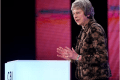
Theresa May’s speech to the CBI: November 19, 2018
VIDEO: Theresa May speaks to the CBI on November 19, 2018
Copyright: Confederation of British Industry and BBC
Transcript of Theresa May’s speech to the Confederation of British Industry, November 19, 2018
INTRODUCTION: “Thank you very much. It is a pleasure to be back with the CBI again.
Let me start by thanking Carolyn for your leadership of the CBI as Director General.
And also welcome John Allan, who has taken up his role as President since I last addressed you.
I know John from his time on the Home Office Supervisory Board and I know he will make a fantastic contribution as President.”
SPEECH: “There is one paramount issue facing our country at the moment, and I know it is the number one concern of the CBI, so let me get right to it.
Last week the Cabinet agreed the terms of the UK’s withdrawal from the European Union.
We also agreed a draft outline of the political declaration on the future relationship between the UK and the EU.
Both documents were the result of many hours of negotiation between the United Kingdom and the European Union.
Together they represent a decisive breakthrough – but they are not the final deal.
We now have an intense week of negotiations ahead of us in the run-up to the special European Council on Sunday.
During that time I expect us to hammer out the full and final details of the framework that will underpin our future relationship and I am confident that we can strike a deal at the council that I can take back to the House of Commons.
The core elements of that deal are already in place.
The Withdrawal Agreement has been agreed in full, subject of course to final agreement being reached on the future framework.
That Agreement is a good one for the UK.
It fulfils the wishes of the British people as expressed in the 2016 referendum.
I have always had a very clear sense of the outcomes I wanted to deliver for people in these negotiations.
Control over our borders, by bringing an end to free movement, once and for all.
Control of our money, so we can decide for ourselves how to spend it, and can do so on priorities like the NHS.
Control of our laws, by ending the jurisdiction of the European Court of Justice in the United Kingdom and ensuring that our laws are made and enforced here in this country.
Getting us out of those EU programmes that do not work in our interests, like the Common Agricultural Policy and Common Fisheries Policy.
And that is exactly what we are going to deliver.
Let me say a little more about the first of those items – getting back full control of our borders – because I know that is an issue of great importance to the British people.
The United Kingdom is a country that values the contribution that immigration has made to our society and economy over many years.
And in the future, outside the EU, immigration will continue to make a positive contribution to our national life.
But the difference will be this: once we have left the EU, we will be fully in control of who comes here.
It will no longer be the case that EU nationals, regardless of the skills or experience they have to offer, can jump the queue ahead of engineers from Sydney or software developers from Delhi.
Instead of a system based on where a person is from, we will have one that is built around the talents and skills a person has to offer.
Not only will this deliver on the verdict of the referendum. It should lead to greater opportunity for young people in this country to access training and skilled employment.
And we want an immigration system for the future that everyone can have confidence in.
Yes, a system that works for business. One that allows us to attract the brightest and the best from around the world, more streamlined application and entry processes. And we are already taking action in that regard, introducing the use of e-gates for visitors from the USA, Japan, Australia, New Zealand, and Canada.
But it also needs to command the confidence of the public by putting them in control of who comes to this country.
That is what I am determined to deliver, and I look forward to working with you to achieve it.
So now we have agreed the Withdrawal Agreement it is important that we focus on the new relationship we want to build with the EU.
And that new relationship must set us on the path to a more prosperous future.
To do that, it needs to work for jobs right across our economy.
Because we are not talking about political theory, but the reality of people’s lives and livelihoods. Jobs depend on us getting this right.
And what we have agreed unashamedly puts our future economic success, and the livelihoods of working families up and down this country, first.
So we have agreed a transition period, to avoid a cliff-edge for business and to provide the certainty you need to invest.
On goods, the outline future framework agrees to the creation of a comprehensive free trade area with the EU, our biggest and nearest goods market.
Zero tariffs, no fees, charges or restrictions across all goods sectors, with an ambitious customs arrangement that respects both sides’ legal orders.
That is what our businesses need, and that is what my deal will deliver.
That is the right thing for the future of our country. Because while the world is changing fast, our geography is not.
Europe will always be our most proximate goods market and ensuring we have free-flowing borders is crucial. Skilled jobs rely on it.
Take the automotive industry. Since 2010 our manufacturing output has increased by 9%, but in auto manufacturing the growth has been 60%.
Nissan in Sunderland. Jaguar Land Rover in Coventry. Alexander Dennis in Falkirk. Honda in Swindon. Vauxhall at Ellesmere Port. Wrightbus in Ballymena.
These firms support tens of thousands of jobs – both directly and indirectly. Often they are at the heart of their local economies.
All rely on parts being able to flow across borders to support just-in-time supply chains.
The same is true for our food exporters and our supermarkets.
The deal proposed will work for all of them and sustain the livelihoods they provide to working people across the UK.
But the method that works best for goods would not be the right one for services and investment.
A world being made ever smaller by changes in technology presents different opportunities in the services sector, and that requires a different approach.
Because the UK is not just a European hub but a global hub for services – and our future success depends on us continuing to be so.
So we have agreed with the EU to negotiate a trading relationship in services more ambitious than any existing free trade agreement.
It will deliver a level of liberalisation that goes well beyond WTO terms.
All modes of supply will be covered and it will remove substantially all discrimination in the sectors it covers.
Regulatory autonomy will be preserved, but we will each ensure that our approaches are transparent, efficient and compatible as far as possible, doing all we can to avoid unnecessary regulatory requirements.
We will make appropriate arrangements on professional qualifications and right across the board – in digital, in financial services, in intellectual property, in transport, in energy – the agreement provides the certainty businesses need.
For the safety of all our people we have ensured that our close security and intelligence co-operation with the EU will carry on.
And for our whole economy, we have worked hard to deliver a deal that put jobs and livelihoods, prosperity and opportunity first.
That is what Brexit should be all about – getting a good deal that unlocks the opportunity of a brighter future for this country and all our people.
Over the last eight years, our economy has been transformed and we approach Brexit from a position of recovered strength.
Our public finances are in the healthiest state for a decade, with the deficit down by four fifths and our debt as a share of the economy now falling.
And businesses have continued to show their confidence in the British economy.
Last month Amazon announced that it would be opening a new office in Manchester, and they have plans to create 1,000 research and development jobs across the country.
Rolls-Royce announced 200 new jobs at their head office and manufacturing plant at Goodwood.
British firms won contracts worth £1 billion to support Royal Navy ships, supporting over 700 jobs.
And in September I was at a Zero Emissions Vehicles Summit, where industry announced over £500 million of investment that will create 1,000 jobs across the UK.
And today Equinix have announced a further £90 million investment in a new data centre to service growing demand for digital financial services in the City of London, bringing their total UK investment to £295 million this financial year – a vote of confidence in its future as the world’s premier financial hub.
But the most striking economic success story of the last few years has been the jobs miracle that sound economic management has delivered since 2010.
Youth unemployment has almost halved.
More disabled people in work than ever before.
The female unemployment rate has fallen to a record low.
And 1,000 more people have found work every day.
Last week we saw some more excellent employment numbers.
A record number of people are now in work – 350,000 more than a year earlier.
Over three million more since 2010.
And wages rose by 3.2%, the biggest rise in a nearly a decade.
Now I never forget what is behind those numbers: not figures on a spreadsheet – but real people.
It is the young person who has left school or college and swapped their pocket money for a wage they earned themselves by their own hard work.
They might still be living at home, and can afford to give their parents a little each week towards their board. And maybe even start saving for a place of their own.
It might be a parent, who is moving off benefits and is able to provide a better quality of life for their family. They could be able to take their first foreign holiday or get a new car.
Or an older person, who may have given up hope of ever working again, but who accessed training, learnt new skills, and now feels the rush of pride that comes with being able to make a contribution and be part of a team again.
Or someone with a disability, who has faced their whole life being told they didn’t have anything to offer in the workplace, who has been helped by the DWP’s Disability Confident scheme to access a new opportunity.
That’s the difference that having a job can make; it can provide a sense of purpose and dignity on which a happy life is built.
That is what businesses like yours provide to millions of people across the United Kingdom every day.
It is why starting a business, growing a business, and keeping it thriving and successful are some of the most socially responsible things you can do in life.
And it is why the deal we will strike with the EU has securing jobs and prosperity at its heart.
Now I got into politics to help people who want to work hard and do their best to have a fair shot and the chance to get on in life.
And I know that businesses have an essential role to play. Business can and should be a force for good in our world.
But at a time when many are questioning whether free markets and an open trading economy can work for everyone in society, business need to do more to win that argument.
It is not just a job for politicians: all of you must play your part too, by stepping up to demonstrate that you truly have a stake in the success of this country.
The very best way of doing that is by investing in the future of the next generation by giving them a chance to develop their skills and begin a rewarding career.
And the government will work with you every step of the way.
When I first became Prime Minister I immediately identified the need for government to step up and be much more engaged in shaping our economy to be ready for the challenges of the future – and so we set about developing our new Modern Industrial Strategy.
At a time of great change and technological transformation as we pass through a fourth industrial revolution governments have to think and act strategically, in partnership with business, to strengthen the foundations of productivity and build up our comparative advantages.
That means investment in our traditional physical infrastructure – roads, rail, air, and now also broadband and this government is doing that with record investment.
But for the UK it is also about our knowledge infrastructure and our human talent too.
So I want to harness the power and expertise of businesses to transform our skills base and drive up our productivity in the years ahead.
We have some of the best universities anywhere in the world, and after eight years of Conservative education reform, our schools are scaling new heights of achievement.
But technical education has not kept pace.
So we are transforming it in England through a programme of major and lasting reform.
High-quality T-levels will stand alongside A-levels as gold-standard qualifications – backed with an extra £500 million a year once fully rolled out.
They will represent a step-change in quality and ambition for technical education.
The average hours a young person spends learning on their vocational course will increase by over 50%: from 600 hours per year to over 900 hours per year.
There will be a clear route into higher-level technical training and apprenticeships, supported by a reformed apprenticeship levy.
New Institutes of Technology across England will help deliver T-levels, serving key sectors in their locality and helping to drive growth at a local level.
A crucial aspect of the new qualifications will be a high-quality industry placement to help young people gain the experience employers need.
Businesses will play a crucial role in delivering these placements, and I want every business leader here to think hard about what opportunities your company can offer to a young person to join your team for up to three months.
For them, it could be an amazing opportunity to build their skills, learn from your team, and test out what they have learned in an industrial environment.
For you it is an opportunity to build the pipeline of skilled young people coming into your industry – broadening and deepening your skills base.
And it is a chance to demonstrate your commitment to the communities in which you do business. And there is much more that business can do.
By investing in research and development you can help the UK become the ideas factory of the future, leading the world in new technology, turning scientific breakthroughs into economic rewards.
The government has set an ambitious target of increasing the UK’s R&D spend to 2.4% of our national income. Government is doing its bit to achieve that – but we will only succeed if business steps up and plays its part too.
In the budget last month we increased the annual Investment Allowance from £200,000 to £1 million – it is now for business to make full use of it.
By doing more to ensure greater fairness and diversity in the workplace, tackling the gender pay-gap, improving BAME representation in the workforce, you can tap into new talent and help restore faith and confidence in business as a great force for social progress.
As the gig economy expands, you can ensure that all workers are treated fairly and decently.
The CBI is a great partner and champion in making the case for this positive and forward-looking approach.
And in all of this, government will be your staunch ally.
We all believe in business as a force for good – and I want everyone here to work with me to make the most of the opportunities that lie ahead.
And those opportunities are real and substantial.
The key to unlocking them is getting a good Brexit deal agreed and delivered over the next few weeks.
That is my focus. My job is to get the best deal. Parliament must then examine it and do what is in the national interest.
And I know what that deal needs to do.
Deliver on the referendum vote by giving us control of our borders, laws and money.
Get the UK out of the Common Agricultural Policy and the Common Fisheries Policy.
Set us on course for a prosperous future where livelihoods are protected, our security is maintained, and our Union secured.
It was never going to be easy or straightforward.
And the final stage was always going to be the toughest.
But we have in view a deal that will work for the UK.
And let no one be in any doubt – I am determined to deliver it.
Thank you.”
Transcript courtesy of gov.uk

Theresa May: United Nations Speech September 2018
UK Prime Minister speech to the UN General Assembly: September 26, 2018
Prime Minister Theresa May spoke on behalf of the UK at the UN General Assembly 2018
Transcript
On behalf of the United Kingdom let me begin by paying tribute to an outstanding leader of this United Nations, who sadly passed away this summer.
Kofi Annan was one of the great Secretaries General, a tireless campaigner for peace and progress, and a champion of human rights and human dignity – whose influence will continue to be felt around the world for years to come.
Over the course of his lifetime he witnessed the extraordinary progress that we as a community of nations have made since this organisation was founded.
Progress in which we have more than halved the number of people living in extreme poverty in this century alone.
Progress in which the number of people killed in conflicts has fallen by three-quarters in just over three decades.
And progress in which millions of our citizens lead healthier and longer lives and where – thanks to advances in human knowledge – in medicine, in science and in technology – we are presented with huge opportunities in the years ahead.
Yet today – many are concerned about whether this progress will continue, and fearful about what the future holds.
For the end of the Cold War did not – as many once believed – lead to the inevitable supremacy of open economies and liberal democracies co-operating on the global stage for the common good.
Today instead we face a loss of confidence in those very systems that have delivered so much.
The belief in free markets has been challenged by the financial crisis of 2008, by the concerns of those feeling left behind by globalisation, by the anxieties about the pace and scale of technological change and what that will mean for jobs, and by the unprecedented mass movements of people across borders with all the pressures that can bring.
And after the military interventionism at the beginning of the century, people question the rationale – and indeed legitimacy – of the use of force and involving ourselves in crises and conflicts that are not ours. While at the same time being repelled by the slaughter in Syria and our failure to end it.
These doubts are entirely understandable. So too is the demand for leadership. So those of us who believe in inclusive societies and open economies have a duty to respond: to learn the lessons of the past, to meet people’s concerns with practical actions not beguiling illusions and to renew our confidence in the ideas and values that have done so much to benefit so many for so long.
For be in no doubt, if we lack the confidence to step up, others will.
In the last century – whether in the rise of fascism or the spread of Communism – we have seen those on the extreme right and extreme left exploit people’s fears, stoke intolerance and racism, close down economies and societies and destroy the peace of nations. And today once more we see worrying trends in the rise of these movements in Europe and beyond.
We have seen what happens when countries slide into authoritarianism, slowly crushing the basic freedoms and rights of their citizens.
We have seen what happens when corrupt oligarchies rob their nations of the wealth, resources and human capital that are so vital to unlocking a brighter future for their citizens.
We have seen what happens when the natural patriotism which is a cornerstone of a healthy society is warped into aggressive nationalism, exploiting fear and uncertainty to promote identity politics at home and belligerent confrontation abroad, while breaking rules and undermining institutions.
And we see this when states like Russia flagrantly breach international norms – from the seizing of sovereign territory to the reckless use of chemical weapons on the streets of Britain by agents of the Russian GRU.
We have to show there is a better way to meet the concerns of our people.
That way lies in global cooperation between strong and accountable states based on open economies and inclusive societies.
That ensures strong nation states provide the bonds that bring citizens together and ensures power remains accountable to those it is there to serve.
That celebrates free markets and has the confidence to reform them when they need to work better.
And that demonstrates that delivering for your citizens at home does not have to be at the expense of global cooperation and the values, rules and ideals that underpin this.
Indeed cooperation and competition are not mutually exclusive.
Only global cooperation based on a set of agreed rules can ensure competition is fair and does not succumb to protectionism, with its certain path to lost jobs and international confrontation.
And it is only global co-operation which can harness legitimate self-interest towards common goals, producing agreements on global challenges such as climate change, proliferation and increasing inclusive economic growth.
We see this cooperation here today at this UN, as we also saw it at the Commonwealth Heads of Government meeting earlier this year.
And here today – as Chair-in-Office of the Commonwealth – I deliver a clear statement on behalf of the Heads of Government of its fifty-three equal and independent member states. We reaffirm our shared commitment to work together within a rules based international system to address shared global challenges and foster a fairer, more secure, more sustainable and more prosperous future. This commitment takes account of the special requirements of least developed countries, and of small and otherwise vulnerable economies, and it benefits all our citizens and the wider world.
But it is not enough for us merely to make the case for cooperation. We need action, at home and in the community of nations, to show how our ideas and values can deliver practical benefits for all our people in all parts of the world.
We must recognise the legitimacy of people’s concerns and act to build a global economy that works for everyone.
We must invest in the patient work of building open societies in which everyone has a stake in the future.
And we must act to uphold the international rules based system – and stand up for our values by protecting those who may suffer when it is violated.
Let me take each in turn.
First, we must respond to those who feel that the global economy is not working for them.
The pace of globalisation that has left too many people behind.
The fear that our children and grandchildren may lack the education and skills to secure the jobs of tomorrow.
And the risk that technological change could become a source of inequality and division rather than the greatest opportunity in history.
In the UK we are driving investment in industries of the future to create new jobs – from low-carbon technologies to Artificial Intelligence.
We are investing in education and skills so that workers are ready to make the most of the opportunities that lie ahead.
And we are making sure people play by the rules – so that business and innovation is celebrated for creating jobs not demonised because of grievances over tax not paid or rights not respected.
And while we strive to make our own economies work for all our people – we should do the same at a global level.
In an increasingly global economy, it is not enough to ensure people play by the rules at home.
We need global co-operation to set and enforce fair rules on trade, tax and the sharing of data.
And these rules need to keep pace with the changing nature of trade and technology.
So we need to give the World Trade Organisation a broad, ambitious and urgent mandate to reform. This must address the areas where it is not functioning effectively; deal with issues that are not currently covered; and maintain trust in a system which is critical to preventing a return to the failed protectionism of the past.
Fair and respected rules are essential for business to flourish and drive growth. But recent history shows that this cannot be sustained without deeper partnerships between governments, business, international financial institutions and civil society to ensure that growth delivers for everyone.
That is why I recently visited Africa – along with British businesses – to promote trade and investment, and encourage a new partnership based on shared prosperity and shared security.
It is why at this General Assembly I co-hosted an event with Prime Minister Trudeau, Prime Minister Kagame and President Akufo-Addo calling for more support for investment and job creation for young people in the continent.
It is why the United Kingdom will maintain our commitment to spend 0.7 per cent of gross national income on official development assistance. And we will put our development budget at the heart of our international agenda, and do more to create jobs, improve skills and increase investment in emerging economies – in both our interests and theirs.
For the best way of resisting protectionism is to ensure that this century is defined by open markets that really deliver for all our people.
Second, we must build countries, not only economies, that work for everyone – inclusive societies where every citizen has a stake in the future.
These are the firm foundations on which strong and accountable nations are built. And history has consistently taught us that giving people a stake in society is the best way to ensure stability, security and economic growth.
There is no one right way to do this.
Every country must choose its own path.
But the basic tenets are common across the world.
They include a government that is transparent and accountable.
An independent judiciary to enforce the rule of law.
Free and fair elections and a free and open media.
The freedom of expression, a right to redress and property rights that are reliably enforced.
And equality, freedom of thought, opinion, religion and conscience – all found in the United Nations Universal Declaration of Human Rights, signed 70 years ago.
Those of us who believe in these tenets must set an example in defending and strengthening them at home and abroad.
That is why we must call out hate speech, anti-Semitism, Islamophobia and all forms of prejudice and discrimination against minorities wherever we find it.
Like many leaders, I suspect, I do not always enjoy reading what the media in my country writes about me. But I will defend their right to say it – for the independence of our media is one of my country’s greatest achievements. And it is the bedrock of our democracy.
So too, will I defend objectivity and impartiality in the face of those who treat truth as just another opinion to be manipulated.
This challenge has only become more complex with the rise in social media, and online information. That is why we agreed at the G7 Summit in June to step up our efforts to respond to disinformation. And why, together with our partners, and with tech companies, we are leading efforts to reclaim the internet from terrorists and others who would do us harm.
And just as we must stand up for the values that we adhere to, so we must support countries and leaders who choose to take the often difficult steps towards a more inclusive society.
The United Kingdom will use all the levers at our disposal to do so.
Through our aid budget and commitment to the Sustainable Development Goals we will not only protect the most vulnerable but also bolster states under threat and help others sustain their progress.
Through global campaigns we will help countries to end scourges such as modern slavery and sexual violence in conflict.
And we will mobilise wider support through our alliances and membership of multilateral organisations – not only the UN, but also international financial institutions, the G7, the G20 and NATO.
And just as there is no single recipe for an inclusive society, so there is no single model for balancing the democratic demands of our public with the imperative to co-operate internationally.
The vote by the British people to leave the European Union was not a rejection of multilateralism or international co-operation. It was a clear demand for decisions and accountability to lie closer to home.
I believe the role of leadership in these circumstances is clear: it is delivering on the democratic wishes of our people and international cooperation working with allies and partners in pursuit of our shared values.
Third, we must have the will and confidence to act when the fundamental rules that we live by are broken.
This is not about repeating the mistakes of the past by trying to impose democracy on other countries through regime change.
But we should not allow those mistakes to prevent us from protecting people in the face of the worst violations of human rights and human dignity. We should not allow those mistakes to paralyse the international community when its long-established norms are violated. And we should not let our inability to prevent some of the worst conflicts today stop us from making every effort to ensure they do not happen again in the future.
For if we stand back, we allow the world to become divided into spheres of influence in which the powerful dominate the weak, and in which legitimate grievances go unaddressed.
This is not just a moral imperative. It is also a matter of self-interest. For when barbarous acts and aggression go unchecked – dictators and terrorists are emboldened.
So, we must have the confidence to act.
When the Syrian Regime used chemical weapons on its people again in April, it was Britain together with France and America who took military action to degrade the Syrian regime’s chemical weapons capability and deter their use.
And when earlier this year, Russia used a toxic nerve agent in a sickening attack on the streets of Salisbury, the UK with our NATO, EU and other allies took action, expelling over 150 Russian intelligence officers: the largest collective expulsion ever.
In Burma, following the damning report of the United Nations fact-finding mission, we should show the same confidence to hold accountable those responsible for the appalling atrocities repeatedly inflicted by the Burmese military on the Rohingya, Shan and Kachin peoples since 2011.
Similarly we should gather evidence of Daesh’s crimes worldwide, so ensuring justice for their victims and deterring those who might conduct such crimes in the future.
But accountability alone is not enough. We must do more collectively to prevent such atrocities in the first place, and address the causes of instability that can give rise to them.
The United Nations has a critical role to play. And it has a wide range of levers to do so from sanctions – which show the leaders of Iran and North Korea that they cannot act without consequence – to peacekeeping missions such as that in South Sudan, which is helping to prevent suffering and the collapse of law and order.
But to be able to draw effectively on these levers, the Security Council must find the political will to act in our collective interest. The UN’s agencies must deliver the reforms that the Secretary General has started – to become more agile, more transparent and better coordinated on the ground. And to support these reforms, we must also ensure proper funding is targeted specifically at those parts of the UN that deliver results.
70 years ago the General Assembly agreed the Universal Declaration of Human Rights. Today we must renew the ideals and values on which that Declaration was founded.
In doing so, we must learn the lessons of the past and show through our actions how co-operation between strong and accountable states with open economies and inclusive societies can best deliver security and prosperity for all our people.
As Kofi Annan said at the start of his second term as Secretary General: “I have sought to turn an unflinching eye to the failures of our recent past, in order to assess more clearly what it will take for us to succeed in the future.”
In that spirit, let us show unflinching resolve to renew the promise of freedom, opportunity and fairness.
A promise which has delivered for more people, in more places than at any other period in our history.
And let us ensure that promise can be fulfilled for our children and grandchildren – and for every generation to come.
Thank you.
Published 26 September 2018
Transcript courtesy of GOV.UK

Jacob Rees-Mogg speech at Churcher’s College – January 25, 2018
Below is the transcript of a speech given on the state of the current EU negotiations by the Head of the European Research Group, Jacob Rees-Mogg MP, at Churcher’s College, Petersfield, 25th January 2018
“First of all thank you very much for inviting me here. I am delighted to be the guest of Helen Jolliffe, who is a great family friend and Godmother to my second son, Thomas. Helen is a wonderful godmother so when she asked me to come I was really honoured to be invited and accept.
It is also very appropriate that I should be speaking at Churcher’s College because, as you know, it was founded in 1722 by Richard Churcher to educate local boys in the skills needed for service in the Merchant Navy.
This ties in with the subject of this evening’s talk ‘The UK in a post-Brexit World’ because this country has such a history of being a trading nation. The Merchant Navy goes back into the mists of time, trading with foreign nations. It is, therefore, wonderful to think how ambitious we were in 1722 to be setting up a school to ensure that those skills were available.
We want to be doing the same now. We want to have a bigger ambition for the 21st Century than people like Mr. Churcher had for the 18th Century. There is a great Brexit opportunity and some really obvious benefits that we can get that improve the condition of the people.
This is currently at risk. The negotiations that are about to begin sound as if they aim to keep us in a similar system to the Single Market and the Customs Union. ‘Close alignment’ means de facto the Single Market, it would make the UK a rule taker like Norway, divested of even the limited influence we currently have.
90% of global trade growth is expected to come from outside the EU but we would be tying ourselves to a system that seeks to protect the current declining status quo, rather than engaging with the challenge of the next generation.
Conformity with EU rules will also prevent us from making meaningful trade deals with other nations where we could secure reduction of the non-tariff barriers and regulatory distortions which are often worse than the tariffs. They impose such high regulatory burdens on importers that no-one bothers and they are not there for either safety or scientific reasons but for protectionist ones. No sensible nation would negotiate with the UK for a marginal gain when we would merely be a vassal of the EU.
The Customs Union is worse. It protects industries that we often do not have and helps continental producers on the back of UK consumers. The EU-funded CBI, that lover of vested interests, wants it to favour inefficient encumbrance against poor consumers. Whether it is ‘a’ or ‘the’ Customs Union it is a protectionist racket that damages the interests of the wider economy.
This would deny us some of the early Brexit advantages which relate so much to trade, to the ability to trade freely. Economic arguments for one way free trade, let alone for trade deals, are well known. For example, 21% of people’s income is spent on average on food, clothing and footwear. These are the highest tariffed areas in the Customs Union. 11.8% on clothing, 11.4% on footwear. Food is so heavily tariffed and obstructed that it is almost impossible to import.
This hits most on the poorest in society, the poorest who spend an even higher proportion of their income, even above the 21%, on food, clothing and footwear. The first gain that we can have is by removing all the tariffs on those goods which the UK does not produce thus giving a real terms income boost, most of all to the poorest in our society. To that group of people who Theresa May spoke about during her famous speech on the doorstep of Downing Street when she had just kissed hands and become Prime Minister. Just the people that Mrs. May wanted to help. I think Mrs May’s words were inspirational and should underpin what the Government does.
The United Kingdom, though, should be more ambitious than this and take the benefits of the best regulatory models and then challenge for global technological leadership. We know from Mr. Churcher in 1722 that we have long been one of the World’s great trading nations.
Despite our relatively small geographic size we are still the second biggest exporter of services and one of the largest foreign investors, the United States being first in both cases. We are also an open and welcoming nation not least to foreign investment. We have both a large stock and regular inflows of foreign investment coming into this country, by some measures second only again to the United States and even bigger than China (excluding Hong Kong and Macau).
Such a nation should take responsibility for its own future and become a role model for the rest of the world. Already two of our universities are the best in the world. We have a high tech sector and are the site of the world’s premier financial centre. We must build on this comparative advantage in the knowledge economy. Surely we must become an innovative hub, a centre and driver of the world’s technological advance.
To do this we must ensure that our regulatory system promotes competition on its merits and thus enterprise. We should succeed or fail based on the quality of our ideas and our capacity for hard work, not on the ability to lobby the Government to get regulations or laws to obstruct competitors. Our system cannot be tied to regulations that stifle innovation.
At the moment the UK, in the European context, is the best of a bad bunch. Europe lags far behind other comparable regions in the Global Entrepreneurship Monitor’s ranking of the rate of business start-ups. All we manage is to be the best in a sclerotic Europe. Compared to the dynamism of the United States and Asia the UK has a long way to go to translate its brainpower, its little grey cells, into entrepreneurial companies.
To build this capacity is to make our nation ready for the next hundred years. In the future there will be a premium on creativity and judgement, in industries that rely on intelligence as opposed to pure manufacturing. The jobs that people, as opposed to Artificial Intelligence, will do will be in precisely the space where Britain has the greatest advantage.
This does not mean a nation of computer scientists. Innovation and creativity can be applied to the leading edges of any industry and it is these leading edges that Britain is in a position to capture. In a truly competitive, enterprise environment no one can know precisely what those industries are. Our success will depend on our ability to capture the most valuable parts of increasingly complex supply chains.
An example of this is the iPhone. iPhones are manufactured in China but the value is added by the research and marketing being done in the US which reaps the bigger advantage. Consequently, China sees only 6% of the value created.
As I said, we do not know precisely where these areas will be but it will always be important. Interestingly, New Zealand, which produces only 3% of the world’s milk, controls 30% of the value of the global dairy market. It is not just high tech areas that will be dependent upon this knowledge economy. It is even in traditional areas such as agriculture.
Taiwan has developed a system of growing vegetables in a water solution rather than soil using a patent formula of antagonist micro-organisms which boost production with low nitrate levels. It wants to develop this in York and should be encouraged to do so.
Unfortunately, in the United Kingdom there are barriers which may prevent us getting to this bright future. First, the UK-EU relationship may continue to tie the UK to the kind of regulatory framework which has made Europe so inefficient. This would be bad for the economic environment in the UK but it would also be bad for the ability of the country to deal with other, faster growing nations.
A classic example of this is data. If the UK were tied to the European approach to data protection and data flow – a very restrictive one – it will limit the ability of our country to embrace the fourth industrial revolution: big data and all that this offers. Without data flow none of those applications are possible.
It is all very well for UK Ministers to extol the virtues of artificial intelligence and high tech as they are doing now almost, as we speak, amongst the panjandrums in Davos. But no one will take them seriously if they do not have the ability to set their own regulations in this area. The European regulatory system is simply not conducive to the development of entrepreneurial companies. Those companies will continue to come from the United States and Asia. For the UK to be active in this area it needs regulatory autonomy. As Michael Gove has put it: the EU is analogue in a digital age.
Second, the UK must be in a position to encourage pro-competitive behaviour across the globe. Highly developed agreements like the Trans-Pacific Partnership (TPP) represent the blueprint for trade discussions in new areas involving services that rely on the cross border supply of data.
It is noteworthy that the EU was unable to agree to cover new services like these in CETA whereas the TPP members were. In order to do this the UK must be able to determine its own regulatory system and negotiate freely with others.
Third, contracting trade deals is difficult and requires great flexibility. Any restrictions, such as the EU having an effective veto on UK changes of regulation or the UK instantly losing access if there were any deviation without some pre-agreed mechanism to manage divergence, will take the UK out of the negotiating game.
Other countries would not think it was worth their while to discuss trade deals with us. We would merely appear to be a mini-me version of the European Union and thus be of no interest to other countries.
There are disturbing signs that the EU’s position on a host of internal market distortions will mean that it is unable to play in this new world. These are data flow, prescriptive regulations like REACH chemicals regulation, the precautionary principle in agriculture, local content rules in broadcasting which are mainly there to protect unwatchable French films.
In addition to being unable to discuss new services involving data flow in CETA it could not discuss them in the Trade in Services Agreement in the WTO either. A plurilateral agreement that like-minded countries agreed in order to improve trade in services around the world.
This prompted the Americans to question why the EU were in the discussions in the first place. Why were it there if it were not willing to do anything? For the United Kingdom, dependent as she is on our service exports and the creation and realisation of ideas, it would be foolish indeed to put our future into such constrained hands.
If the UK can achieve the independence necessary it can become a rule-setter in the world. It can export with its trading partners ideas about how best to create a governance structure that will spur innovation and enterprise. Its future can be true to its history.
As I said, encapsulated in this College, it is vital to ensure that competition, not cronyism, determines the future prospects of our citizens. Competition allows aspirational societies to be formed where people truly believe that they succeed or fail on their own merits and not some crony interest.
Britain’s success as a nation can be attributed to the application of this competitive principle. It has been translated through free trade and free markets and has allowed people to come together to meet each other’s needs in voluntary exchange.
We have reached the portals of tremendous possibility. If the UK is to execute an independent trade policy then it can play a role in ensuring that there is an injection of wealth into the global economy. This will improve the lot of all mankind and we, the British people, will be propelled forward on this rising tide.
To paraphrase Pitt the Younger we will have saved ourselves by our exertion and we will have saved the world by our example. If, on the other hand, this possibility is taken off the table then Brexit becomes only a damage limitation exercise. The British people did not vote for that. They did not vote for the management of decline. They voted for hope and opportunity and politicians must now deliver it.
If we do not, if we are timid and cowering and terrified of the future, then our children and theirs will judge us in the balance and find us wanting. ‘Mene, Mene, Tekel, Upharsin’ – as the writing on the wall said at the feast of Balthazar. We have our future and our destiny in our hands.
To embrace the world boldly with this new policy is not a foolish leap into the unknown. Sometimes the bold move is the safest one. As Sir Walter Raleigh said: “fain would I climb, yet fear I to fall.”
For too long our negotiators seemed to have been cowed by the EU. Their approach seems to be that we must accept what the EU will allow us to do and build from there. This is no way to negotiate and it is no way for this country to behave. We must negotiate from the international trading framework in which both the EU and the UK sit as equal partners, whose provisions govern our behaviour. We must also not confuse the EU’s opening bid with its bottom line, it is not Holy writ. If we came out with our negotiating objectives nobody in Europe would assume these were set in stone.
If the EU and UK, who start out with exact regulatory alignment, cannot agree some mechanism to recognise each others’ regulations and one that manages divergence without the UK being prevented from exercising its independence, then who can? Both sides’ negotiators must not fail here and I am confident that as long as we are strong and negotiate properly they will not.
I have talked about who we can be as a nation. We must also understand our particular role in the world at this critical time. The world’s economic architecture is stuck and the UK is expected by the rest of the world to advocate policies that will release its energy.
There has been no concluded WTO round for twenty-three years, while indicators show that actual industrial output and global trade are stalled. If the UK is unfettered by the deadweight of the EU then it will play a role in jumpstarting the global economic system. This will unblock many initiatives that have been gummed up for too long.
We must never forget that wealth can be created or destroyed, but it is much harder to create than destroy. We are coming to a fork in the road. We can take the familiar path that leads to a gradual erosion of our wealth, our success and ultimately our values, by staying close to the EU and aligning our regulations to theirs.
We could simply manage decline. Or we could take another road that may look to us now like an unfamiliar one. In which case our best days lie before us. From the Agricultural Revolution to the repeal of the Corn Laws to the birthplace of the Industrial Revolution to being co-architect of the post-war system the UK has led the way.
Britain has been called on to be a shaper not only of our destiny but that of the whole world. If we get it right by opening up our markets, seeing the benefits of free trade and regulations that encourage enterprise others will follow. The EU has too many pen pushers to dare, the US is too big to care. Only a medium sized, flexible economy can lead the way and the next great economic revolution should be made in Britain for the benefit of the world.”
Transcript courtesy of The Freedom Association
 Letter to Britain