Home » Posts tagged 'European Union' (Page 8)
Tag Archives: European Union

Brexit: The Path to UK Sovereignty
by John Brian Shannon | August 26 2016

As the UK government gears up to deal with the will of voters, four paths to trade in Europe appear that merit consideration
- EEA membership
- EFTA membership
- WTO rule-based membership, sans EEA or EFTA
- Negotiated trade deals that are none of the above
EEA membership would qualify Britain to trade with other EEA member nations, all of which are located in Europe, but not all are members of the European Union.
From the EEA website:
The EEA Agreement provides for the inclusion of EU legislation covering the four freedoms — the free movement of goods, services, persons and capital — throughout the 31 EEA States. In addition, the Agreement covers cooperation in other important areas such as research and development, education, social policy, the environment, consumer protection, tourism and culture, collectively known as “flanking and horizontal” policies. The Agreement guarantees equal rights and obligations within the Internal Market for citizens and economic operators in the EEA.
What is the EEA Not?
The EEA Agreement does not cover the following EU policies:
- Common Agriculture and Fisheries Policies (although the Agreement contains provisions on various aspects of trade in agricultural and fish products);
- Customs Union;
- Common Trade Policy;
- Common Foreign and Security Policy;
- Justice and Home Affairs (even though the EFTA countries are part of the Schengen area); or
- Monetary Union (EMU).
The Agreement on the European Economic Area, which entered into force on 1 January 1994, brings together the EU Member States and the three EEA EFTA States — Iceland, Liechtenstein and Norway — in a single market, referred to as the “Internal Market”.
Switzerland is not part of the EEA Agreement, but has a bilateral agreement with the EU. You can read more about this agreement on the European Commission website, and on the Swiss Federal Administration website.
EFTA membership governs free trade relations between EFTA States, which in 2016 are Iceland, Liechtenstein, Norway and Switzerland. Britain was a founding member of the EFTA in 1960 until 1973 when it joined the EC. It would need to apply to the EFTA in order to become a member.
From the EFTA website:
The European Free Trade Association (EFTA) is an intergovernmental organisation set up for the promotion of free trade and economic integration to the benefit of its four Member States.
The Association is responsible for the management of:
- The EFTA Convention, which forms the legal basis of the organisation and governs free trade relations between the EFTA States;
- EFTA’s worldwide network of free trade and partnership agreements; and
- The European Economic Area (EEA) Agreement, which enables three of the four EFTA Member States (Iceland, Liechtenstein and Norway) to participate in the EU’s Internal Market.
EFTA was founded in 1960 on the premise of free trade as a means of achieving growth and prosperity amongst its Member States as well as promoting closer economic cooperation between the Western European countries. Furthermore, the EFTA countries wished to contribute to the expansion of trade globally.
Based on these overall goals, EFTA today maintains the management of the EFTA Convention (intra-EFTA trade), the EEA Agreement (EFTA-EU relations), and the EFTA Free Trade Agreements (third country relations). The EFTA Convention and EFTA free trade agreements are managed by the Geneva office, and the EEA Agreement by the Brussels office.
EFTA was founded by the Stockholm Convention in 1960. The immediate aim of the Association was to provide a framework for the liberalisation of trade in goods amongst its Member States. At the same time, EFTA was established as an economic counterbalance to the more politically driven European Economic Community (EEC). Relations with the EEC, later the European Community (EC) and the European Union (EU), have been at the core of EFTA activities from the beginning. In the 1970s, the EFTA States concluded free trade agreements with the EC; in 1994 the EEA Agreement entered into force. Since the beginning of the 1990s, EFTA has actively pursued trade relations with third countries in and beyond Europe. The first partners were the Central and Eastern European countries, followed by the countries in the Mediterranean area. In recent years, EFTA’s network of free trade agreements has reached across the Atlantic as well as into Asia.
EFTA was founded by the following seven countries: Austria, Denmark, Norway, Portugal, Sweden, Switzerland and the United Kingdom. Finland joined in 1961, Iceland in 1970 and Liechtenstein in 1991. In 1973, the United Kingdom and Denmark left EFTA to join the EC. They were followed by Portugal in 1986 and by Austria, Finland and Sweden in 1995. Today the EFTA Member States are Iceland, Liechtenstein, Norway and Switzerland.
World Trade Organization (WTO) membership is perhaps the easiest way forward as Britain (and virtually all nations) are already members and the WTO is merely a standardized set of rules that govern trade between nations.
The present ruleset governing UK trade is the EU ruleset, meaning that who the UK trades with, tariff rates, and other rules and conditions have been decided by 28 EU nations — and not always in the interests of the UK — but in the combined interest of 504 million EU citizens.
The main thrust of this means that WTO rules would continue and that the UK would not be allowed to charge higher tariffs on EU-sourced imports, than what the EU charges on UK imports into the EU. Although the UK could certainly decide to charge lower tariffs than the EU charges. That could be a significant benefit for some UK industries.
There are other benefits to WTO membership. And as most nations are WTO members anyway, the ruleset is well-understood around the world.
In February 2014, the Swiss voted in a referendum to no longer pursue EU membership and left the bloc. The government of Switzerland has therefore negotiated a series of bilateral trade agreements with the European Union AND is a member of the EFTA, but not the EEA.
Of course, WTO rules still apply — unless both parties agree to abrogate or change some of the WTO rulesets.
Keep in mind that both the EFTA and EEA are European trading area agreements and don’t apply anywhere else in the world, while the WTO applies everywhere.
Therefore, non-EU trade will be largely governed by WTO rules (as is the case with most countries) while Britain’s trade with the EU could take several different paths.
Any combination of WTO, EFTA, or EEA, or bilateral agreements that supercede WTO rulesets could be negotiated between Britain and the EU.
At the end of it all, why did 17 million+ voters choose to Brexit?
Two main themes appeared to gain considerable traction during the campaign.
One, the democratic deficit in Brussels, and two, the wholly unregulated movement of people from eastern Europe and the Middle East/Levant and a complete breakdown of the Schengen Area border control system.
Brexit effectively solves the democratic deficit problem in Brussels by returning governance to the House of Commons and the House of Lords. While the mass migration problem is solved as Brexit returns sovereignty of Britain’s borders to the UK government.
The revised EFTA convention (the Vaduz Convention) extends beyond free trade in goods, and includes provisions on free trade in services and the free movement of capital and of persons. None of these should be problematical to the UK given that the Vaduz Convention only applies between its members and so would not act as a gateway for the free movement of persons from the r-EU or elsewhere. All four EFTA states have standards of living comparable to or even higher than the UK so do not present any mass migration risk. — Brexit and International Trade Treaties, The European Free Trade Association (EFTA)
Recommended Read Brexit and International Trade Treaties by Lawyers for Britain
None of this can occur until Article 50 is triggered and a 24 month clock begins ticking to end Britain’s membership in the European Union.
It would be quite wonderful if Prime Minister Theresa May would hold a press conference every six months to inform Britons of the various areas of progress and ongoing obstructions until the Brexit process is complete — a process that could take as long as 5-10 years from the June 23, 2016 start date.
We are in uncharted waters and Britons are excited to be getting their country back. They know it’s going to take time, resolve, and they know full well that there will be difficulties along the path to restoring Britain’s full sovereignty. But the payoff in 5-10 years will be brilliant.
Whatever Britain is now, it’s only going to get better.

Britain: Between Now and Article 50
by John Brian Shannon | July 21, 2016
Until Article 50 is triggered by UK Prime Minister Theresa May thereby setting the stage for exit negotiations from the European Union, it’s tempting to think about what could be accomplished in the meantime.
Making this the time to focus on the reasons 52% of the UK electorate voted to leave the EU and to try and design policies that actually solve their problems. Remember, this is more than half of the UK electorate we’re talking about — not some jolly sods down at the pub having a pint.
A majority of normally complacent voters woke up and decided to vote for real change, and big change.
If Theresa May’s government doesn’t bring positive change they will vote again and Jeremy Corbyn will ride the protest wave into Number 10 Downing Street without needing to utter a word. At that point, the only possible person who could prevent his ascension to the Prime Minister’s office would be Corbyn shooting himself in the foot. And even that might be forgiven.
With that level of motivation in mind, let’s look at what PM Theresa May might reasonably accomplish on the path to meeting the needs and wants of the UK’s frustrated electorate between now and and the day she triggers Article 50 of the Lisbon Treaty locking-in Britain’s choice to leave the European Union with a non-negotiable 2-year deadline.
The geopolitical or geoeconomic reasons for Europe’s economic misfortune are of little importance to UK citizens, what they want are their jobs back!
Therefore, JOB #1 for Theresa May must be to create as many jobs as possible in the shortest timeframe — and not minimum wage jobs.
The question is: How to do that?
(Easy) PM Theresa May must send her senior ministers to every Commonwealth of Nations member country in a fact-finding and job-creation mission, and also to invite every organization in those countries to move their headquarters (or a branch office) to Britain where the goal of ‘jobs for Britons’ will be the underlying motive.
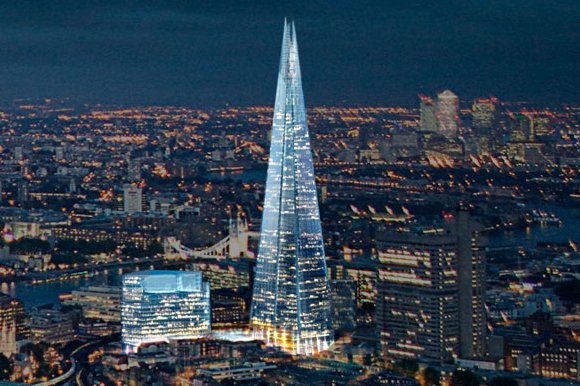
Choose a prestigious address in Britain for your organization. www.the-shard.com
Q: What prestigious organization doesn’t want a London address? A: They all do!
They simply, but profoundly, need assistance from a “Welcome to Britain!” department of the UK government designed to cut through red tape and facilitate on behalf of those organizations wishing to add a prestigious London address to their brag list.
If the city of London real estate is deemed too expensive for some organizations, do we know the selling points of other UK cities? ‘Find that now, Smithers.’ And then advertise the virtues of those particular cities, as well as the virtues of London real estate.
Every company listed on a stock market anywhere in the world, startup, and every NGO must receive a sincere invitation from Britain’s government to do business in the UK, with plenty of follow-up, and they must be guaranteed a streamlined process. No amount of hand-holding should be considered too much for organizations willing to create more than 25 UK jobs.
A flashy and informative website “RelocateToUK.co.uk” with a toll-free number; “Want to relocate your business to the UK? Call the Prime Minister’s office now at 1-800-GroYourBiz” (or whatever) must be prominently advertised around the globe on everything from cruise ships to telephone booths, on transport trucks, buses, and on passenger and cargo aircraft.
The Commonwealth of Nations comprises 53 nations with a total population of 2.3 billion people. Therefore, sending out one cabinet minister per month is simply not going to cut it.
I’d send one cabinet minister off every 3 days to various Commonwealth nations, telling them as they leave, “Don’t come back until you’ve got firm commitments for a minimum of 1000 UK jobs, or a billion pounds sterling FDI.” And if they don’t come back, they were deadweight anyways.
If Theresa May sets the bar too low then only a few UK jobs will be created — but by setting the bar and career rewards high, thousands of jobs will be created and high and regular inflows of FDI will become the norm rather than the exception.
This must be ongoing for the next 10 years, it can’t be a one-time flurry of activity.
With 2.3 billion people in the Commonwealth(!) failure to bring home 1000 jobs, or 1 billion pounds sterling in FDI per week, should result in termination of the minister’s employment. But done right, it should be easier than a walk in the park.
India alone should represent a minimum of 5% of UK GDP. And if not, we’re doing it completely wrong.
This has got to be JOB #1 for the government until a stable unemployment rate of 2.5% is reached. Hey! The very survival of Britain is at stake. No lollygaggers.
(Easy) Mandatory job-sharing legislation written and passed by September, 2016.
Those not counted as workers (students/retired/independently wealthy) aren’t eligible to access the job-sharing scheme. But for workers, every worker in the UK must be guaranteed a job for a minimum of 6 months per year — thereby accumulating enough work hours guaranteeing them (hassle-free) unemployment insurance for the remainder of the year.
Hence, workers are either ‘working’ or ‘receiving guaranteed unemployment insurance’ with no ‘other’ category for workers.
And not one worker left behind on social welfare, NOT ONE!
Some employed people may receive layoff notices in order to make room for those who’ve yet to work a full 6 months in the calendar year. As long as they have their guaranteed unemployment insurance benefits to fall back on, that is the sacrifice that they along with everyone else must make in order to forge ahead and out of the present economic moment. And within 6 months they’ll simply return to their previous job. No drama necessary.
Sweden has operated a job-sharing scheme (through it’s unions) for decades, and it has been a stunning success and although Swede’s tend to keep their successes to themselves you can read more about this fascinating programme here; In Sweden, Nobody Sleeps in Dumpsters
(Medium) The economic models of Norway and Sweden are very interesting models indeed, for instead of low tech/low risk/low reward, complete with millions of manual labourers that must be kept busy (the ‘Low Economic Model’) the Nordic workforce is primarily made-up of high tech/high demand with a distinctly export-oriented focus (the ‘High Economic Model’)
With the relatively high sterling, the Low Economic Model just won’t work. Rather, the UK must rapidly complete the move to a high tech/high demand export-driven economy.
If we look at the Taiwan experience; That country had little in the way of natural resources save for a massive hydro-electric dam and smallish fishing and forestry resources.
It was a country that was destined to mediocrity, until one day a very smart person decided that Taiwan would become the world’s #1 supplier of computer chips.
Everyone laughed. But the rest is history. From next-to-no-resources and a then mostly unskilled workforce, Taiwan now ranks as one of the seven economic wonders of the world.
It turns out that Taiwan’s #1 resource was it’s people, once it switched to the High Economic Model.
The UK government must adopt a similar mindset and act as facilitator to UK companies, encouraging them towards massive high tech, high value and high demand exports.
Artists that create multi-million dollar art installations around the world must be near the top of that list. Maybe ‘give them Soho’ at a special low property tax rate to set up their galleries and headquarters.
Similar should be done with the world’s top architectural firms. They too should be cordially invited to a special low tax zone part of London where they can design and build the office tower of their dreams in order to showcase their design talents.
Do you like billion dollar movies? We do! If California can lure practically the entire U.S. movie industry away from New York City (which they did from 1950-1970) then the UK can lure half of Bollywood to Pinewood Studios (for one example) and court the world’s movie industry luminaries until Buckinghamshire is full to the top, filming movies or even parts of movies in cooperation with almost every other movie company in the world. And the same applies to Theatre, and not only the Shakespearean kind.
The Low Economy jobs must be slowly purged from the UK but replaced 2:1 with High Economy jobs.
By responding to the main disappointments of UK voters with a view to resolving them quickly, and acting in ‘virtual crisis mode’ until we achieve the results we want — 1000 new jobs can be created in the UK every day, billions of pounds sterling FDI can be added to the economy every week, and a renewed focus on relocating high value segments of the world economy to London can add significant GDP to the economy.
“Begin with the end result in mind.” — Stephen R. Covey
Former President Bill Clinton famously ordered a sign for his Oval Office desk which read; “It’s the economy, stupid.” Which on the surface, seems crude and out-of-place in the office of the President of the United States of America.
But every day, former President Clinton looked at the sign and it guided his thinking, perhaps subliminally while on overseas phone calls. More often than not, President Clinton would finish the conversation and then ask his caller, “How can I get some of your business here in the US?”
World leaders learned to have something ready to offer Mr. Clinton because they knew that after the business of the day was conducted, the President would ask, “How can you help me improve the U.S. economy?” (or words to that effect)
In that way, Mr. Clinton brought home the bacon every day for America, more than any single person in the country.
The Prime Minister of the United Kingdom and her ministers would do well to post similar exhortations on their own desks, to remind themselves that each voice on the phone might well provide a billion pounds sterling worth of business for the UK, simply for the asking.
But if you don’t ask for it, you don’t get it. And that counts as a fail at the next election.
During a time of unprecedented global change with even bigger geopolitical change just around the corner, it’s no time for timid policymakers. Not only does the UK need larger-than-life politicians, it needs larger-than-life policies.
There isn’t a moment to waste, so let us begin.

Brexit: A Warning for Globalization
Seventeen million Britons voted to leave the EU, and the world wants to know why.
Could it be the Economy?
All EU citizens are feeling the pressure of falling purchasing power and lower employment levels, but only Britons have had the opportunity to leave the European Union for a shot at a better existence.
I suggest that the bottom two economic quintiles in every EU nation would choose to leave the EU today! if they could, and for the same reasons voters in the United Kingdom voted Brexit on June 23, 2016.
That’s 203 million people out of a grand total of 508 million EU citizens who now find themselves in the bottom two economic quintiles in the European Union.
That is some statistic!
If the European economy was rocking along at a furious rate, it mightn’t be too much of a problem.
GDP growth is flat and EU unemployment is cast at 9 percent of the total workforce — but in reality it’s much higher, as huge numbers of people have given up looking for work and aren’t counted on official unemployment statistics, nor are those who’ve returned to college because they can’t find a suitable job, nor are those who find themselves on some kind of government (welfare) support. Which makes the real EU unemployment rate in excess of 20 percent.
Official youth unemployment in the EU ranges from 50 percent in Greece, to 45 percent in Spain, to 37 percent in Italy, to an EU-low of 7 percent for Germany.
And like elsewhere in the developed world many EU jobs are entry-level jobs. And sure, the people who have those jobs know they’re lucky to have them — but they also know they’ll never ‘get ahead in life’ for as long as they stay at that job.
It isn’t an EU-only problem. In recent decades, a larger proportion of employment opportunities are low-paying jobs as multinational corporations automate many of the operations formerly performed by skilled workers.
Why pay a human, when you can pay a machine less?
Could it be a lack of Democracy?
All over the EU, everything from the price of bread to how many migrants are allowed into your EU-member country are decided by unelected mandarins in the EU’s version of the Soviet Politburo.
With an official unemployment rate of 9 percent which equates to +21 million people (but a real unemployment rate of +20 percent, which equates to 44 million unemployed people) and 203 million people living in the bottom two economic quintiles; When you combine their numbers with the people who’ve had enough of being told how to live by the unelected bureaucrats in Brussels, you arrive at enough votes to exit the European Union. Exactly as happened in the UK last week.
Here’s the rough math on that for the entire EU:
- Total population of the EU = 508 million
- Of those EU citizens, 203 million are living in the bottom two economic quintiles + 44 million real unemployed + a minimum of 20 million voters living unhappily with the unelected mandarin situation in Brussels = 267 million unhappy EU citizens
- 508 million – 267 million unhappy voters (‘leavers’) = 241 million who would probably vote for continued EU membership (‘remainers’)
Do you see how the UK accumulated enough votes to leave the European Union?
If a vote were held in every EU country today, the exact same result would occur as in the UK last week.
And everyone would blame their economic woes, their lack of employment and quality of their employment, and the lack of democratic process in Brussels, for their decision to vote against EU membership.
Could it be Globalization?
Globalization has done some wonderful things for consumers over the past 25 years, some of which have been quite unnoticed by citizens.
It’s fair to say that globalization ushered in an era of low-priced and higher quality goods than would otherwise have been available. It’s also fair to say that consumers have a much wider selection of goods to choose from.
And importantly, competition dramatically sharpened between corporations — which increased productivity, efficiency, national GDP statistics, and has helped developing nations to become net assets to the global economy instead of draining the strength of the world economy.
It’s all good – except the parts that aren’t
The downsides of globalization are understood; Higher unemployment, lower wages, lower quality jobs, offshoring millions of jobs, the increased power of corporations vs. citizens, and the fear of our societies transitioning from true democracies into corrupt plutocracies.
Now that we’ve reaped the benefits of globalization (but lost the UK in the process!) now might be a good time to address some of the inadequacies of globalization before we lose significantly more.
“We cannot solve our problems with the same thinking we used when we created them.” — Albert Einstein
Legislation can solve every one of these problems if the political will exists.
If a higher minimum wage is legislated throughout the 28 EU nations (say, 15 euros per hour) and if people who earn less than 25,000 euros per year are exempted from paying income tax, and if job-sharing schemes are made mandatory with a view to employ every worker for a minimum of 6 months per year; Not only could the bottom two economic quintiles have an opportunity to improve their lives for the first time in decades, they will resume their normal voting patterns (which is more often than not) reelecting incumbent politicians and voting to remain in existing political unions.
See how easy it is?
“If you treat an individual as if he were what he can and should be, he will become what he can and should be.” — Johann Wolfgang von Goethe
By addressing the negatives of globalization, the EU could still become what it can and should be.
And by addressing the democratic gap in Brussels where unelected officials can never, ever, be removed by voters no matter how odious the policies, the European Union could become what it can and should be.
And that’s an EU worth joining.
Related Article:
- Brexit is a rejection of globalisation (The Guardian)
- EU referendum: The result in maps and charts (BBC)
 Letter to Britain