Home » Posts tagged 'Britain' (Page 9)
Tag Archives: Britain

Trident: Should the UK Employ Strategic Deterrence or Strategic Hope?
A conversation has begun in the post-Cold War era about whether Britain and other countries should continue their nuclear missile programmes.
In the United Kingdom, the Trident missile delivery system is up for discussion along with modernized warheads.
In case you haven’t heard, the Trident missile system is favoured by the government to replace the Royal Navy’s Cold War era nuclear-tipped missiles.
They don’t last forever. In fact, nuclear materials deteriorate at a steady rate and if you leave them for too many decades they can self-detonate. Yes, the Royal Navy stays on top of this, that’s why we’re having the discussion now as opposed to having it in Heaven…
If nuclear materials deteriorate beyond a certain point and detonate aboard a RN submarine in the middle of the Atlantic, it would be a very sad day indeed.
Which is why nuclear weapons aren’t something to play around with — and that includes playing politics.
Only properly informed people should be involved in this decision but it doesn’t hurt for members of the public to read about and understand the nuclear deterrence rationale, called ‘Mutually Assured Destruction’ or MAD. (Fitting, isn’t it?)
But no matter the name, the doctrine of Mutually Assured Destruction has worked to prevent nuclear confrontation since 1945.
Under the MAD terms, no sane leader would use nuclear weapons against another country as it would bring an equally devastating nuclear response from the attacked nation.
Although leaders of countries have become furious at each other in years past in regards to trade disputes, SR-71 overflights, or attempts at regime-change — their knowledge that a nuclear strike / counter-strike could occur if the dispute gets out of hand, such incidents are automatically self-governing due to the horrific consequences attached to nuclear weapons use.
And it works! Nuclear deterrence has performed flawlessly since 1945 to prevent major conflict between nation-states.
Why Would We Need MAD in a post-Cold War World?
This rationale is a cobra snake disguised as a dove, for it says; ‘The Cold War is over, everything is fine, we live in a largely stable and peaceful world — so why do we need nuclear weapons as a deterrent?’
Just as the people who said prior to World War I; ‘We live in a largely stable and peaceful world, why bother having a national military that costs millions to maintain?’
Those words were barely uttered before World War I arrived.
And similar occurred in the interwar period between 1919 and 1939. People thought there could never be another World War as the consequences of the First World War (‘The War to End All Wars’) were still too horrible to contemplate.
But World War II did arrive and in many ways it was more horrific than WWI due to the advanced firepower of the era.
Then came the Korean War, the Vietnam War, the Soviet/Afghan War, then the 1990 Gulf War in Iraq, and in 2003 the second war in Iraq which we call the Iraq War, along with the 2003 Afghan War. Not to mention the almost countless brushfire wars that have occurred in Africa, Asia, the Middle East and South America and Central America during the postwar era.
In every case, the public consensus was that the previous war ‘had to be the last war’ because ‘war is too horrible to do’ and thenceforth only peace would reign on Earth.
We see how wrong they were…
Prepare for War, but Always Plan for Peace
Every combat-experienced Admiral will tell you; ‘Prepare for War, but Always Plan for Peace’ for they know better than anyone that war is simply an extension of human psychology.
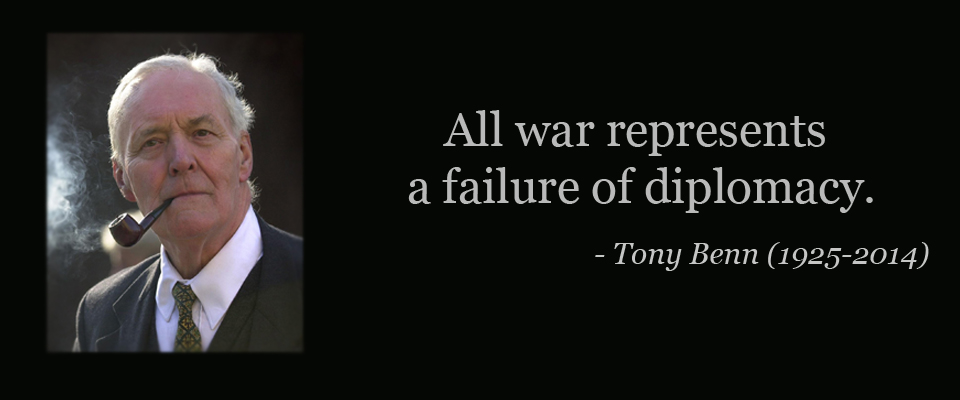
Image created by Samankashwaha
Eventually, diplomacy will fail and the military had better be up to the task of defending the country — or they and their fellow citizens won’t have a country.
It’s no Coincidence the Best-armed Countries have Fewer Wars Thrust on Them
With a strong military a country can decide to take part in a ‘Coalition of the Willing’ for example.
But very few countries with a powerful military get invaded. Not that invasion is the only type of warfare, but that’s the primary reason nations divert precious resources to fund a viable military.
Certainly, nuclear-armed nations aren’t subject to invasion, nor will any potential conflict go far, as the world’s nuclear powers police not only the world but each other as well.
The UN Security Council permanent members are all nuclear powers and each of them has an outsized say in world affairs. It would be naive in the extreme to think that the UK could stay in the UNSC should it decide to give up its advanced nuclear weapons programme.
Having a viable nuclear weapons system is one thing, but having a say in global affairs at the highest level is on the shortlist of things that identify the United Kingdom as a Top Ten political power.
It isn’t always about GDP and Productivity
Sometimes it’s about defending the interests of your country and like-minded countries, even if that means continuing with an expensive Cold War programme that was designed from the outset to make war far too costly to contemplate.
And, the most important point of all? It has worked perfectly, every day, since 1945.
In the discussion between Strategic Hope vs. Strategic Deterrence, my heart is with those who believe that one day the human race will mature to a point where war is left behind in the dustbin of history (as it should be!) but in the meantime, my mind favours what has actually worked over the past 72 years. Poseidon’s trident must remain.
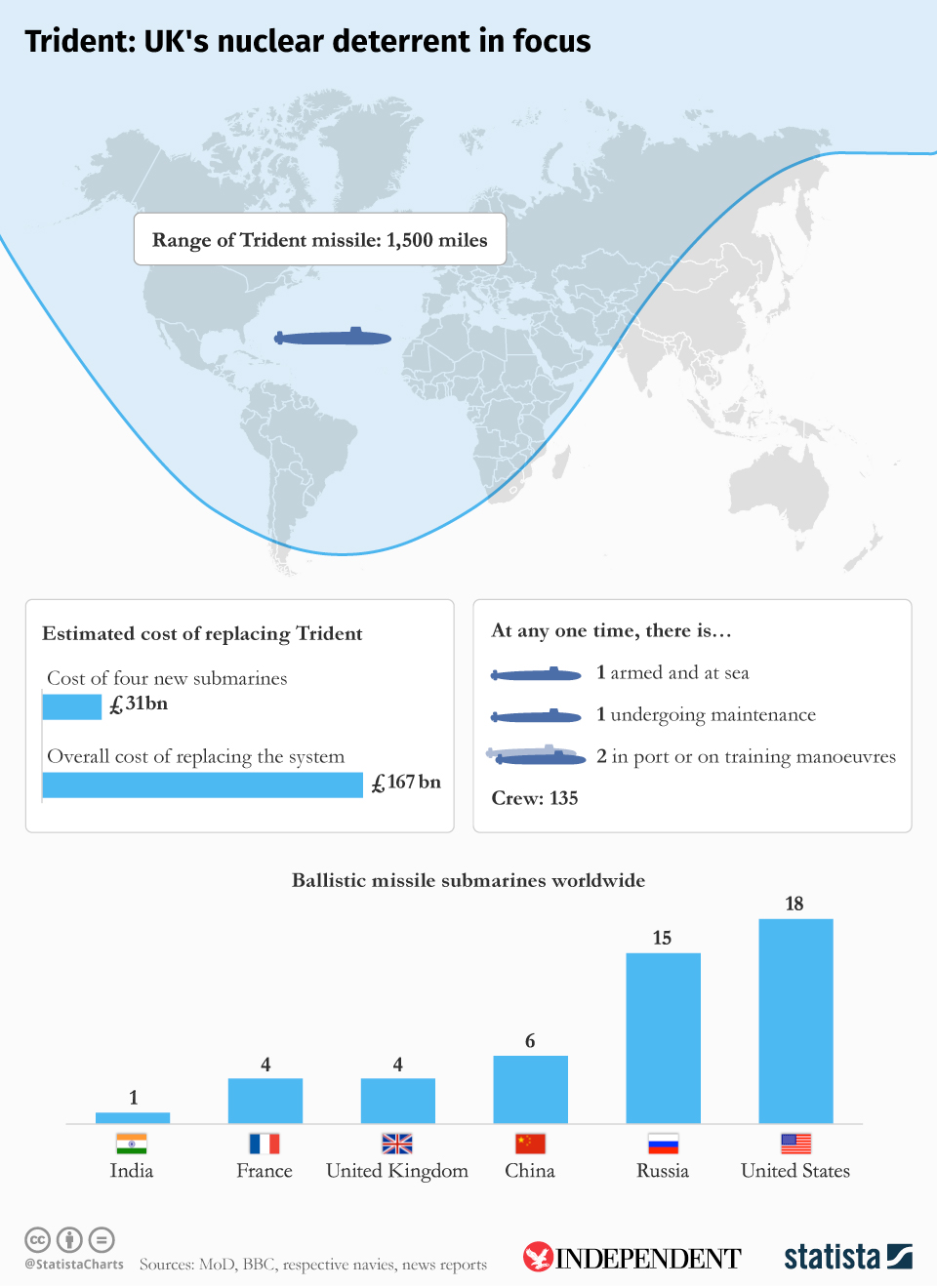
Since 1969, the United Kingdom has had a Continuous At Sea Deterrence (CASD) tasked with protecting the UK in case of nuclear attack. 1 submarine is constantly armed and at sea while another 1 is undergoing maintenance. A further 2 are in port or training. The submarines around which the system is based are obsolete and need replacement. UK submarine and missile system replacement costs could reach an estimated £167 billion. Image courtesy of Statista.

PM Theresa May Calls Snap Election for June 8th
In a surprise statement from Number 10 Downing Street, UK Prime Minister Theresa May announced her courageous decision to go to the polls on June 8, 2017 which will ensure stability as Brexit negotiations begin.
“I have just chaired a meeting of the Cabinet, where we agreed that the Government should call a general election, to be held on June 8.
I want to explain the reasons for that decision, what will happen next and the choice facing the British people when you come to vote in this election.
Last summer, after the country voted to leave the European Union, Britain needed certainty, stability and strong leadership, and since I became Prime Minister the Government has delivered precisely that.
Despite predictions of immediate financial and economic danger, since the referendum we have seen consumer confidence remain high, record numbers of jobs, and economic growth that has exceeded all expectations.
We have also delivered on the mandate that we were handed by the referendum result.
Britain is leaving the European Union and there can be no turning back. And as we look to the future, the Government has the right plan for negotiating our new relationship with Europe. We want a deep and special partnership between a strong and successful European Union and a United Kingdom that is free to chart its own way in the world.
That means we will regain control of our own money, our own laws and our own borders and we will be free to strike trade deals with old friends and new partners all around the world.
This is the right approach, and it is in the national interest. But the other political parties oppose it. At this moment of enormous national significance there should be unity here in Westminster, but instead there is division. The country is coming together, but Westminster is not.
In recent weeks Labour has threatened to vote against the deal we reach with the European Union.
The Liberal Democrats have said they want to grind the business of government to a standsill.
The Scottish National Party say they will vote against the legislation that formally repeals Britain’s membership of the European Union.
And unelected members of the House of Lords have vowed to fight us every step of the way.
Our opponents believe that because the Government’s majority is so small, our resolve will weaken and that they can force us to change course. They are wrong.
They underestimate our determination to get the job done and I am not prepared to let them endanger the security of millions of working people across the country.” — Prime Minister of the United Kingdom, Theresa May (April 18, 2017)

UK-born Children of Foreign parents: UK Citizens, or Not?
by John Brian Shannon | April 17, 2017
It seems logical that when a child is born in a given country that he or she should automatically be awarded citizenship in that country — while the parents obviously continue to be citizens of their own country. But in a surprising number of countries that’s not how it works.
As in Saudi Arabia and other countries, so it is in the United Kingdom — as recently and publicly reaffirmed by the Home Office in the case of a Dutch couple whose child was born in the UK.
Once a baby decides they want to be born, where the Mother and Father happen to be at that point in time is completely irrelevant. Some of you may have had that experience.
It seems counter-intuitive in the extreme to deny a person born in a country… citizenship in that country.
Imagine what it would’ve been over the past 100-years if every British parent had to travel to the appropriate UK government office with reams of paperwork to prove the entire family tree, thereby allowing the child to have the right of British citizenship?
The population of Britain would’ve never reached 65-million. Ever! People would’ve thought twice about having children, some would’ve decided to not have any at all, while other kids would’ve been adopted to foster-parents in other countries. That’s not the way to grow an economy!
You’re either born in the country and therefore automatically a citizen of the country with all the rights and responsibilities thereof, or you’re born outside of the country and are a visitor, student, diplomat, or an invited worker with impressive credentials who was offered citizenship by the government.
But being a citizen isn’t all about the rights and privileges of citizenship, there are also the responsibilities of citizenship.
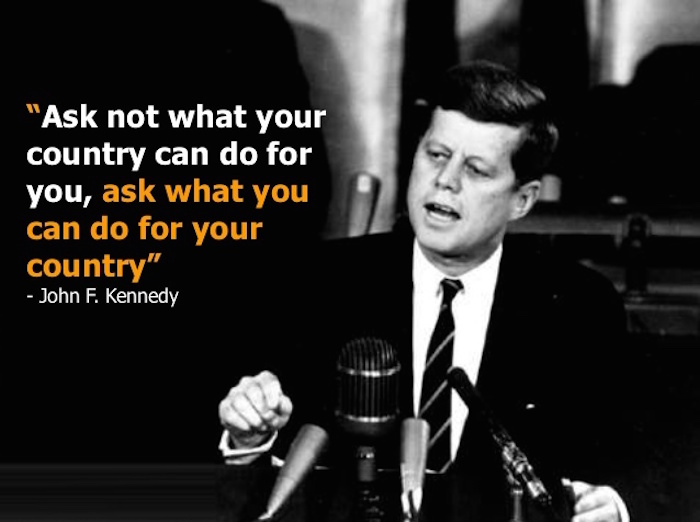
Citizen Rights and Responsibilities
For one; Every citizen is a potential ‘brand ambassador’ for their country; Whether a tourist in the UK asks for directions from a Briton, or if the British ‘brand ambassador’ is travelling outside the country, they are representing Britain 24/7 to the people around them in every word and every action whether they like it or not. Such words and actions are carefully watched in many countries. And it could occur that they are called upon to verbally discuss or defend a certain policy, or even the distant history of Britain — something at which all UK citizens should be exceptionally skilled. Training for this should begin at a young age and continue throughout their education.
Two; During wartime, able-bodied people are expected to shoulder some amount of burden to defend the country. This can range from flying a warplane as the great flying ace Billy Bishop did for Britain and Canada (he was a Canadian who flew for the RAF in WWI) or, as in the American example, ‘Rosie the Riveter’ who left housewifely duties behind for 8-12 hours per day to rivet aircraft frames together as part of the WWII effort.
If you are willing to fight for Britain during wartime, then unquestionably, you are worthy of British citizenship. If you’re unwilling to fight for the UK, you’re unworthy of UK citizenship. It’s the ultimate citizenship litmus test!

‘Rosie the Riveter’ — Hundreds of thousands of American women assembled aircraft and manufactured weapons 8-12 hours per day during WWII. U.S. government poster.
Third; Able-bodied people are expected to become educated and contribute to the overall economy of the UK. Of course, they’re free to choose their university education and their career. But at the end of the day it’s not unreasonable to expect their choices will result in a net gain for the country, whether a cultural gain (an artist or homeless shelter worker, for example) or a true economic gain (a typical blue-collar or white-collar worker) or a clerical gain. It may be that they choose to serve their country in academia or in government. In any event, citizenship carries with it the obligation to contribute to the country that provided them with relative peace and prosperity, and a good education.
Fourth; The UK government should enact legislation that requires one year of compulsory military service to be served by age 25. If you’re a British citizen enjoying all of the rights and privileges of British society it’s completely reasonable to expect some sort of contribution to the national defense.
Of course, such gap-year military cadets may well find themselves helicoptered into flood ravaged regions to assist local authorities, or they may be learning how to fly a light aircraft, or working on a national infrastructure project where the military corps of engineers are building or rebuilding part of the national motorway system.

Personnel from RAF High Wycombe recreate the iconic Beatles Abbey Road album cover, parading the Armed Forces Day Flag on Armed Forces Day which falls on June 24th in 2017. Image courtesy of AECOM
During their gap-year military service, all of their necessities should be covered including free medical and dental coverage, food and shelter, and many recreational activities could be included.
In short, they should be encouraged to — learn hard, work hard and play hard — which the most successful nations have always done. And the least successful, haven’t.
At the end of their gap-year military service each cadet should receive a generous scholarship to the UK college or university of their choice. For those who wish to continue serving their country in the military, they should receive an equally generous scholarship that leads them toward a higher rank.
By creating a young cohort of military conscripts who can choose when to serve their gap-year military service, every young Briton will emerge from that military training as significantly brighter, bolder and more experienced citizens with skills that the young people of most countries won’t ever have.
That’s the way to build a smarter, stronger and more capable UK society, on the way to Building a Better Britain!
 Letter to Britain