Home » Posts tagged 'Britain' (Page 7)
Tag Archives: Britain

Theresa May’s Weird Winning Strategy
As of this writing (5:00am BST, June 9, 2017) election results for the UK General Election are beginning to trickle-in and pundits are lining up to lambaste Prime Minister Theresa May for calling a snap election while in majority government, and then losing the majority just as the UK is poised to head into Brexit negotiations.
‘Oh yes. She fumbled it. Absolutely.’ Said every headline.
And on the surface, that’s what it looks like.
Surely, any majority government that calls an election they don’t need, becoming a minority government in the process, are losers. What else could it be?
But what if Theresa May is smarter than pundits realize?
Short-term pain, for long-term gain?
Maybe. She’s a shrewd operator. Although she can seem cold, standoffish, and even awkward in certain situations, it also seems she’s a patriot who was willing to ‘take a hit for the team’ in order to realize her dream of ‘Building a Better Britain’.
What if everything she’s done has been done with great purpose and resolve, balancing huge risk to her standing as Prime Minister of the United Kingdom and to her party fortunes in order to accomplish some great goal that will eventually result in a better Britain?
What if Theresa May has been playing chess whilst everyone else has been playing checkers?
Viewing the UK through a Prime Minister’s lens
Holding a snap election vs. not holding a snap election.
What would be the point of staging a successful getaway from the European Union, and then with the SNP still powerful because it was holding 56 seats, the SNP decided to take Scotland out of the United Kingdom via (post-Brexit) Indyref after Indyref?
Wouldn’t it follow that either Northern Ireland or Wales might then consider staging their own independence referendums and possibly leave the United Kingdom?
What if both devolved territories followed Scotland out of the United Kingdom?
Suddenly, there would be no more ‘United’ in the name United Kingdom, only England remaining.
At that point, the European Union would probably prevail upon the newly independent territories to join the EU — and if successful at that, the EU would become emboldened to invite London into the EU family by promoting London referendum after London referendum.
Had Theresa May not called a snap election, she might have left the SNP in a powerful position, with Scotland leaving the UK (post-Brexit) and the SNP inviting both Northern Ireland and Wales to leave the UK with Scotland.
Such are the matters that keep Prime Ministers awake at night.
Trading a majority, for a Kingdom that remains United
It appears that Theresa May knew what she was doing all along — she chanced losing a majority in the House of Commons for a chance to stick it to the SNP.
Yes, it cost her. But because of the 2017 election results the SNP is now a weaker force, with much less momentum than it had pre-election. Momentum that could have been used in the immediate post-Brexit timeframe to break up the United Kingdom.
Such is the nature of strategy; In order to safeguard the ‘United’ part of the name ‘United Kingdom’ Theresa May used her tactical assets to accomplish those goals.
And that’s the difference between strategists and tacticians. Master strategists like Winston Churchill won WWII, but were forced to expend many of their tactical assets to do so.
(Read about the Battle of Britain to fully understand how this played out in WWII. Many times it may have looked like Britain was losing the war, or at least taking a severe beating, when in fact Winston was setting the Nazis up for later defeat. And he did it in broad daylight, right under everyone’s noses, including his own staff)
Is Theresa May that good? In broad daylight, quite under everyone’s noses, did May just save us from a SNP-led break up of the United Kingdom in the post-Brexit period?
Let the facts speak for themselves
Prime Minister Theresa May spent some of her chips in order to take down the SNP — the same SNP that represented the number one threat to the UK remaining united in a post-Brexit Europe.
Now that the SNP has lost a significant number of seats to Labour and Conservatives alike, the SNP is no longer the threat to UK continuity, harmony, and stability it once was.
In baseball parlance, this is known as a ‘force play‘ when the base runner is in a position to score a point and is forced by the playmaker to run towards home plate knowing full well they’ll be ‘tagged out’ in the process.
If that’s what Theresa May is up to, she’s playing the game of politics at a level far above the understanding of her critics, and it also means she’s a true British patriot, a citizen par excellence, of a permanently United Kingdom.
Having weakened the greatest potential threat to UK unity in decades, the noble Theresa May can now proceed with a safe Brexit — a Brexit where the United Kingdom doesn’t risk losing Scotland, or Northern Ireland, or Wales, in the process.
Well done, Theresa! Right… under… their… noses!
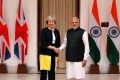
Money… Money Changes Everything!
At this moment in UK history, more money is needed to fund the NHS, schools, roads, railways, airports and other national infrastructure, Trident, foreign aid — and to fund 500 million sterling worth of renovations to the House of Commons.
Money is certainly the problem, as more money would solve all of those issues and many more.
Unfortunately, some governments ‘rob Peter to pay Paul’ but with little change in the total amount of revenue actually collected by the government.
- In some cases, a socialist (Labour) government will raise more revenue by raising taxes. Let the wailing begin!
- In other cases, a conservative (Conservative and Unionist) government will cut expenditures via fiscal and budgetary belt-tightening. Groan!
Which is why governments everywhere are always on the hunt for more money.
But are they? Are they really on the hunt for money? Are they really trying to increase revenue? Or do they automatically hit their default mode every time a budget crisis looms?
Some observers think that governments dismiss attempts to increase revenue via increased trade with other nations too quickly and move to their particular default mode.
Where Could the UK Find 1.3 Billion Consumers Wanting to Buy British Goods?
Well, India, for one. And they’re a Commonwealth nation. Ta-Da! See? It’s sooo simple.
All the UK government must do is to reach out to India’s leaders (especially post-Brexit, but nothing stopping them from getting started now!) in the interests of ramping-up trade by at least one order of magnitude.
Why should India purchase trillions of rupees worth of goods from non-Commonwealth nations when they could purchase them from the UK?
Why does India purchase their aircraft carriers from Russia, their fighter-bombers from Russia, other significant navy ships from Russia, and billions worth of goods from China, the southeast Asian nations, and the United States?
A century ago, Great Britain’s trade relations with India were booming. Shipyards couldn’t build ships fast enough to keep up with the annual increase in trade.
Who dropped the ball?
Heads should roll for allowing that relationship to falter — a relationship of prime importance to both the UK and to India!
Never Mind Playing the ‘Blame Game’ There’s No Time!

Instead of UK government departments fighting each other for funding, the government should work to ramp-up trade with India to increase Britain’s GDP by 5 per cent.
We need to get a piece of that rapidly growing and rapidly modernizing economy, and thereby add five per cent to Britain’s annual GDP.
Yes! More money will solve all of Britain’s spending problems… but it isn’t going to fall out of the sky and land in the Treasury building by itself!
Someone! Anyone! Perhaps the Prime Minister or the Foreign and Commonwealth Secretary (or both) along with the Queen should invite Prime Minister Modi of India and his high officials to London, for an unprecedented and long overdue re-look at the macro relationship between the two countries to see how increased trade could improve the economies of both nations, and how each nation can play to their own strengths and work to offset each other’s weaknesses.
Instead of UK Government Departments Fighting Each Other for Funding – Increase the Available Revenue Pool for All Departments
Companies fight over ‘market share’ because that’s what companies do. And it is often a vicious competition.
However, governments have an unparalleled advantage here because they can increase the overall size of the market — which, using this metaphor, relates to UK GDP.
By dramatically ramping-up trade with India the government could increase GDP by five per cent, easily meet the spending requirements of all departments and still have the economic clout to run balanced budgets indefinitely.
This so badly needs to be done that Brexit is a side-show by comparison, although without Brexit it would be difficult to enter into new trade arrangements with any non-EU country.
In summary, Brexit is merely the means to an end — an end with a much stronger economy for both Britain and India, and a stronger Commonwealth partnership.

38,000 Die Prematurely from Diesel Emissions
According to research recently published in the scientific journal Nature, “The consequences of excess diesel NOx emissions for public health are striking,” and responsible for 38,000 annual, premature deaths (globally) due to heart and lung disease and strokes.
But wait! It gets worse. By 2040 that number might increase to 174,000 — and that’s if every diesel vehicle conforms to 2017 emissions standards.
Most of the deaths occur in Europe where diesel cars are popular and are the primary source of particulate matter (soot) and oxides of nitrogen (NOx).
In China and India the proportion of diesel cars and trucks differs and emission standards are lower, consequently, diesel trucks are the largest contributors to particulate and NOx emissions.
“This rigorous study highlights the serious consequences which have resulted directly from the irresponsible actions of the motor manufacturers. [But] …it may well underestimate the full consequences for public health [and the] premature deaths from NOx could be 10 times higher than those from exhaust emissions of particles.” — Professor Roy Harrison, environmental health expert at University of Birmingham
Due to strict emission standards that were enacted since 1999, diesel engines built in 2017 (and the diesel fuel itself) are orders of magnitude cleaner than in the pre-2017 timeframe.
Yet, in the absence of incredibly strict diesel vehicle emissions standards for the future many more people could die prematurely from diesel-fueled vehicle exhaust due to a number of related factors. The huge baby boom demographic in Western nations show an increasing trend to higher rates of respiratory illness as they age, for one example.
Read the report: Impacts and mitigation of excess diesel-related NOx emissions in 11 major vehicle markets (Nature)
No matter who wins the UK June 8th election there are really only three choices on this file — four choices, if you include ‘Doing Nothing’ which really isn’t an option for a responsible government.
- Ban all diesel fuel sales in the UK by 2020. Yes, this would cause a paradigm shift in vehicle engine choices — and result in mass sales of used diesel engine vehicles to the continent before diesel vehicles are banned.
- Ban the use of diesel fuel for motive power within all UK cities. But not the carrying of diesel fuel because some vehicles are diesel/electric and can be switched manually between diesel and electric mode.
- Ban the use of diesel fuel for motive power in UK cities with more than 1 million residents. Pollution levels are noticeably higher in major centres, smaller cities may notice a daytime spike, followed by an evening clearing of the noxious emissions.
- Do nothing. At this point, even considering such a plan is beyond irresponsible, now that the facts are coming out and each new study on the subject turns out to be more incriminating (for diesel emissions) than the one that preceded it.
Certainly it will take some effort by the government. But in this case, there simply isn’t any alternative. Something must be done to save the lives of thousands of Britons annually.
Past 2020, more UK citizens will be dying prematurely from air pollution annually, than were dying during The Blitz annually — but with no end in sight if new regulations aren’t quickly legislated.
The payoff is that the NHS will begin saving hundreds of thousands of pounds per month even in the first year — and every subsequent year will improve on those stats. And UK citizens and non-citizen residents will live healthier, happier, and more productive lives.
I respectfully urge the Prime Minister to make it a priority. Lives are at stake!
 Letter to Britain