Home » UK (Page 62)
Category Archives: UK

Why the UK Must Steer Brexit & Not be Steered
As the UK is a net contributor to the EU, there’s no incentive for European Parliament negotiators to want an early deal
However, yesterday Prime Minister Theresa May ‘called time’ on never-ending Brexit negotiations by informing the EU that October 29, 2018 is the last day to avert a WTO-style Brexit, commonly called a ‘No Deal’ Brexit
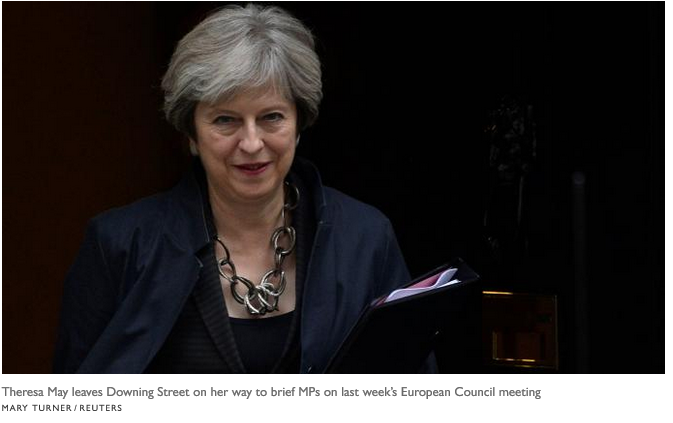
To understand why there is any debate at all about the UK leaving the European Union, one must understand that the United Kingdom contributes more to the EU than it receives. Over £8 billion (net) per year flows from the United Kingdom to the European Union and people are wondering why the EU Parliament is opposed to Brexit?
That’s a lot of money even by European standards, a continent of 504 million people.
£8 billion is the difference between a rich EU and a cash-starved EU that can’t afford all of its legitimate programmes and its excesses. To wit; The alcohol budget for the EU Parliament is in the tens of millions (euros) per year.
Yes, every government has a wine and spirits budget, but the EU Parliament alcohol budget is bigger than the next ten countries alcohol budgets combined. And it’s not just the alcohol budget that we’re talking about here.
The only country that contributes more to the EU budget is Germany — which pays even more than the UK! — and not a word of thanks to either Britain or Germany for subsidizing almost every policy and almost every country in the 28 member bloc.
Ready for some numbers?
Britain’s population is 65 million, so the net contribution of £8 billion works out to £123. per Briton, per year.
If you want to figure it by workers, who after all are the ones paying this bill, there are about 33 million workers in the UK, and 30 million of them are Britons.
So, let’s do the math; £8 billion, divided by 30 million, equals £266 per worker, per year. Over ten years, that’s £2660 per British-born worker.
What could that amount of money done for each British worker over the past decade? We’ll never know.
So far, so good?
Let’s look at the UK contribution over the past decade, which means we are simply multiplying those numbers by ten.
The net contribution of the United Kingdom over ten years is £80 billion.
Let’s see what the UK could’ve done with that money:
- 26 Queen Elizabeth class aircraft carriers, completely fitted-out. (or)
- 100 more Wembley Stadiums. (or)
- 146 state-of-the-art UK hospitals such as the Queen Elizabeth Hospital in Birmingham. (or)
- 183 copies of The Shard, an iconic building in London. (or)
- 2285 brand-new Academy schools, or 5333 brand-new state-run Secondary schools. (or)
- Every UK high school graduate could receive a tuition-free PhD education and a new small car.
That’s just the past ten years…
What could be better than any one of those things? Is there anything better? Let us know in the comments section below!
Really, for all the (net) billions that go to the European Union courtesy of the British taxpayer what do Britons get in return?
Not one thing. Because it’s the net amount, not the gross amount. Which by definition means that Britons are getting nothing for that particular £8 billion (annual) or £80 billion (decade) net payment to the union. It’s the net amount. Get it?
Obviously, there’s nothing in Brexit for the EU
How could there be? It’s all in their favour.
Every year that the EU can stretch Brexit out is another £8 billion (net) for the European Union to fund its good and necessary budgets and their unconscionable, wasteful spending programmes. (Bad for Britain, but good for the EU!)
Only the most foolish and irresponsible British government would allow the EU to stretch this out for as long as possible (and who could blame the EU for doing so?) and that’s why Prime Minister Theresa May must be shown respect here.
In Theresa May’s UK, Britain is No Longer the EU’s Cash Cow
Love her or hate her, everyone knew that Margaret Thatcher truly loved Britain — and we’re starting to see a renewed and more confident Theresa May rising to meet the challenges of her time, as did Maggie in her era.
Theresa May has wisely informed the EU that there is a ‘Best Before’ date for Brexit negotiations and that October 29, 2018 is the absolute last date that the proposed 2-year implementation deal can be offered to the European Union.
In the absence of such a signed agreement Brexit negotiators will have no other option but to prepare for a full-blown WTO-based Brexit. (Which won’t be half as traumatic as it sounds as most of the world operates on WTO rules and have done so since 1995)
Therefore, smart EU negotiators will string it along for as long as they can as it’s (obviously) the logical way for their side to proceed. But now that the Prime Minister has provided a timeline to work toward, expect the 2-year implementation deal to be signed one day before the deadline, because that gets the European Union the most British taxpayer cash without actually missing the October 29, 2018 deadline.
Calling ‘time’ on the EU’s negotiating tactics (delay, obstruct, delay some more) is the single best, and strongest thing Theresa May has done since becoming Britain’s Prime Minister — and when combined with her Florence speech where she reached-out to EU leaders and to the European people as never before by a British PM — Mrs. May will earn and thereby guarantee her place in British history as the UK’s Brexit Prime Minister.
Well done on all counts, Theresa!
Related Articles:
- My mission is a two-year bridge to a final Brexit deal, Theresa May tells MPs (The Times)
- Brexit divorce lawyers eye up EU’s wine list (Financial Times)

UK PM in Brussels, OECD Barbs & the EU’s Rising Champagne Budget
What’s a UK Prime Minister to do who is away for meetings with EU officials to discuss Brexit terms and to solve practical matters and common problems, when the richly-funded-by-the-EU Organisation for Economic Co-operation and Development (OECD) seeks to undo the democratic will of the British people by claiming that undoing Brexit would bring more wealth to the UK?
It’s not like the OECD utterances on the UK economy have been accurate since Brexit was first discussed in the public arena, and it’s not like the OECD has a legitimate mandate to comment on political developments in any OECD member nation. In fact, it’s expressly forbidden in their charter.
Since Brexit was first suggested, the OECD have been the prophets of doom, telling anyone who would listen that economic Armageddon would occur were the UK to continue pursuing Brexit and yet, almost exactly the opposite has occurred. UK markets are booming, trade is flourishing, countries are lining up to sign free trade agreements with a post-Brexit UK, and Britons are looking forward to taking back control of their country.
Yes, the EU Parliament will miss the (net) £8 billion annual contribution from the UK taxpayer. Britons get that.
But the United Kingdom must do what’s best for its citizens not what’s best for a greedy and overly bureaucratic EU politburo that wants to spend its time passing arcane legislation and finding ways to get evermore money out of Britain (mainly) and other EU member states, to support its extravagant operations.
“Will it be Moët & Chandon Dom Perignon White Gold, Mr. Junckers, or a couple of Heineken?” — You know the answer to that question! ;)

Moet & Chandon Dom Perignon White Gold
On a related note: UKIP’s Nigel Farage said today on his wildly successful call-in talk show that the EU Parliament wine and spirits budget is in the tens of millions of dollars and that they are thinking of upping their annual alcohol purchase.
Summary
For as long as the UK remains a paid-up member of the European Union, it’s fair for the UK and other members of the union to comment on political, economic and social developments happening within the other EU member states.
However, the OECD should refrain from commenting on the politics of any nation.
Don’t forget that as a paid-up member of the EU until Brexit actually occurs, the UK (along with Germany) are paying the lion’s share of the OECD’s £85 million annual budget.
On top of that, the UK has its own (country) account with the OECD which costs the UK £11 million per year. You think the OECD would show the UK a little respect as it’s paying 2X its required dues there.
The Organisation for Economic Co-operation and Development needs to realign itself with its original charter to maintain its credibility and thereby maintain its present membership numbers. If the OECD can’t manage to do that, it’s time for the UK to leave the organization.
Related Articles:
- UK Treasury rejects OECD’s call for second Brexit referendum (The Guardian)
- At a glance: the big issues PM must confront tonight (The Times)

UK Warships Set For Early Retirement Could Serve Other Commonwealth Navies
UK Ministry of Defence bosses have announced their intention to retire seven ships and reduce the Royal Marines by 1000 personnel in a cost-saving effort necessitated by the acquisition of two world-class aircraft carriers, the HMS Queen Elizabeth and the HMS Prince of Wales.
It’s brilliant that the Royal Navy is stepping boldly into the 21st-century with two state-of-the-art aircraft carriers, yet many sailors will miss the still great but aging ships, which have a decade or two of service life left in them.
In fact, two of the soon-to-be retired vessels, the HMS Albion and the HMS Bulwark aren’t even halfway through their expected life-cycle but are excellent ships that could be sold to any Commonwealth nation.

UK Royal Navy ship HMS Albion was launched by Princess Anne on March 9, 2001. Image credit: Richard English
As an island nation and as the world’s oldest sea power, Britain should always command a first-rate navy, and good policy would dictate the sale of RN ships halfway through their normal life-cycle to help defer the costs of maintaining that world-class navy.
The helicopter carrier HMS Ocean was also marked out for retirement in an earlier press release along with four smaller Royal Navy ships, but they too could serve out the rest of their expected life in any Commonwealth nation.
Commonwealth Partner Canada – Needs Those Ships!
The Royal Canadian Navy depends heavily on its 12 naval frigate fleet and is desperately lacking in rescue capability (helicopter carrier) and littoral combat (close-to-shore) vessels — which gaps could be filled by the soon-to-be-retired HMS Ocean, HMS Albion, and HMS Bulwark, while saving the Canadian navy billions of dollars — and more importantly, the several years required for Canada to build new ships.
Although Canada has a great navy with proud tradition there are major credibility gaps in Canada’s fleet and purchasing these Royal Navy ships could partially alleviate that gap, thereby propelling the RCN forward by at least five years and at very reasonable cost compared to building new ships.
Canada should constantly drop hints to the Royal Navy to allow them be first to bid on ships and helicopters set for early retirement.
Commonwealth Partner India – Needs Those Ships!
The Indian Navy has a vast area to patrol in one of the busiest shipping regions of the world and it can’t get enough ships. Ever!
Modern naval vessels are very expensive to build, but expensive new ships don’t always suit the needs of the Indian Navy — a navy that requires huge numbers of vessels to patrol all those millions of square miles. Not all of them need to be world-class combat ships.
With thousands of cargo ships and cruise ships travelling through the region every day, and with piracy at an all-time high in the Indian Ocean having enough ships available to maintain a presence is far more important than how shiny the paint is on inspection day.
The level of shipping activity in the Indian Ocean region can only be described as frenetic and piracy is a common problem in the adjacent Arabian Sea and off the east coast of Africa where many Indian registered ships carry trillions of dollars of raw materials and manufactured goods every year.
Commonwealth Partner Australia
Australia fields a modern navy and (thankfully) it enjoys the strong support of the Australian government.
The country purchases build-to-suit ships and submarines from various countries and it occasionally sells its used ships to New Zealand — a good arrangement for both countries.
However, some early retirement Royal Navy ships could be valuable to the Royal Australian Navy in the future. Their navy is heavy with helicopter frigates and minesweepers and has a respectable number of submarines — yet there may be occasion when Britain’s navy could decide to part with ships that meet the needs of the Australian fleet.
The only thing lacking in the RAN fleet are destroyers. They could make-do with 6 as we are presently in peacetime; At the moment, the Royal Australian Navy has 1 destroyer.
Other Commonwealth Partner Navies
Many Commonwealth nations are maritime countries with various naval capabilities, yet purchasing new ships is an expensive proposition for rapidly developing nations.
For them, it’s difficult to justify a billion dollar warship when they need crucial infrastructure (yesterday!) to serve the needs of their citizens. Yet, having an effective naval presence to deter piracy and to protect national sovereignty becomes increasingly important as their GDP rises.
One way for them to accomplish two goals at once is to purchase used RN vessels that match their needs. Indeed, for the cost of one new frigate a small nation may be able to purchase five used, but still effective, former Royal Navy frigates or smaller coastal defence craft to provide security in nearby shipping lanes.
Summary
Until now it has been normal for navies to max-out the life of their ships and to pay massive sums to refit their navy ships at mid-point in their life-cycle (some refits cost more than the original ship!) and that’s an expensive way to outfit a navy when there is a better alternative.
In the 21st-century there are so many rapidly developing Commonwealth nations, UK shipyards could have a continuous frigate assembly line, a continuous destroyer assembly line and a continuous coastal patrol craft assembly line to keep up with total demand from a world-class Royal Navy that retires its ships early and sells them to allied nations.
But that’s only if the Royal Navy makes the historic decision to sell its ships at the 12-year mark, while they still have at least 18-years of life left in them.
It would be wise to continue to operate them as usual — but simply make it known to Commonwealth partners that any Royal Navy vessel over 6-years of age is automatically available for purchase to Commonwealth members.
As the Commonwealth’s rapidly developing nations continue to increase their wealth, they’ll have evermore reason to protect what’s theirs and to surveil and protect foreign ships travelling through their waters.
Instead of keeping ships for decades and running them into the ground along with one or two costly refits over the years, in the 21st-century the better way is to sell them to Commonwealth nations at the 6-12 year mark while the vessels still have plenty of useful service life remaining. And in that way, create a healthy UK shipbuilding industry geared towards Royal Navy needs, but also to the needs of Britain’s allies.
That’s how you build a better Royal Navy and help your Commonwealth partners at the same time!
 Letter to Britain