Home » UK (Page 4)
Category Archives: UK

Significant Lives: Captain Sir Tom Moore passes away today, February 2, 2021

Captain Sir Tom Moore, 100-year old military hero who fought in WWII India and Myanmar (formerly Burma), who raised almost £33-million in 2019/2020 for NHS Charities Together, and who sang a chart-topping rendition of ‘You’ll never walk alone’ with Michael Ball in 2020, has passed away today, February 2, 2021.
From BBC — “In a statement, Prime Minister Boris Johnson said: “Captain Sir Tom Moore was a hero in the truest sense of the word. In the dark days of the Second World War he fought for freedom and in the face of this country’s deepest post-war crisis he united us all, he cheered us all up, and he embodied the triumph of the human spirit.
“He became not just a national inspiration but a beacon of hope for the world. Our thoughts are with his daughter Hannah and all his family.”
The flag above 10 Downing Street has been flying at half-mast in tribute and Mr Johnson has spoken to Mrs Ingram-Moore to offer his condolences.”
To read the full article on BBC, click here.

Brexit? Done! Post-Brexit EU Trade Deal? Done! Tying-off Remaining Odds & Ends? Erm…
1653-days after the UK held a referendum giving Britons their first opportunity to vote on EU membership, the Conservative government of the United Kingdom has succeeded in Brexiting from the European Union and agreeing a basic free trade deal allowing mostly uninterrupted trade to continue between the two European neighbours.
While the timeframe (4.5-years!) seems a long time, keep in mind that it takes two to tango and that the EU seemingly did everything in its power to delay Brexit and a post-Brexit trade deal, and it only relented when British politicians showed the strength and resolve to get the job done.
Very noteworthy is that every time the UK government seemed to dither or lose confidence, the EU quickly ramped-up their effort to quash Brexit and the post-Brexit trade deal that followed-on a year later.
“Every day we teach others how to treat us.”
Indeed! Therefore, European Union leaders have taught United Kingdom leaders to firmly and resolutely pursue all future goals with the EU and to never, ever, show weakness or indecision.
I hope that lesson has been learned by UK politicians. If it hasn’t, someone has been busy studying far less important matters.
As Expected, There Have Been Some Delays at the Ports
Of course, this was expected. How could it not occur when both sides spent 4.5-years bickering, rather than solving problems?
But, you get what you pay for.
Perhaps if we paid UK Parliamentarians double the remuneration we do now, we’d be twice as happy with them? Hmmm…
Minor gripes aside, the Conservative government of Prime Minister Boris Johnson has gotten the job done — and that, in the middle of an unprecedented Coronavirus pandemic! Well done, Boris!
Yes, some minor adjustments will be required. It’s been reported by the BBC that some Northern Ireland shipments have been turned back or refused, and UK residents will face more paperwork than ever if they want to visit the EU, especially if they want to bring their pets along.
In summary, the whole process could’ve been smoother, faster and more complete. But aside from the few things to be worked out, Brexit and its follow-on trade deal with the EU has been delivered as promised by the Prime Minister and his government.
Hearty Congratulations to Prime Minister Boris Johnson, to his Conservative Party, and to other Brexit Supporting UK Parliamentarians!
Rather than suffering a failure of statecraft, the leaders of the United Kingdom and the European Union got the job done in the middle of a massive COVID-19 pandemic and they deserve a huge round of applause and our undying gratitude!
Finally, the UK can begin to maximize its opportunities and again become a full partner in the world community of nations.
Finally, the UK can forge its own trade deals with other countries and blocs.
Finally, the UK can design its own foreign policy to benefit the interests of the United Kingdom and its people.
Finally, the UK can create its own domestic policies to benefit Britons and visitors to the United Kingdom.
Finally, the UK can renew and re-energize its relationships with the other Commonwealth of Nations countries.
And the UK can begin to concentrate on what works best for itself and its people, instead of having to clear everything with a foreign power, first.
Even while we’re still under the shadow of the horrible Coronavirus pandemic, its clear to see that the UK’s future is going to be bright and prosperous. Just give it a few months and we’ll see a reinvigorated country — one that no longer hesitates to reach for better and produce better than ever!
Now the UK can Get On With Building a Better Britain!
Now that the EU restraints have been cast-off, the UK will have a free hand to solve its domestic and foreign issues, and to become all that it can and should be.
Brexit has occupied 4.5-years of time and effort, and there was precious little oxygen left in the room to discuss other matters needing attention.
First on the list must be to complete the campaign to eradicate COVID-19 from the United Kingdom, to further assist both individual Britons and those businesses hurtfully impacted by Coronavirus, and to reset the economy when it is safe to do so.
Second, the UK needs to level-up the incomes of those stuck in the bottom economic quintile — thereby ending homelessness in the UK. Maybe the government will create a programme to pay unemployed Britons a minimum wage (or better!) to plant 1-billion trees per year in the UK, neatly solving three problems at once; Homelessness, Unemployment, and helping the UK to meet its CO2 Reduction Targets via their natural photosynthetic process whereby trees store carbon for up to 500-years, in the case of oak trees.
Third, the UK needs to put a major push to become a major exporting country like Germany. I can hardly wait for that! However, it is inappropriate to spend money, time and effort on this in the middle of a major Coronavirus pandemic.
Fourth, the UK needs to finish the many projects still on the books — like HS2 and others. But closely following those projects should be a plan to reclaim 100-square miles from the sea surrounding the UK, annually. In a country of 68-million (as of last week) all the existing land will soon be spoken-for, and thankfully, much of the sea surrounding Great Britain is shallow and therefore perfect to build-up and fill. Beside the obvious benefit, is that seawalls at 40-feet above the high tide mark will build resiliency into the UK’s shorelines with easily available rock and gravel/soil. Doing so at-scale means creating half a million good-paying jobs and building dozens of scenic golf resorts and hotels, thousands of seaside homes, and themed communities to support them.
And that’s just the beginning of the benefits of Brexit, folks!
Thank you again to Prime Minister Boris Johnson, to government negotiators, to the UK Cabinet, and to all MP’s and Lords who followed the instructions of Britons and voted for Brexit and a post-Brexit trade deal! Well done!
Written by John Brian Shannon

The Shocking Truth: How Far We Are From Meeting Our Paris Agreement CO2 Reductions
Buckle-up everyone, because I’m about to destroy your perceptions about how far we are from meeting our Paris Agreement COP21 CO2 reduction commitments. Stand by to be amazed!
You might think that we’re doing well in regards to our clean air commitments, after all, there are more electric cars (EV’s) replacing internal combustion engine cars (ICE) and coal power plants in many countries are being shuttered and replaced with natural gas-fired power generation (much, much, cleaner!) and that renewable energy (RE) represents almost all of the new power plants built over the past 5-years. (True, by the way)
Not bad. But far from good, as you’ll soon see.
So, let’s take a look at how far we are from meeting our 2015 Paris Agreement COP21 clean air goals. Remember, I said to ‘Buckle-up’!
What’s it Going to Take?
The short answer, of course, is more than you’ve got, more than your city has got, more than your country has got, and (so far!) more than our world has got. For example…
Let’s say that global aviation (all aviation, all the time — whether commercial airlines or private aircraft, helicopters, drones, etc.) represent about 2.1% of global CO2 emissions (even the airlines agree with this metric) and that starting tomorrow, all airlines and private aircraft in the world would suddenly stop flying. Forever.
Would THAT be enough for us to meet our COP 21 carbon emission standards?
No it would not.
OK, so, that wouldn’t do it, so let’s add all global shipping in the world (all ships at sea and on lakes that deliver cargo to various ports around the world) which combined add about 2.2% of the annual global carbon dioxide additions to our atmosphere. (Nobody disputes this number either)
Would THAT be enough for us to meet our COP 21 carbon emission standards?
No it would not.
Wait a minute. If we ended all annual global aviation and all annual global shipping tomorrow and forever! — doesn’t that represent a total of 4.3% of all annual global CO2 emissions?
Why, yes it does.
But even that won’t allow us to meet our COP21 CO2 commitments? Shouldn’t that amount of CO2 reduction be enough to meet those targets?
Nope. Not even close.
No, the scale of the global warming problem is much worse than we are able to correct via a simple 4.3% reduction in the annual global CO2 output.
I Need to Get to The End of This! What’s it Going to Take to Meet Our COP21 Targets?
Let’s get a look at some other, larger numbers.
Global transportation (all kinds of transportation, everywhere, on land, sea, and in the air) account for 29% of all global CO2 emissions. What if we cut all of it, beginning tomorrow and forswear all kinds of motorized vehicles forever; Would that do it?
Yes, it would.
But, we’d be forced to give up all cars, trucks, trains, ships, aircraft of all kinds, and any other kind of motorized vehicle, and we’d need to shop locally and travel on foot, bicycle or horseback. Forever.
OK, we can’t do that. Give me another option.
You got it!
So, primary power production (creating electricity from a combination of hydroelectric dams, thermal power plants that are coal, oil, or natural gas-fired, and nuclear power plants) that is consumed by residential users account for about 30% of annual global CO2 emissions.
Ready to cut the cord and live without electricity forever?
Probably not.
But, just for the sake of argument; If every residential user of electricity on Earth stopped using electricity tomorrow, would we meet our COP21 clean air commitments?
Yes, we would.
OK, we can’t do that. Give me another option.
Righto!
Industry (all industry, including all agriculture, everywhere on the Earth) create about 41% of annual global CO2 emissions — that’s everything from building ships, cars, aircraft, military equipment, paint, oil, diesel fuel and petrol production, beauty products, furniture, carpets, clothing, tires, shopping carts, all kinds of food and drink packaging, all food production, and farmers burning their fields to clear their fields for the next years’ crop.
Ready to give up on all that?
I didn’t think so.
But, just for the sake of argument; If every company and farm stopped producing tomorrow, would we meet our COP21 clean air commitments?
Yes, we would.
OK, we can’t do that. Give me another option.
What If We Shaved a Few Percentage Points From Each of Those CO2 Producers?
Would that work?
Maybe. But it would depend upon our level of commitment. It depends if we care about future generations of humans, of animals, and of the plant life on this planet enough to stick with it. But it wouldn’t be easy. In fact, life on Earth would change dramatically, in ways we can’t begin to imagine.
OK, we can’t do that. Give me another option.
I can’t, because there aren’t any.
It looks like we’re all out of options.
Throw Me A Bone, Here!
OK, there’s one chance in Hell (IMHO) for us to avoid a future global rapid warming scenario where the planet’s air temperature would become too hot to allow life to continue on the surface of our world.
And that is?
The BMW i3.
What?
The BMW i3 is a smallish SUV crossover that runs on battery power — not a large battery — that has a tiny one-cylinder onboard petrol engine to charge the battery when the vehicle is underway. The BMW i3 always travels on battery power (the petrol engine isn’t connected to the driveline, it exists only to keep the battery charged) and it has an onboard five-gallon petrol tank.
All of which means that the i3 takes you everywhere you want to go on battery power, and if the battery gets low, the tiny petrol engine automatically starts up to recharge the battery. You wouldn’t even notice it unless I told you it was on and charging the battery pack. It can even charge the battery when you park the car while you’re shopping if you choose that option setting via the onboard software.
How many cars and light trucks would need to be powered by such a system in order to meet our COP21 Paris Agreement clean air targets?
All new cars and light trucks would need to be powered by such a system for the world to meet its CO2 commitments, and we’d need to begin no later than 2022.
Could it be done?
Yes, of course.
Some larger trucks might need a tiny two-cylinder diesel engine to charge up their batteries (much larger batteries than the i3 uses) but that upgrade would prevent gazillions of gallons of diesel fuel being added to the Earth’s atmosphere annually.
The essence of this approach means that for millions of drivers, they’ll buy about five-gallons of petrol per month — instead of buying five-gallons of petrol per day for the average driver.
And when billions of people start using five gallons of petrol per month instead of five-gallons per day, that’s when annual global CO2 emissions will fall by approximately 14% — which is enough (barely) to meet our COP21 clean air commitments.
See the scale of the problem now?
Want to See the BMW i3 — and it’s Brother, the Mighty BMW i8 Supercar that Employs a Slightly Different Propulsion System?
Keep in mind, that in every way, the only difference between the BMW i3 and normal cars is the propulsion system. And similar applies to the BMW i8 supercar — although in that car, the system is geared to blazing acceleration and high speed performance.
Here are a couple of pictures of the future for you…
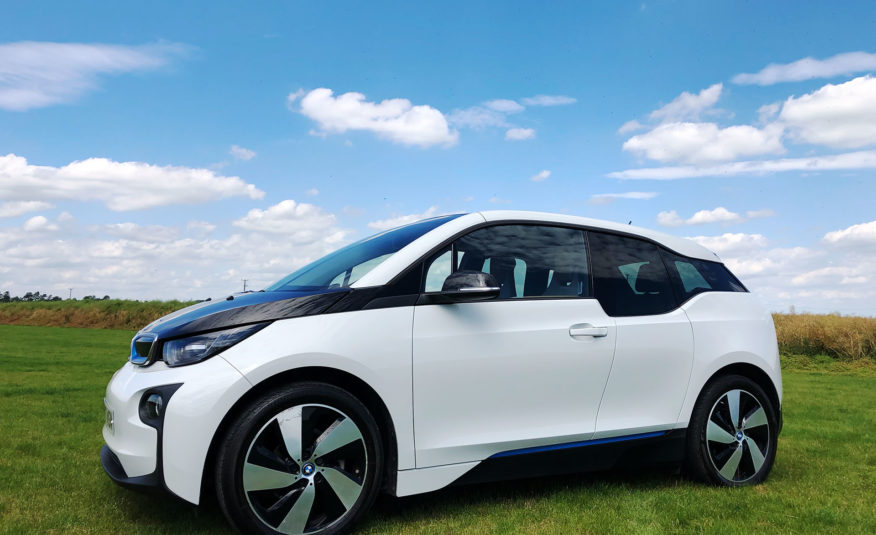
BMW i3 electric vehicle (EV) with one-cylinder petrol engine range extender option
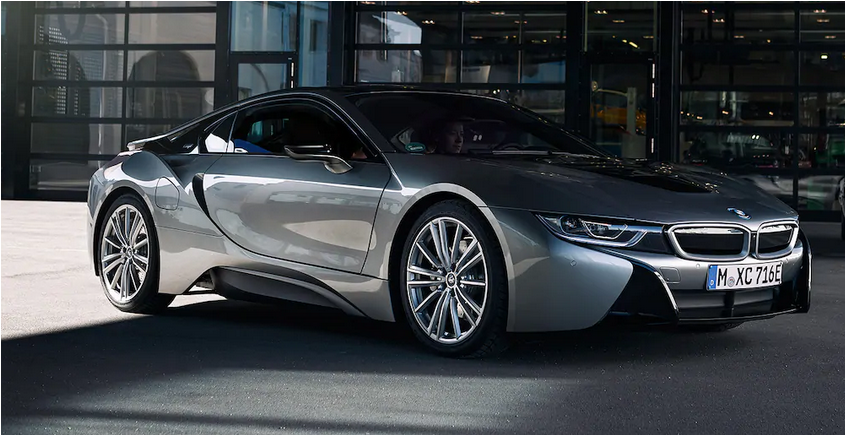
BMW i8 electric vehicle (EV Hybrid) supercar
Written by John Brian Shannon
 Letter to Britain