Home » UK (Page 11)
Category Archives: UK

Will Copper Help Prevent the Next Pandemic?

According to experts, if railings and doorknobs were copper-coated, viruses and bacteria would be killed on contact, as copper kills germs almost instantly. Copper image courtesy of Serge Averbukh
It’s a little-known fact that the element copper kills viruses and bacteria upon contact, in less than a minute; It’s less-known that the typical Western diet is lacking in this crucial micronutrient.
Therefore, in the context of the Novel Coronavirus known as (COVID-19) shouldn’t we be manufacturing our subway handholds, turnstiles, railings, door handles and other commonly touched surfaces from this interesting and useful metal? Not to mention that we should eat the recommended daily allowance of this vital nutrient in case it helps to protect us in a general way from killer viruses and bacteria.
I’m not saying that copper is some kind of panacea and that we’ll never catch another cold or virus as long as we live, but you should read what an expert on the topic says here.
However, those studies didn’t include copper cooking utensils, copper thread woven into fabric or copper toilet handles or any other way of using copper to kill germs of all kinds — it only focused on 10% of the most commonly touched surfaces in hospitals.
Imagine a hospital where all handrails, doorknobs, the siderails on hospital beds and countertops/washbasins were made from copper, or even brass, which has a significant amount of copper in it.
Getting Proactive About Making Life Difficult for Viruses and Bacteria in Public Areas
What if we coated everything from countertops, to car door handles, to handrails and more in copper, and it decreased the infection rate by pathogens by ‘only’ 50 per cent? (Including COVID-19)
Think what that would do to lower NHS costs, not to mention saving thousands of lives and reducing trauma for people, businesses, and governments. Seen what Coronavirus is doing to people’s lives, small business, and to society these days?
We’re told that it’s going to get worse before it gets better, although China, after expending Herculean effort seems to have COVID-19 under control. Let’s hope that Western healthcare systems fare the same or better as more information about how to fight this Coronavirus variant comes to light.
At least Prime Minister Boris Johnson is taking it seriously, as are the leaders of the devolved territories of Scotland, Wales, and Northern Ireland.
In America, President Trump finally got on the bandwagon and is doing more than any Western leader to slow the spread of COVID-19 in his country although some have termed the steps the United States is taking as ‘draconian’ — yet, they’re the same sort of people who would sue the U.S. government for any subsequent illness had he not ordered strong measures to protect Americans. And in Canada, Prime Minister Justin Trudeau has taken far-reaching steps to prevent the spread of Coronavirus.
After missing the boat initially, Western politicians have now ramped-up to meet the threat posed by this novel coronavirus.
Of course, it’s too late to install copper coatings on every subway car railing or handhold, turnstile, or ATM, and on every park bench armrest and every public building doorknob.
Or is it? Maybe now, during the present Coronavirus event maintenance workers could be doing the work in a timely fashion!
A great thing about copper is that any metal fixture can be electroplated with copper, or it can be hydrostatically applied (electo-painted) to surfaces by spraying a special copper emulsion onto the surface where it magnetically attaches and cures. Both electroplating and hydrostatic coating methods result in a very strong and permanent bond to the substrate metal. However, these methods result in a copper coating only a few microns thick which means heavily-used surfaces (like subway handrails) might need to be recoated every year or two. Still, both electroplating and hydrostatic coatings are a realistic way to cover metal surfaces with a metal that kills every kind of pathogen almost instantly — whether virus or bacteria.
Similar could be done using either brass (which contains plenty of copper) or silver (which also kills germs of any kind but is more expensive than brass or copper) and gold (which is even better at killing viruses and bacteria, although costly) and none of these metals tarnish as copper does. Therefore, the choice of metal (copper, brass, silver, gold) would depend upon the application. Even automotive steering wheel buttons could be made from copper, brass, silver, or for Rolls Royce owners, gold; Remember, each time you touch one of the buttons, you’re killing the germs on your fingertips.
While this suggestion won’t help much in the present COVID-19 crisis, it could reduce infections in the future that are transmitted by touching contaminated surfaces, especially on public transit, in public areas (think: stairwell railings, park benches, ATM machines, etc.) and in hospitals, senior citizen homes and other areas of high usage.
‘An Ounce of Prevention is Worth a Pound of Cure’
One day, governments, healthcare systems, and citizens will finally realize that the old phrase, “An ounce of prevention is worth a pound of cure” is among the most-valuable wisdom ever passed down from your ancestors. So take that advice and run with it for your own good and the good of future generations, by incorporating copper, brass, silver, or gold on commonly touched surfaces, and inside of the now ubiquitous water bottles. Interestingly, if you fill your pure copper water bottle with clean water and leave it overnight in the fridge, you’ll benefit because some tiny amount of the copper will dissolve into the water and you’ll thereby gain a small amount of copper in your diet over a few weeks.
(Caution: Don’t fill your copper water bottle with citrus juice and leave it overnight in the fridge, as you can ingest too much copper because the acid in the citrus will dissolve a small amount of the copper and it will leach into the liquid. Remember, it’s a micronutrient. We don’t get enough of it, but high-ish doses from any source including leachate from copper water bottles full of acidic drinks will make you feel dizzy and tired if you use your copper water bottle improperly over a period of weeks)
And for 24/7 germ-killing action on coins; Why not ensure that all future coins are manufactured with high copper or silver content — high enough to kill germs in seconds? Seems a simple way to prevent the spread of one of the most handled surfaces of all.
Related Articles:
- The Doctor Who Helped Defeat Smallpox Explains What’s Coming (Wired.com)
- Copper kills coronavirus. Why aren’t our surfaces covered in it? (FAST COMPANY)

Why ‘Herd Immunity’ Isn’t the Answer to Solve a Serious Pandemic
As I write this blog post (Saturday, March 14, 2020) there are 142,539 cases of the Novel Coronavirus variant 2019 (COVID-19) in the world and in some countries the total number of new cases continues to grow at a slow rate, yet in other countries the number of new cases is growing at a steady geometric rate, while in other countries new COVID-19 cases are growing at an exponential rate.
In places where COVID-19 is growing slowly, most countries have the capacity to deal with it and should see exactly as many cases treated as diagnosed. Where the virus is spreading at a geometric rate, only those healthcare systems with sufficient capacity will be able to handle that progressively larger daily number of cases, and where COVID-19 is growing at an exponential rate, about 2% of infected persons will die — because, so far, that’s the fatality rate for COVID-19 globally.
Centers for Disease Control COVID-19 Situation Summary (updated daily)
Also as of today, there have been 5,393 deaths verified as COVID-19 fatalities — although, especially in developing countries — thousands of people die every day from all sorts of things and there isn’t the capability to test the cause of each and every death. Indeed, some 29,000 people die every day from hunger alone and if they can’t solve the hunger issue in their country, trying to find funding for millions of COVID-19 test kits must surely rank farther down their priority list.
Thus far, 135 countries have reported COVID-19 cases and a report out of China says that serious illness occurs in only 16% of cases. That kind of information helps to keep the illness rate for this virus in the proper perspective.
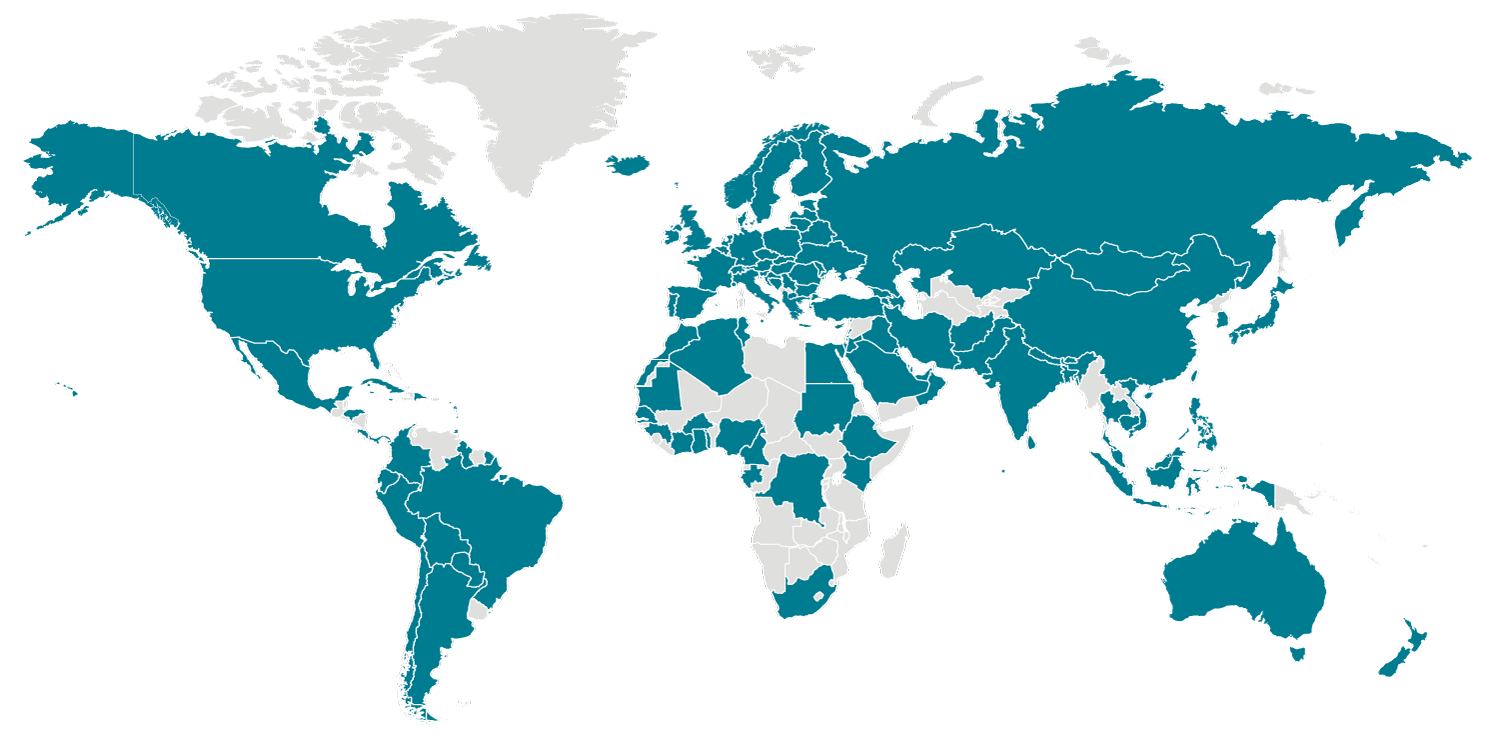
Global Coronavirus case countries, March 14, 2020. Image courtesy of Centers for Disease Control and Prevention.
Europe is Now the Epicentre of COVID-19 Cases Due to their ‘Herd Immunity’ Health Paradigm
Much of Europe operates their healthcare systems by purposely not treating such conditions as influenza (the flu) and other contagions, which they think is the best way to facilitate their much-vaunted ‘Herd Immunity’ goals.
And in previous decades where the vast majority of contagious diseases had low fatality rates the ‘Herd Immunity’ option was worthwhile, as everyone who subsequently caught the virus and then later recovered were thereby and automatically permanently immunized by the (terrible) experience of becoming ill and recovering courtesy of the human body’s own immune system response. Healthcare systems liked it because it was and remains the cheapest way to ‘immunize’ the public against a mild virus.
But That Was Then, And This Is Now…
During the peak Baby Boomer years, most people were young, healthy, lived in a healthier environment, and often spent considerable time outdoors which can be beneficial for human health.
In 2020, a larger proportion of people are older, less healthy, and live in a less healthy environment — although, due to advanced healthcare in most countries, people also tend to live longer lives. And for that, you can thank modern healthcare.
Global Population Pyramid 1960 & 2020

In 2020, We’re Living On Borrowed Time
Millions of people return from visiting abroad every year in 2020, therefore, our species is exposed to countless more contagions — and chief among them are respiratory diseases such as influenza, SARS and MERS viruses and more recently, the latest Novel Coronavirus (which itself is a SARS-type virus) and others such as the Zika virus that made headlines a few years ago after travelling from Egypt to the United States for the first time in recorded history.
All these viruses mutate over time, and it can happen that they mutate several times in a decade. Which doesn’t bode well for the future as we’re in a permanent state of being one mutation away from extinction or something approaching that. And the leaders of healthcare systems don’t want to admit it to themselves, nor do they want to be accused of spreading panic among the general population.
So, carry on blissfully, because one day a mutated SARS or MERS virus or some other mutated and highly contagious respiratory virus may spread across the globe in a matter of days and we’ll all die horribly! Won’t that be fun? ;)
If I had told you a month ago that a Novel Coronavirus was going to spread across the globe and that the United States was going to close its airspace to European aircraft and (after tomorrow night) stop those Americans stuck in Europe from returning and simultaneously close its border with Mexico, you would’ve laughed.
After all it has never happened in recorded history, although during the Spanish Influenza pandemic in 1918, had there been millions of people flying around on passenger aircraft every day, the United States and other developed countries may have ceased to exist as we know them.
“The 1918 influenza pandemic was the most severe pandemic in recent history. It was caused by an H1N1 virus with genes of avian origin. Although there is not universal consensus regarding where the virus originated, it spread worldwide during 1918-1919.
In the United States, it was first identified in military personnel in spring 1918.
It is estimated that about 500 million people or one-third of the world’s population became infected with this virus. The number of deaths was estimated to be at least 50 million worldwide with about 675,000 occurring in the United States.” — Centers for Disease Control and Prevention
Now that particular H1N1 virus variant still exists and it continues to appear from time to time in human populations. You know it as ‘the flu’ which many people are resistant to on account of their ancestors catching H1N1-1918 and their immune systems creating antibodies to combat the disease which (the antibodies to H1N1-1918) are passed to their children via Mother’s milk which is loaded with antibodies for their infants.
But not everyone is resistant, nor has everyone the same amount of immunity. In 2020, the H1N1-1918 strain no longer kills millions of people per year. That’s a benefit of so-called ‘Herd Immunity’ — whomever doesn’t get killed by it develops some amount of immunity and can pass along the antibodies to their infant children.
It’s great when it works, although the fatality numbers can get high. But ‘Herd Immunity’ was as good a method as any in 1918 to prevent further outbreaks, because medical knowledge about viruses was low and the level of medical technology was even lower.
What if COVID-19 Fatality Rates Were the Same as Ebola or Other Viral Killers?
All Europeans would be dead by now, is the short answer and North Americans would be barely hanging on.
And there are two reasons for that; One, politicians were initially slow to get the message that a major healthcare crisis was on the way (and there’s a reason for that which we’ll discuss in a moment) and Two, Europeans prefer to ignore viruses because (although small numbers of deaths occur) it helps to build a ‘Herd Immunity’ within a given country (which only works where everyone doesn’t die or are permanently maimed by the virus)
Healthcare Systems are Permanently One-Week Behind Viral Transmission
It’s nobody’s fault that the world’s healthcare systems are at a supreme disadvantage when it comes to tracking viral outbreaks.
For example, it can take a week or even longer for a person to show any symptoms at all, while some people may remain asymptomatic (without symptoms) while still passing the virus on to others wherever they go.
Not only that, but once the first case is diagnosed (patient zero) it may be days or weeks before a similar case shows up on the system.
And further, those subsequent cases may be hundreds or even thousands of miles away from the original viral case which makes it difficult to associate those cases together as one virus or disease, in one database.
Consequently, once healthcare systems sufficiently ramp-up to handle the epidemic (‘pandemic’ once it crosses international boundaries) the virus will still hide from Doctors and Nurses for a week or more, and in some patients, months.
Which is why it can take time to nail down a rapidly-spreading virus, especially when it’s enabled by millions of people flying from country to country carrying the virus, and in some cases, showing no symptoms while still passing-on the contagion.
What Healthcare Systems Don’t Need is Politicians Adding Another Week or Two of Dither and Delay to the Equation
If leaders of countries refuse to make timely decisions about banning flights from affected countries, it stands to reason that their country will receive evermore carriers and spreaders of the virus, thereby creating more victims in their own country. Which gets costly for healthcare systems once it gets into the thousands or millions of patients.
But that’s only if those healthcare systems choose to treat those infected patients, or (as in the European Union) where they let it run its course through the general population in hopes that fatalities will be low and large numbers of people will gain immunity after plenty of suffering by infected persons.
It’s a dangerous way to proceed, IMHO, and it isn’t for the faint of heart; Hoping that it doesn’t mutate enroute from one city to another, and hoping that not too many people die as it hits the elderly and the infirm much harder than the typical healthy person.
As I said above, it could be argued that countries once had the moral right to follow a ‘Herd Immunity’ philosophy back when there were no real alternatives, but now, in this interconnected world where millions of people fly to and from everywhere on the planet every day of the year and viruses continue to mutate completely unaware of our views on the topic, and when a virus is identified and politicians then add one or two weeks to the equation before finally making the right decision (or at least, some of the right decisions) it’s like playing Russian Roulette with the global population.
We’re only one random genetic mutation from viral annihilation! (Probably unlikely in the short term, but we almost certainly will take a major hit by 2050) Still, we can lower fatalities and huge amounts of suffering now by not employing the “Herd Immunity’ philosophy during global pandemics.
Therefore, the so-called ‘Herd Immunity’ philosophy must end where novel viruses are concerned, and the weeks of political delay prior to taking practical steps to prevent massive spreading of infected persons must end. Or we homo sapiens, will end. One day.
Remember, wash your hands often, maintain a social distance of about six feet, don’t shake hands, and don’t go on a cruise ship if you’re aged or infirm. Other than that, have a great week everyone!
Notes:
Visit the World Health Organization webpage that displays up-to-the-minute situation reports here: WHO Coronavirus Disease (COVID-2019) Situation Reports
Situation report – 54 Coronavirus disease 2019 (COVID-19) SitRep | Dated 14 March 2020
(This WHO link displays the most recent report as of March 14, 2020)

Virus Economics: When Markets Feel Poorly
Fearing that the Coronavirus pandemic might affect their investments, perception became reality for investors in the world’s stock exchanges as markets see their biggest drop in recent years.
‘Money flees uncertainty’ – You’ve heard it before or read it in print
It vaporizes during civil unrest, it dissipates into thin air when politics goes awry such as when a national leader faces a coup d’é·tat, and it leaves without saying goodbye during natural disasters. In short, the thing we call “money” isn’t our friend at all, in fact, “money” (by which, I mean ‘investment’) is the most fair-weather friend we could have.
And that’s a good thing!
(I hear what you’re thinking, “Is Gordon Gekko writing this post? You know, the whole, “Greed is good,” thing and all that?) Hehehe.
No, Gordon Gekko from the movie Wall Street isn’t writing this post, I’m merely remarking upon what’s patently obvious in the global marketplace — that the de facto rule is that individual and institutional investors prefer stable and profitable companies and countries to unstable and less profitable companies and countries. Of course.
What it means on the ground is that organizations that prepare in advance for the ‘bad times’ are seen as more stable, and therefore a better long-term investment, and that’s where the money flees to during challenging economic times.
Which is why some countries have a AAA+ credit rating and others don’t. It’s why some companies have triple A credit and others don’t. It’s why some countries need IMF loans and others don’t.
Stayin’ Alive, Yeah!
Being prepared, means staying alive, even while your competitors are dying all around you. (Not literally dying; But that’s the kind of talk you hear on trading floors during the so-called ‘bad times’)
I say ‘bad times’ because, for prepared countries (and companies) there really are no ‘bad times’.
Prepared organizations sail right through recessions, depressions, war, civil unrest, natural disasters and more — precisely because they’re well managed and well-equipped to weather any sort of storm, whether it be political, economic, or even natural disasters that can strike without warning.
Any CFO knows that recessions occur every 25-years. They know their factory (or whatever) is located in a floodplain, or in an active earthquake zone, etc., therefore, long in advance of any of those events occurring, they create a ‘rainy day fund’ to carry the company through a catastrophic period with surprisingly little upset.
The reward for this kind of long-term thinking is that when disaster finally strikes (and it surely will, it’s just a question of when) your organization will carry-on with ‘business as usual’ even as your competitors are dying in the market. It’s called ‘building resiliency’ into your company (or country) and it’s a fine thing.
And that’s the time that your company can go ’round and snap those companies up for ten cents on the dollar. ‘Picking their bones’ as we used to say in the halcyon days of Carl Icahn, investor, corporate raider… and strangely enough… philanthropist. Cool, huh?
Anyway, ‘Fortune favours the prepared’ said Louis Pasteur, and he was right.
So it follows then, that countries that aren’t prepared for Coronavirus version 2019 (called COVID-19 now that it’s been officially named) aren’t going to sail through it unaffected.
Rather, it’s easy to see even at this early stage which countries have engaged in long-term thinking, and have long ago upgraded their medical capacities to handle pandemics such as COVID-19, and although some cases showed up on their healthcare systems they had the ability and the capacity to deal with those cases with immediacy.
And if there’s one thing that pandemic-type viruses hate, it’s timely diagnosis, speedy quarantine and effective treatment.
Consequently, those prepared economies will see little economic impact from COVID-19 or any subsequent mutation of the COVID-19 virus which is likely to be called COVID-20 if it occurs in 2020. And there’s always, always, a mutation eventually, however it’s almost impossible to predict when that mutation will occur. At that time, the treatment for COVID-19 won’t work on COVID-20 (or whatever that mutation gets named) or if it does work, it’s likely to be less than 50% effective. Just sayin’.
Again, those governments that believe in long-term thinking and have prepared in advance of the latest Coronavirus pandemic have already inoculated their economies against the worst of the problem, although they could still (secondarily) be affected by other countries whose economies may now suffer on account of not being prepared.
Therefore, it was the perception of investors who have themselves created the entire ‘Black Monday’ market devaluation by pulling their investments from the stock market. But if there are more countries that are prepared for and respond well to the Coronavirus threat, then today’s market recalibration will turn out to be nothing more than a blip on the year-end 2020 annual report.
But if it turns out that a majority of countries aren’t properly prepared to handle this Coronavirus pandemic then this market slide could last a long time and worsen as thousands more become infected.
And then what happens around November or December 2020 if a new, mutated COVID virus appears?
Just as the markets get back to normal, suddenly a newer and more virulent version of this virus begins to run through the world’s healthcare systems… will they be ready then? Let’s hope so.
More Pandemics are On the Way. So, Let’s be Ready Next Time!
One thing’s for certain. In this increasingly interconnected world, there will be more pandemics and perhaps much more deadly and with a more rapid onset than the COVID-19 virus.
In such an instance, only the countries blessed with leaders who aren’t afraid to make the big decisions (like closing their airports and even their land borders and seaports for 2-weeks to prevent millions more infections from occurring) will survive the next viral onslaught.
In the case of the COVID-19 virus (so far) it looks like the major economies have dodged a bullet, because it turns out that it isn’t the strongest virus, as it’s only able to kill the elderly and the infirm. However, future pandemics may not be as mild as this particular Coronavirus.
We need to get ready. We have so far failed this drill, but Western healthcare systems are quickly ramping-up to meet the present threat. Until governments begin to provide permanent ongoing funding to healthcare providers to help them get more efficient at capturing such viral threats, isolating those who are contagious, and effectively treating those who’ve been exposed to such contagions, we’re living on borrowed time.
Let us thank the medical professionals on the front lines diagnosing, isolating, and treating those people who’ve had exposure to the virus, and thank them for doing much in a short time, with only tepid support (at first) from Western governments. Bravo!
Bonus Graphic
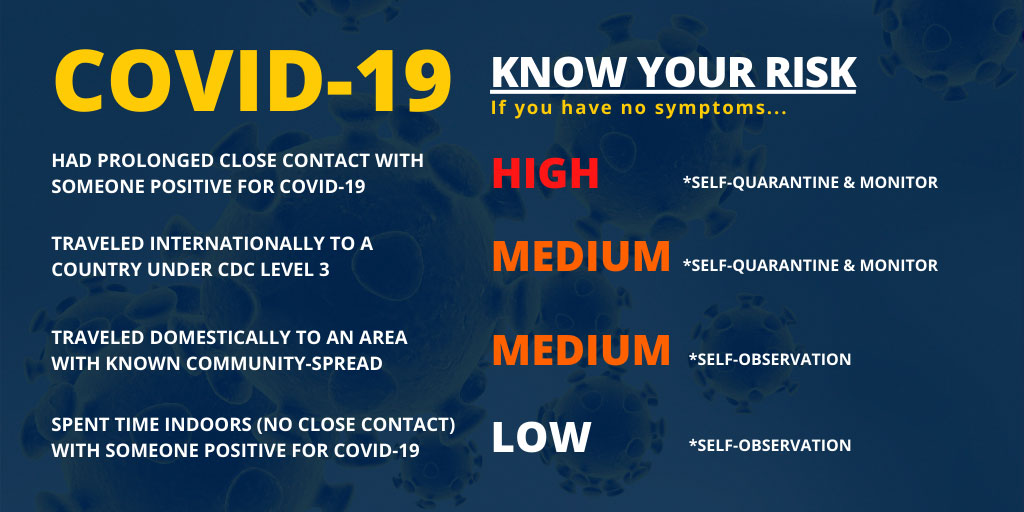
Markets see their biggest drop in recent years as fear of the COVID-19 virus spreads.
 Letter to Britain