Home » UK economy (Page 5)
Category Archives: UK economy

Boosting Britain’s GDP 5% in three easy steps
by John Brian Shannon | October 18, 2016
Opportunities as big as the sky abound regarding UK exports to developing nations that need everything, and needed it yesterday.
India with 1.5 billion people now and 2.2 billion by 2025, need massive upgrades to their electrical grid. Although India has made great strides in recent years, some 400 million people living in rural areas of the country have never had electricity.
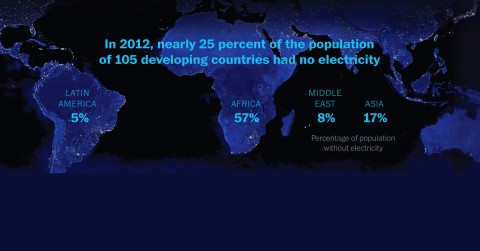
Is Britain ready to export electricity grid expertise and grid components to India’s 400 million citizens who have never had electricity in their homes? Such opportunity with real benefits for both nations!
Filling that need over the next two decades will cost hundreds of billions of dollars (if the Americans do it) but that begs the question Why leave it to the U.S.A. alone?
Such an opportunity represents hundreds of billions pounds sterling if the UK takes on part of that project — with significant opportunities to earn revenue by financing such projects — financing which are likely to be guaranteed via some combination of Indian government bonds, World Bank funding, and IMF loans.
Not only that, of course. India has a growing middle class with real purchasing power that want to purchase quality cars and trucks, housewares, electronics, and just about any product manufactured in the UK.
Further, Indian corporations need access to world class financing and market exposure afforded by the London financial sector, and some of the world’s preeminent legal and architectural firms have an obvious role in helping India to become all that it can and should be.
GCC kingdoms are always searching for evermore high-end warplanes and civilian jetliners, and they are always quick with the money. And, especially nice, no bickering when it comes time to pay the bill.
The GCC has transformed in recent years due to massive expansion in the formerly sleepy fishing villages of Dubai, Abu Dhabi, and Ras Al Khaimah — turning them into thriving financial centres, replete with stunning architecture and residential communities.
In fact, some of the most famous buildings in the world are located in those three cities and were designed by world class architects based in London, engineered by the most advanced engineering firms in the world, along with a host of other services such as project management, financing and property management, many London-based.
In the GCC, it isn’t about whether they have the money, because they sure do. It’s about having a presence and being there to meet opportunities as they arise.
In places like Dubai, major projects are envisioned, mooted, and completed in less than four years. Which is about the amount of time it takes to get just a simple development proposal permit approved in some cities. The message there is; Don’t nap, or you’ll miss it.
Brazil. The country’s formerly strong economy has taken some shocks in recent years. Both economic and political shocks have caused damage to the Brazilian economy, but that also presents many opportunities for investor groups. Huge Brazilian conglomerates that are barely holding together for now could be a real bargain for investors with sterling to spare.
What is great about commodity based economies is that when the price rises, it doesn’t get any sweeter. And when commodity prices are low, it’s almost always a good time to buy stock in those companies, or just buy the whole company.
Sugar from Sugarcane – and Biofuel Made from Sugarcane
Companies like Cosan and Raizen have the advantage of selling their sugarcane in two very different markets.
If the price of sugar is high, then the twice-yearly sugarcane crop gets sold as sugar commodity, or as finished sugar product at the retail level.
But when sugar prices drop, those same corporations simply sell their sugarcane to the huge biofuel market in Brazil, where 92.9% of Brazil’s cars run on a minimum 22% biofuel blend (E20) as mandated by Brazilian law, with many cars burning 100% biofuel (E100) which significantly lowers vehicle emissions and respiratory related healthcare spending across Brazil’s largest cities.
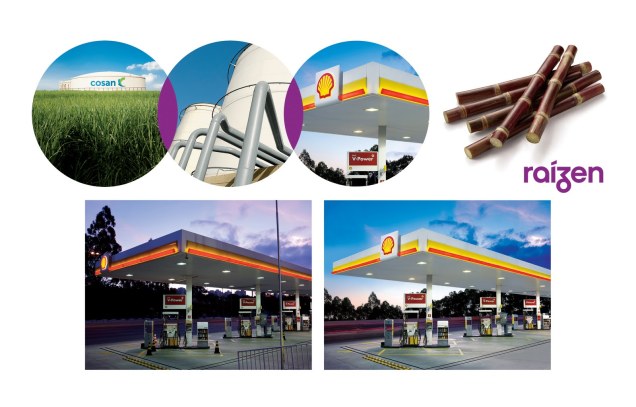
Raízen, the joint biofuel venture between Royal Dutch Shell and Cosan Ltd. is the 3rd-largest energy company in Brazil. Image courtesy of Raízen.
“A life cycle assessment by the Yale School of Forestry on jatropha, one source of potential biofuels, estimated using it could reduce greenhouse gas emissions by up to 85% if former agro-pastoral land is used — or increase emissions by up to 60% if natural woodland is converted to use.
In addition, biofuels do not contain sulfur compounds and thus do not emit sulfur dioxide.” — Wikipedia Aviation Biofuel
Aviation Biofuels
With global aviation accounting for 2% of total anthropogenic (human-caused) CO2 emissions, now is the time for Britain to legislate 50/50 blends of biofuel and conventionally sourced petroleum aviation fuel. Many airlines are already doing exactly that. Notably, the US Navy is doing the same as part of it’s Great Green Fleet programme. Biofuels can also help to moderate jet fuel costs when conventional fuels skyrocket due to wild price swings.
By switching commercial aircraft to 50% biofuel blends, aviation related CO2 emissions would drop by half and respiratory illness healthcare spending would drop by billions.
Summary
What makes these three opportunities so tantalizing are the sheer numbers; India with 2.2 billion consumers by 2025, the GCC nations with their unquenchable thirst for the trappings of a wealthy society, and Brazil for it’s commodities, especially the sugar/biofuel synergy with the opportunity to cut global aviation emissions by half.
With the right vision, the right approach by the British government, and some dedicated effort and follow-up by HM government, it should prove to be a cakewalk to grow the British economy 5% by 2021 (separate from already planned growth) on the strength of those three opportunities alone.
Related Articles:
Read: Sweetening The Biofuel Sector: The History of Sugarcane Ethanol in Brazil
Read: Sugar-Cane Fuel Wins in Brazil as Cheap Ethanol Beats Gasoline
Read: Shell and Cosan invest $1 billion to boost Brazilian biofuels
London Usurps Berlin As Startup Capital Of Europe
“Berlin has long been jewel in the crown of Europe’s startup scene. Startup investment has flowed into the German capital for years but according to research from Ernst & Young, other European cities are providing it with stiff competition.
Berlin saw a huge year on year decrease in startup investment volume from H1 2015 to H1 2016 to see its crown slip as startup capital of Europe.
In its place is now London, with 1,320 million euros of investment in the latest half year – an increase of 289 million over the same period in 2015.” — Niall McCarthy (Statista)

You will find more statistics at Statista
Related Article:

Trading ‘Globalization’ for ‘Interdependence’
by John Brian Shannon | August 19, 2016
Globalization has done much to lift the total GDP of many nations, except that inequality has increased by orders of magnitude (even within rich countries) due to the sloppy and sometimes corrupt implementation of the thing we call Globalization.
Read the prescient 2014 article by the New York Times’ Neil Irwin You Can’t Feed a Family With G.D.P.
‘Interdependence’ would be a better catchword to replace the word ‘Globalization’.
‘But aren’t they the same thing?’ some might ask. Well no, they’re not.
Globalization can best be described as ‘having the ability to export to other countries in exchange for goods or currency (and only if we must) accept goods from other countries, and pay for them in goods or currency.’
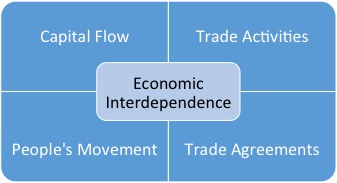
Whereas Interdependence could be described as ‘mutually beneficial trade between nations, where each block of transactions can be recorded as a ‘Win-Win’ for those trading partners.’
Yes, it’s a bit more complicated than just dumping your stuff in another country and getting the loot. (Globalization in a nutshell)
But if each block of transactions were properly engineered to produce the Win-Win result from the beginning, we wouldn’t have the follow-on effects of Globalization to deal with — inequality and the ‘trickle-up economy effect’ whereby in 2016 the 1% own 50% of the world’s total wealth and by 2030 will own 76% of the world’s wealth, and financial crises and trillions (globally) paid by taxpayers in corporate welfare over the postwar period, mountains of debt that will never be repaid, and deteriorating democracies as corporations take the reins from governments, and if TPP isn’t stopped soon the corporations will be taking governments to court for lost profit opportunities due to governments following the instructions of voters!
Originally, the North American Free Trade Agreement (NAFTA) was a great agreement designed to make North America more competitive vis-à-vis the other continents — but it was badly implemented by mediocre minds — which resulted in it being spoken of in the same tone of voice reserved for other words deemed filthy, such as that ‘Globalization’ word.
In regards to such agreements, it seems that no matter how noble and exceptional the original agreement (with the exception of the Montreal Protocol) it seems that proper implementation of these agreements fail. see; Kyoto Accord, see; hundreds of unfulfilled UN resolutions, etc.
But one step better than enforcing the terms and conditions of globalization’s international trade agreements, would be to have ‘Interdependence’ become the new catchword thereby superceding (Canadian spelling) Globalization.
Civilization must always advance.
That doesn’t mean that gadgets become more sophisticated (although some might think that’s the whole point of it) what it means is that our thinking must advance — all those shiny gadgets are merely a consequence of that higher thinking, not the purpose of it.
Our thinking about governance could move forward by a quantum leap if we’re advanced enough to grasp it.
Globalization = The ability to dump our goods in other countries and get loot for it, is one thing.
Interdependence = Ongoing, engineered agreements between nations (bilateral, trilateral, multi-lateral, as the case may be) where each agreement must result in a ‘Win-Win’ for each of the participant nations or there’s no signing ceremony.
Do you see the difference?
The difference is a more civilized world, fewer socio-economic problems generally and less inequality specifically, and fewer conflicts.
The reason we no longer live in trees and eat bananas is that we can grasp larger concepts; Hence, here we are, today.
The questions; Is this it? Is this who we are? Is Globalization our highest accomplishment? Or are we a people capable of better-yet?
Time will tell.
 Letter to Britain