Home » Theresa May (Page 19)
Category Archives: Theresa May

Day 548: Pass the Eggnog and Where Are We On Brexit?
“It was a dark and stormy night; the rain fell in torrents — except at occasional intervals, when it was checked by a violent gust of wind which swept up the streets (for it is in London that our scene lies), rattling along the housetops, and fiercely agitating the scanty flame of the lamps that struggled against the darkness.”
Oops, that was another lifetime. But in the here and now, London rain still falls in torrents, violent winds sweep up and down the streets, and the flames of freedom still struggle against the forces of darkness.
Our protagonist is of course the redoubtable Theresa May, Prime Minister of the United Kingdom who has given repeated assurances since her July 2016 inauguration that “Brexit means Brexit” and “Brexit will occur on March 29, 2019” and has repeated many similar expressions of intent.
But not much has changed.
For all the talk by Remainers and their skulking ‘Project Fear’ campaign, none of their shrill accusations have materialized; The economy didn’t crash, unemployment didn’t skyrocket, the deficit hasn’t increased, and governments haven’t fallen.
It’s been a rather bit dull, hasn’t it?
For all the talk by Leavers and their loud promises to save £350 million per week (and redirect the money to the NHS) and to save UK taxpayers £8.6 billion (net) per year, and the largely unfulfilled increase in British exports due to renewed interest in UK goods, not much has happened there either.
In fairness to the Leave campaign, as Brexit hasn’t yet occurred they can’t be faulted on promises which can’t be kept until Brexit completes.
So, What Has Happened?
Politicians on both sides of the Brexit line have been talking, and they’ve decided to talk some more.
Apparently, the talks are going so well that one side wants to pay the other side £40 billion in advance of gaining a bespoke trade deal, while the other side say that talks have progressed so well that they’re going on to ‘Phase II’ — more talk — but this time the talk will be about trade.
Oh, and March 29, 2019 appears to be the mutually agreed official Brexit date, but negotiators on both sides have created a policy ‘Mulligan’ allowing them to postpone the official Brexit date in case one side misses the target date by a few days or weeks.
How very European.
And you must know they agreed on the Mulligan as the first order of business, but then delayed announcing it until concluding their ‘Phase I’ negotiations.
Hehehe, I love the Europeans. Really I do, while knowing full well that if an alien attack ever occurs, the interstellar invaders will be told in the most indignant of tones “Oh no old boy you mustn’t attack now, it’s tea-time — and as civilized people we must agree to delay the start of the war.” (Or some variant of that)
Here in North America such concepts as missed deadlines aren’t tolerated. ‘Get it together or you’re fired’ is how deadlines are kept in the U.S.A. (and no Mulligans)
What’s on the Horizon?
Next-up appears to be working towards a trade deal by October 29, 2018 — as a lack of agreement by that date will indicate a WTO-style Brexit.
NOTE: October 29, 2018 is cited by many as the latest possible date to sign a Brexit trade deal and still have time for industry and government to properly implement such agreements.
Newspaper columnists are wondering aloud about a CETA-style deal between the UK and the EU. (CETA is a trade deal between Canada and the European Union that took 7 years to negotiate and even into the 8th year isn’t fully implemented)
Still, CETA is an excellent basis upon which to build a future trade relationship with the European Union. The UK could do worse than using CETA as a template to forge a new trading arrangement with the EU. Such an agreement could be further tailored in later months or years to meet specific needs on both sides of the English Channel.
But as of December 2017 we’ve not seen much urgency for trade discussions. However, as October 2018 draws close, the speed at which things happen will increase exponentially.
Nobody wants to fail at getting a trade agreement — UK and EU industry would crucify politicians who didn’t sign a viable and timely trade agreement — and voters would likely punish their respective politicians at the following election. Yet, if some horsepower isn’t soon applied to the slow-motion Brexit discussions, policymakers on both sides are likely to find themselves speaking from the opposition benches after the next election.
Either Way, We’re On Our Way to a Cordial Brexit
Whether a trade deal is signed in time or not, in typical European fashion a cordial parting looks set to occur.
Three years will have passed from the June 23, 2016 Brexit referendum and the only variable seems to be whether politicians will manage to negotiate a free trade deal that is ready to sign by October 29, 2018 thereby leaving enough time for implementation ahead of the final Brexit date of March 29, 2019.
Only 461 days to go, Prime Minister…
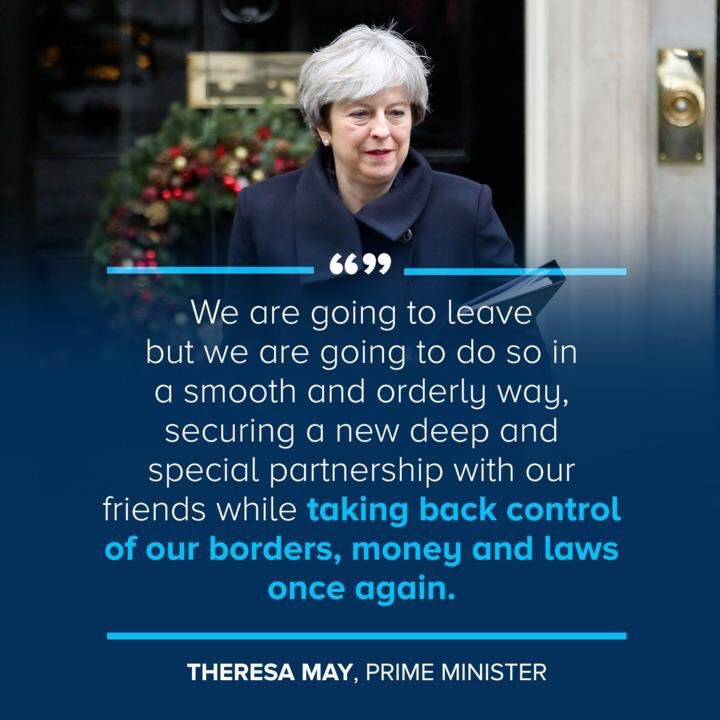
With Theresa May at the helm for the foreseeable future it may take plenty of time to arrive at certain Brexit waypoints. Yet irrespective of ongoing Brexit frictions — UK relations with the European Union are likely to improve even from their present (high) level. Which in the final analysis, means that quiet diplomacy is the most profound of Theresa May’s political qualities.
Wishing you all a very Happy Holiday season and a safe and prosperous New Year!

How Spending More on Defence Can Cost the UK Less
On June 23, 2016 the United Kingdom held an historic referendum so that voters could decide whether they wanted to leave the European Union governance architecture and over 52% of UK voters elected to “Leave” the EU.
Subsequent divorce negotiations between the two sides have been sporadic with short bursts of progress.
In recent days, UK Prime Minister Theresa May suggested to EU negotiators that a figure of £40 billion would be an appropriate amount for the UK to pay the European Union as a sort of “divorce fee” to allow the UK to leave while still gaining a favorable post-Brexit trade deal with the European Union.
However, the day after PM May suggested the £40 billion divorce payment, her government tabled an autumn budget with massive budget reductions for the already cash-strapped British military, one assumes to be able to afford the unprecedented divorce bill that the UK must now pay before March 29, 2018.
This blog post discusses the pros and cons of UK Ministry of Defence cuts and suggests a better way to afford the Brexit divorce bill.
The Responsibility of Government
The Number One responsibility of every government in the world is the protection of the country’s citizens and the sovereignty of the national borders. Everything else by definition, must be of lower importance. That’s how countries work.
Yes, even the UK’s cherished and highly ranked National Health Service (NHS) funding must fall to second place behind the safety and security of the country — as the NHS could (if worst came to worst) access significant billions in funding via corporate sponsorship — an option not open to the military.
How to Determine Military Funding
The size, composition and funding of the UK military MUST be determined by its overall mission — not arbitrary decisions by bureaucrats. Full stop.
(NOTE 1) Long-term stable defence funding is far better than generous amounts one year, followed by low funding the next (due to arbitrary budgetary decisions not based on actual military need) and then, who knows what funding they might get the year after? It’s the absolute worst way to fund a military. Pencil-pushing bureaucrats might as well be working for the enemy at that point.
(NOTE 2) This blog post isn’t “for” or “against” Theresa May or Philip Hammond, it’s a general statement on how to best fund any military, anywhere.
(NOTE 3) This blog post is based solely on the opinion of its author, although any military officer in the world would agree were they to view it from the UK perspective.
So, what is the mission – in order of priority?
- Absolutely 100% protection of the land, sea and airspace around the UK.
- NATO commitment.
- Commonwealth mutual aid.
- United States mutual aid.
- Potential Commonwealth member mutual aid.
- Only UN Security Council approved missions (and never any unapproved foreign missions)
- Creation of a HUGE civil engineering department, on par with the U.S. Army Corps of Engineers which build many of America’s roads, bridges, dikes, levees, ports and other infrastructure too important to be left to corporations where profit makes the final decisions. Oh, by the way, the U.S. Army Corps of Engineers saves the American taxpayer more money than it costs when compared to having U.S. infrastructure projects built by corporations. The UK has missed “windows of opportunities bigger than the sky” by not building critical national infrastructure using the UK military under a USACE-style system, and it has cost multi-billions more that it should.
- Humanitarian assistance delivered to any natural disaster zone or human-caused crisis anywhere in the world.
Conclusion
Military forces perform better when their mission is clearly defined, when they have stable funding (and once the amounts have been promised by the government, untouchable) and have very clearly defined powers.
Tampering with this age-old formula for success is the surest way to help any military fail in its appointed role, and will work to demoralize the troops and cost the taxpayers much more than by using universally accepted practice.
- To watch a segment from LBC’s The Nigel Farage Show on the topic, click here.
- To read a related Westmonster.com blog, click here.

UK Taxpayers: If £40 Billion Isn’t Enough, Then It’s a WTO Brexit, Prime Minister
“It’s starting to get a little rich.” That seems to be the general opinion of UK taxpayers judging by the thousands of terse comments posted in the comments section of UK newspapers, on UK talk shows, and in places like YouTube where hundreds of Brexit videos (both pro and con) await your viewing pleasure.
But the general consensus seems to be that these extremely large numbers will require huge tax increases and may reflect badly on the Conservative Party’s chances in the next election.
It’s Fun, Fun, Fun, ’till Daddy takes the T-Bird away as the Beach Boys tune goes.
It’s great to make nice with the EU people and pay them billions in exit fees, but after a certain large number is reached taxpayers are likely to revolt, signalling the end of the Conservative reign for the foreseeable future.
Why Should There be a Divorce Bill at All?
This still, even at this late date, hasn’t been explained. AT ALL.
Not even Theresa May’s government seems to have received guidance from the EU Parliament or their negotiators as to why the UK should pay the outrageous sums demanded by the EU.
What’s it for? Everyone wants to know. The silence on this is deafening.
Both sets of numbers, whether proposed by the EU or the UK seem completely arbitrary to put it mildly.
Let’s Leave on Good Terms
Having said that, when you exit a marriage or a long-term business agreement it’s expected you don’t leave the other party in the lurch. Of course some kind of payment for loss of opportunity by the jilted party is de rigueur if you want warm trade relations to continue.
It’s also good business to NOT ask for wholly outrageous amounts of money (too late for that, I guess) otherwise, they risk ‘poisoning the well’ and even if trade continues, over time evermore billions of UK trade will be done with the U.S. and billions less with the EU.
What is Fair?
No change in money flowing across the English Channel for four more years (but no lump sum payment to the EU either) and Brexit can occur as scheduled on March 29, 2019 — but until then, the UK should continue to receive the exact same benefits from the EU as it will remain a paid-up member until that date. (Hey, no shorting us!)
After that date, the UK can continue to pay the EU the same £8 billion (net) for three more years — a full three years beyond Brexit day.
Calendar
- Article 50 triggered March 29, 2017, therefore,
- March 29, 2017 to March 29, 2018 (£8 billion net)
- March 29, 2018 to March 29, 2019 (£8 billion net)
- Also, March 29th 2019 will be Brexit day, and after that date the UK will no longer be an EU member
- March 29, 2019 to March 29, 2020 (£8 billion net)
- March 29, 2020 to March 29, 2021 (£8 billion net)
- March 29, 2021 to March 29, 2022 (£8 billion net) and the final payment to the EU
Take it or leave it Mr. Barnier, or the EU won’t get to sell their goods to the UK after March 29, 2019 except under WTO rules.
Many UK citizens will miss buying BMW’s, Mercedes Benz, Volkswagens, etc. for a couple of weeks (hehehe) until the EU would come to its senses. I bet EU heads would roll if it ever came to that.
OK, Seems Reasonable Enough. But What Will the UK Get in Return?
Nobody seems to know…
 Letter to Britain