Home » Britain (Page 4)
Category Archives: Britain
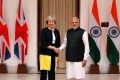
Money… Money Changes Everything!
At this moment in UK history, more money is needed to fund the NHS, schools, roads, railways, airports and other national infrastructure, Trident, foreign aid — and to fund 500 million sterling worth of renovations to the House of Commons.
Money is certainly the problem, as more money would solve all of those issues and many more.
Unfortunately, some governments ‘rob Peter to pay Paul’ but with little change in the total amount of revenue actually collected by the government.
- In some cases, a socialist (Labour) government will raise more revenue by raising taxes. Let the wailing begin!
- In other cases, a conservative (Conservative and Unionist) government will cut expenditures via fiscal and budgetary belt-tightening. Groan!
Which is why governments everywhere are always on the hunt for more money.
But are they? Are they really on the hunt for money? Are they really trying to increase revenue? Or do they automatically hit their default mode every time a budget crisis looms?
Some observers think that governments dismiss attempts to increase revenue via increased trade with other nations too quickly and move to their particular default mode.
Where Could the UK Find 1.3 Billion Consumers Wanting to Buy British Goods?
Well, India, for one. And they’re a Commonwealth nation. Ta-Da! See? It’s sooo simple.
All the UK government must do is to reach out to India’s leaders (especially post-Brexit, but nothing stopping them from getting started now!) in the interests of ramping-up trade by at least one order of magnitude.
Why should India purchase trillions of rupees worth of goods from non-Commonwealth nations when they could purchase them from the UK?
Why does India purchase their aircraft carriers from Russia, their fighter-bombers from Russia, other significant navy ships from Russia, and billions worth of goods from China, the southeast Asian nations, and the United States?
A century ago, Great Britain’s trade relations with India were booming. Shipyards couldn’t build ships fast enough to keep up with the annual increase in trade.
Who dropped the ball?
Heads should roll for allowing that relationship to falter — a relationship of prime importance to both the UK and to India!
Never Mind Playing the ‘Blame Game’ There’s No Time!

Instead of UK government departments fighting each other for funding, the government should work to ramp-up trade with India to increase Britain’s GDP by 5 per cent.
We need to get a piece of that rapidly growing and rapidly modernizing economy, and thereby add five per cent to Britain’s annual GDP.
Yes! More money will solve all of Britain’s spending problems… but it isn’t going to fall out of the sky and land in the Treasury building by itself!
Someone! Anyone! Perhaps the Prime Minister or the Foreign and Commonwealth Secretary (or both) along with the Queen should invite Prime Minister Modi of India and his high officials to London, for an unprecedented and long overdue re-look at the macro relationship between the two countries to see how increased trade could improve the economies of both nations, and how each nation can play to their own strengths and work to offset each other’s weaknesses.
Instead of UK Government Departments Fighting Each Other for Funding – Increase the Available Revenue Pool for All Departments
Companies fight over ‘market share’ because that’s what companies do. And it is often a vicious competition.
However, governments have an unparalleled advantage here because they can increase the overall size of the market — which, using this metaphor, relates to UK GDP.
By dramatically ramping-up trade with India the government could increase GDP by five per cent, easily meet the spending requirements of all departments and still have the economic clout to run balanced budgets indefinitely.
This so badly needs to be done that Brexit is a side-show by comparison, although without Brexit it would be difficult to enter into new trade arrangements with any non-EU country.
In summary, Brexit is merely the means to an end — an end with a much stronger economy for both Britain and India, and a stronger Commonwealth partnership.

Every Day, We Teach Others How to Treat Us
Imagine every UK citizen — including those serving in government working to obtain the best Brexit for all Britons — sitting down with a clean sheet of paper to write out the very best future that we could hope to obtain for British citizens, factoring-in our present level of understanding, our natural resources, our labour force, the available technology in 2017 and of course, our (very) human psychology.
It’s such a good idea — why do anything else?
Write the Future You Want
Therefore, let’s start fresh and write out the best possible future for the citizens of the United Kingdom — and just because we’ve always done things a certain way doesn’t mean that we must always do things that way.
“If I had asked people what they wanted, they would’ve asked for faster horses.” — Henry Ford
Yes! Exactly! Henry Ford was right.
Which is why we now drive capable, safe, and luxurious cars, instead of riding horses specially bred for speed and long distance.
It’s called ‘that Vision thing’ and one of the foremost ‘Visioneers’ in history was… you guessed it, Henry Ford.
Not that Henry was the only one. But it takes a special kind of inspiration to look around and realize that changes are long overdue.
The ‘Win-Lose paradigm’ a.k.a. ‘The Law of the Jungle’ must disappear into the dustbin of history if we’re to survive as a species. Unfortunately, we’ve not yet seen enough of the ‘Win-Win’ vision thing, and here we are well into the 21st-century.
How Does This Thinking Apply to the UK / EU Relationship?
Were the leaders of the UK and of the EU to sit down with a clean sheet and write out the best possible future for their respective citizens, no doubt, it would look very different from the present articles of debate.
Every military person will tell you the quickest way to lose a war is to constantly defend bad positions. And that’s true in politics and in life. Far better to take an objective look at a situation, write out the best possible outcome, and always work to that script.
It’s the way of the world, and what appears as indefensible positions now will seem completely ridiculous positions a year or a decade from now.
At the very least, when we start out with a clean sheet, we start from the most positive position — instead of defending an evolved (bad) position.
Teach Us to be Part of the Solution, Instead of Part of the Problem!
Every day, we teach others how to treat us. We must always be mindful what we’re teaching others.
If we teach them that threats of violence get us to the negotiating table, we’ve taught them to be our abusers!
If, as a professional courtesy, we forward our policy proposals to them ahead of upcoming meetings with them — we’re teaching them to treat us as part of the solution instead of part of the problem.
If we teach them that we’re willing to be responsible for our items of responsibility, we’re sending the signal that we expect the same from them.
READ: Every Day, We Teach Others How to Treat Us
In Any Relationship, Problems Will Crop Up
It’s how you handle them that counts!
Putting on a great big voice and shouting via the media, “You owe us 100 billion euros to pay for projected future liabilities and we want the money NOW!” isn’t the best way to teach others how to treat us.
And with that kind of tone, the response will always be negative.
Such statements are the best way to make UK citizens and politicians part of the problem, instead of part of the solution.
That’s not the way to solve (what probably is) a very real problem. No doubt there will be financial costs associated with Brexit, and both sides may incur different kinds of costs, and all of it must be fairly and carefully worked out between the parties.
The EU doesn’t want to get stuck paying billions of euros worth of future pension or other social expenditures for UK citizens who work or once worked in the European Union. And that’s reasonable. Who could blame them?
I hope Prime Minister Theresa May, fresh from her council election victories, contacts the appropriate EU politicians and magnanimously expresses to them that there won’t be any problem with Britain meeting it’s commitments to the EU, and further, invites them to a working lunch at Downing Street to ask them to generally inform her and the Chancellor of the Exchequer about the concerns held by senior EU politicians regarding future British liabilities to the Union.
Not that anything should be decided then! Far from it. But European Union officials should feel comfortable enough to express their concerns and to inform the Prime Minister how they arrived at those particular numbers.
If Theresa May plays that role well, she will disarm potential EU opponents and cause them to want to show up with reasonable and defensible numbers, and they’ll arrive there in a spirit of mutual problem-solving.
Which is the only way it’s going to work.
Both sides need to get it through their heads; Brexit is either going to become a ‘Win-Win’ proposition, or it will become bloody-hell for both sides. As an educated person who lives in the 21st-century, you already know that ‘bloody-hell’ is a ‘Lose-Lose’ proposition.
And only fools engage in ‘Lose-Lose’.

French Election: A de facto Referendum on Frexit?
French voters heading to the polls on Sunday may notice that public opinion has been shifting in recent days towards Frexit. Even Emmanuel Macron the ‘establishment’ candidate hints that Frexit might be in the cards if the EU doesn’t reform.
Emmanuel Macron warns EU it must change or France will make swift Frexit (The Sun)
Marine Le Pen continues to gain in the polls and with only days to go before the vote, one wonders what would happen if the vote were a month on? Probably a Le Pen victory if the present trend continues.
Alas, the vote will be held on May 7, not June 7, but it shows how voter preferences are changing as each day passes.
Latest French Election Polls: Le Pen Gains on Macron (Newsweek)
Still, a threat to leave the EU coming from an establishment candidate for the French presidency is shocking, as was the violence on the streets of Paris, a.k.a. the City of Love.
Could a new French president influence the Brexit process?
If Marine Le Pen is elected, the EU will face two nations with plans to leave the Union — Britain and France.
On the other hand, if Emmanuel Macron is elected (and if the EU won’t agree to the changes requested by Macron) it seems likely Frexit will occur anyway.
Back to the effects of the French election on the UK;
In the case where the United Kingdom (alone) leaves the EU, all of the hurt, anger and blame felt by the jilted party (the EU Parliament) will be focused on UK voters and their political leaders.
But in the case where both Britain and France decide to leave the EU, the Union may have no choice but to accept that the democratic deficit in Brussels is to blame — and all of the hurt, anger and blame will be directed at Brussels by the EU bloc leaders.
And if that occurs, some necessary changes might actually occur. Although two of their best horses (Britain and France) will have already left the stable.
As traumatic as it might be, that’s what it might take for the un-democrats in Brussels to change their ways.
My view is that Emmanuel Macron will win the French presidency in the May 7th election, that the EU will not offer the changes necessary for France to remain in the Union, and that Marine Le Pen will win the 2022 election and take France out of the European Union shortly thereafter.
‘The one constant in the cosmos is change’
Let’s hope EU leaders realize the profound truth of that truism and decide to make the changes necessary for France to stay in the European Union. Otherwise, even bigger changes are coming for continental Europe. Mon Dieu! Quoi de neuf?
 Letter to Britain