Home » Britain (Page 16)
Category Archives: Britain
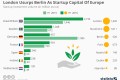
London Usurps Berlin As Startup Capital Of Europe
“Berlin has long been jewel in the crown of Europe’s startup scene. Startup investment has flowed into the German capital for years but according to research from Ernst & Young, other European cities are providing it with stiff competition.
Berlin saw a huge year on year decrease in startup investment volume from H1 2015 to H1 2016 to see its crown slip as startup capital of Europe.
In its place is now London, with 1,320 million euros of investment in the latest half year – an increase of 289 million over the same period in 2015.” — Niall McCarthy (Statista)

You will find more statistics at Statista
Related Article:

Building a Better Britain with Higher Education
by John Brian Shannon | September 1, 2016
Q: What is the Thousand Ton Elephant in the Room?
A: All countries with tuition-free university have ultra-low crime statistics
How many PhD’s have a criminal record? None. You simply won’t have the opportunity to earn a PhD if you have a criminal record. You will hear the words, ‘Sorry old boy, you just don’t make the cut’ and your university application gets tossed in the bin. So much for that plan.
However, it’s within the realm of possibility that if you searched the globe high and low, you might find a handful of PhD’s who’ve been convicted of criminal offenses after having obtained their credentials; But on the main, those with ultra-high levels of education are famous for avoiding criminal activity.
This is interesting because it applies not only to those with a Doctorate degree, but similarly to those with a Masters degree. In fact, anyone with even a minor college degree is likely to have less involvement with criminal activity than the general non-degree, non-MBA, and non-PhD population.
These people have a real life, a real opportunity to get ahead the moment they finish their university education, and they tend to have stronger family ties. They simply have far too much to lose by throwing it away engaging in any sort of criminal or unethical behavior.
Q: What percentage of Americans have a PhD?
A: According to U.S. Census 2013 data, 1.68 percent of Americans over the age of 25 have a PhD. This equates to approximately 2.5 million people. People with professional degrees such as MD or DDS make up 1.48 percent of the U.S. population, making the total percentage of Americans referred to as ‘Doctors’ equal to 3.16 percent. — Reference.com
Their cohort contributes much to the success of the country and is responsible for the fewest crimes on a per capita basis (especially violent crimes) which is important in a country with 16,121 homicides in 2015 and a homicide rate of 5.1 per 100,000 people.
It should be noted that the employment rate for those with Doctorate degrees in the United States is a lowish 76%. Those unemployed Professors may either be retired, happily travelling the globe on sabbatical, or unemployed. But in America, it has been acknowledged universities there produce more Profs than the U.S. requires in any given year, therefore, unemployment can be a concern for American PhD’s.
In the United Kingdom, via the innovative NewRoutePhD initiative, the focus is on obtaining employment for students once they obtain their credentials.
Also in the UK, there is heavy emphasis on the disciplines of Politics and International Relations, Psychology, and Chemistry which are highly valued by companies and universities in the United Kingdom and throughout Europe. PhD students in the UK know they won’t be unemployed once their education is completed.
Also in high demand in the UK are so-called Research Degrees which can range in quality from a simple degree, to an MBA degree, or even a PhD level degree where world class research is being conducted every day within the university by students in engineering and the social sciences.
Q: What is the New Route PhD?
A: The New Route PhD is a national initiative to equip PhD students with the skills they need to pursue successful careers as leaders in universities, companies, government or the public services.
It provides doctoral students with the highest quality of taught materials and practical experience alongside advanced research. This integrated approach offers students a learning environment in which to broaden and deepen subject knowledge and professional skills while providing the opportunity for interdisciplinary study to extend their expertise in new directions.
This innovative and seamless scheme has the full support of the UK government, the Higher Education Funding Council of England (HEFCE) and the British Council. It meets UK doctoral standards and the principles laid down by the Quality Assurance Agency of the UK, including normal quality assurance mechanisms such as assessment hurdles and the provision of external examiners.
In terms of the research student experience as well as the standing and value of the awards for which New Route PhD™ students study, this programme is a landmark in the provision of education excellence.
The New Route PhD™ is an exciting alternative to — not a replacement for — a traditional PhD. Successful New Route PhD™ graduates will have obtained professional and transferable skills that form a major part of the programme. For those pursuing university teaching careers, the Certificate in Learning and Teaching, which is an optional part of the programme, is an invaluable qualification in its own right. — Global Vision
Many countries have looked at the benefits of providing tuition-free university education for citizens and non-citizen residents and have found the so-called side benefits to be (arguably) an even greater benefit than having a highly educated workforce.
Countries like Norway, Sweden, Finland, Denmark, Germany, France, and recently Chile, have noticed that since they began offering tuition-free university education, their crime statistics have dropped remarkably.
Other countries charge a very nominal fee that allows students to study and obtain a useful degree at very reasonable cost in Austria, Belgium, Czech Republic, Greece, Italy, and Spain. While other countries such as Argentina, India, and Taiwan offer some novel solutions for obtaining a university degree at a very low cost. Taipei, Taiwan was voted the most affordable city for university students in 2015. — Where Can You Study Abroad for Free?
In Norway, any citizen or non-citizen resident can obtain a free university education by simply applying to any public university. Many people in the country have at least one degree, while others have several.
Maybe that’s one reason why Norway is awash in success!
(Excerpted from The Secret of Norway’s Success)
- Norway has the highest accumulated revenue surplus in the world, worth $1.3 Trillion+ (held in the world’s largest sovereign fund)
- Strong and steady GDP growth that beats any stock exchange growth in any year
- Exceptionally low Debt-to-GDP
- A very high ranking on the UN Happiness Index
- A very high ranking on the Social Progress Index
- Typically a #1 or #2 ranking on the highest per capita income in the world
- In the Top 5 worker productivity rankings in Europe (and by extension, the world)
- One of the lowest crime rates in the world
- One of the ‘least corrupt’ nations. Ranked #5 on the Corruption Perception Index
- An average 2.5% unemployment rate (except during the global financial crisis where it shot up to 5.5%) Not to worry, it’s already fallen to 3.0%
- Free university tuition for all citizens and residents
- Free universal healthcare ranked 7th in the world (It would rank higher, but maintaining full-service Hospitals in remote regions with tiny populations is uneconomical)
- Virtually 100% of the country is powered by renewable energy except for some remote settlements where a microgrid (natural gas power) is the only choice
- Unparalleled diplomatic credentials. Everyone knows Norwegians are among the best ‘honest brokers’ in the diplomatic world making Norway the ‘go-to’ arbitrators for nations in crisis
- A favorite country of the Olympics committee having hosted successful games twice in recent years
Also notable about the Norwegian example is that the homicide rate is practically non-existent — as there is typically less than one murder per year in the entire country.
With the influx of refugees in recent years, pickpocketing and burglary and other theft have increased, but the Oslo Police have since ramped-up their response with the result that such crimes are now decreasing. — United States Department of State, Bureau of Diplomatic Security (OSAC)
Following the Norwegian example of higher learning, resulting in a more vibrant and educated society and concomitantly a lower crime society, is the way To Build a Better Britain.
Spend More on Education / Less on Prisons
If Prime Minister Theresa May really wants to build a better Britain, the best way to accomplish it is to provide tuition-free university education for UK citizens at public universities, and in so doing, dramatically improve the lives of British citizens and their employers while growing demand all over the globe for the valuable and world class knowledge of Britons.
Related Article:
- The Best Universities in the UK (Times Higher Education World University Rankings)
- 10 distinctive features of the Japanese education system that made this nation the envy of the world (Brightside media) See a short video here

Brexit: The Path to UK Sovereignty
by John Brian Shannon | August 26 2016

As the UK government gears up to deal with the will of voters, four paths to trade in Europe appear that merit consideration
- EEA membership
- EFTA membership
- WTO rule-based membership, sans EEA or EFTA
- Negotiated trade deals that are none of the above
EEA membership would qualify Britain to trade with other EEA member nations, all of which are located in Europe, but not all are members of the European Union.
From the EEA website:
The EEA Agreement provides for the inclusion of EU legislation covering the four freedoms — the free movement of goods, services, persons and capital — throughout the 31 EEA States. In addition, the Agreement covers cooperation in other important areas such as research and development, education, social policy, the environment, consumer protection, tourism and culture, collectively known as “flanking and horizontal” policies. The Agreement guarantees equal rights and obligations within the Internal Market for citizens and economic operators in the EEA.
What is the EEA Not?
The EEA Agreement does not cover the following EU policies:
- Common Agriculture and Fisheries Policies (although the Agreement contains provisions on various aspects of trade in agricultural and fish products);
- Customs Union;
- Common Trade Policy;
- Common Foreign and Security Policy;
- Justice and Home Affairs (even though the EFTA countries are part of the Schengen area); or
- Monetary Union (EMU).
The Agreement on the European Economic Area, which entered into force on 1 January 1994, brings together the EU Member States and the three EEA EFTA States — Iceland, Liechtenstein and Norway — in a single market, referred to as the “Internal Market”.
Switzerland is not part of the EEA Agreement, but has a bilateral agreement with the EU. You can read more about this agreement on the European Commission website, and on the Swiss Federal Administration website.
EFTA membership governs free trade relations between EFTA States, which in 2016 are Iceland, Liechtenstein, Norway and Switzerland. Britain was a founding member of the EFTA in 1960 until 1973 when it joined the EC. It would need to apply to the EFTA in order to become a member.
From the EFTA website:
The European Free Trade Association (EFTA) is an intergovernmental organisation set up for the promotion of free trade and economic integration to the benefit of its four Member States.
The Association is responsible for the management of:
- The EFTA Convention, which forms the legal basis of the organisation and governs free trade relations between the EFTA States;
- EFTA’s worldwide network of free trade and partnership agreements; and
- The European Economic Area (EEA) Agreement, which enables three of the four EFTA Member States (Iceland, Liechtenstein and Norway) to participate in the EU’s Internal Market.
EFTA was founded in 1960 on the premise of free trade as a means of achieving growth and prosperity amongst its Member States as well as promoting closer economic cooperation between the Western European countries. Furthermore, the EFTA countries wished to contribute to the expansion of trade globally.
Based on these overall goals, EFTA today maintains the management of the EFTA Convention (intra-EFTA trade), the EEA Agreement (EFTA-EU relations), and the EFTA Free Trade Agreements (third country relations). The EFTA Convention and EFTA free trade agreements are managed by the Geneva office, and the EEA Agreement by the Brussels office.
EFTA was founded by the Stockholm Convention in 1960. The immediate aim of the Association was to provide a framework for the liberalisation of trade in goods amongst its Member States. At the same time, EFTA was established as an economic counterbalance to the more politically driven European Economic Community (EEC). Relations with the EEC, later the European Community (EC) and the European Union (EU), have been at the core of EFTA activities from the beginning. In the 1970s, the EFTA States concluded free trade agreements with the EC; in 1994 the EEA Agreement entered into force. Since the beginning of the 1990s, EFTA has actively pursued trade relations with third countries in and beyond Europe. The first partners were the Central and Eastern European countries, followed by the countries in the Mediterranean area. In recent years, EFTA’s network of free trade agreements has reached across the Atlantic as well as into Asia.
EFTA was founded by the following seven countries: Austria, Denmark, Norway, Portugal, Sweden, Switzerland and the United Kingdom. Finland joined in 1961, Iceland in 1970 and Liechtenstein in 1991. In 1973, the United Kingdom and Denmark left EFTA to join the EC. They were followed by Portugal in 1986 and by Austria, Finland and Sweden in 1995. Today the EFTA Member States are Iceland, Liechtenstein, Norway and Switzerland.
World Trade Organization (WTO) membership is perhaps the easiest way forward as Britain (and virtually all nations) are already members and the WTO is merely a standardized set of rules that govern trade between nations.
The present ruleset governing UK trade is the EU ruleset, meaning that who the UK trades with, tariff rates, and other rules and conditions have been decided by 28 EU nations — and not always in the interests of the UK — but in the combined interest of 504 million EU citizens.
The main thrust of this means that WTO rules would continue and that the UK would not be allowed to charge higher tariffs on EU-sourced imports, than what the EU charges on UK imports into the EU. Although the UK could certainly decide to charge lower tariffs than the EU charges. That could be a significant benefit for some UK industries.
There are other benefits to WTO membership. And as most nations are WTO members anyway, the ruleset is well-understood around the world.
In February 2014, the Swiss voted in a referendum to no longer pursue EU membership and left the bloc. The government of Switzerland has therefore negotiated a series of bilateral trade agreements with the European Union AND is a member of the EFTA, but not the EEA.
Of course, WTO rules still apply — unless both parties agree to abrogate or change some of the WTO rulesets.
Keep in mind that both the EFTA and EEA are European trading area agreements and don’t apply anywhere else in the world, while the WTO applies everywhere.
Therefore, non-EU trade will be largely governed by WTO rules (as is the case with most countries) while Britain’s trade with the EU could take several different paths.
Any combination of WTO, EFTA, or EEA, or bilateral agreements that supercede WTO rulesets could be negotiated between Britain and the EU.
At the end of it all, why did 17 million+ voters choose to Brexit?
Two main themes appeared to gain considerable traction during the campaign.
One, the democratic deficit in Brussels, and two, the wholly unregulated movement of people from eastern Europe and the Middle East/Levant and a complete breakdown of the Schengen Area border control system.
Brexit effectively solves the democratic deficit problem in Brussels by returning governance to the House of Commons and the House of Lords. While the mass migration problem is solved as Brexit returns sovereignty of Britain’s borders to the UK government.
The revised EFTA convention (the Vaduz Convention) extends beyond free trade in goods, and includes provisions on free trade in services and the free movement of capital and of persons. None of these should be problematical to the UK given that the Vaduz Convention only applies between its members and so would not act as a gateway for the free movement of persons from the r-EU or elsewhere. All four EFTA states have standards of living comparable to or even higher than the UK so do not present any mass migration risk. — Brexit and International Trade Treaties, The European Free Trade Association (EFTA)
Recommended Read Brexit and International Trade Treaties by Lawyers for Britain
None of this can occur until Article 50 is triggered and a 24 month clock begins ticking to end Britain’s membership in the European Union.
It would be quite wonderful if Prime Minister Theresa May would hold a press conference every six months to inform Britons of the various areas of progress and ongoing obstructions until the Brexit process is complete — a process that could take as long as 5-10 years from the June 23, 2016 start date.
We are in uncharted waters and Britons are excited to be getting their country back. They know it’s going to take time, resolve, and they know full well that there will be difficulties along the path to restoring Britain’s full sovereignty. But the payoff in 5-10 years will be brilliant.
Whatever Britain is now, it’s only going to get better.
 Letter to Britain