Home » Britain (Page 15)
Category Archives: Britain

Becoming the Great Meritocracy: The Rise of Education in Britain
by John Brian Shannon | September 15, 2016
Prime Minister Theresa May says she wants Great Britain to become the world’s Great Meritocracy and one of the ways she intends to accomplish it, is by raising the priority given to education.
Which is brilliant! Of all the ways to spend taxpayer money to Build a Better Britain, equipping young minds to become all they can and should be must rank highest of all.
Much has been vocalized via the anecdotes of those who attended Grammar schools in Britain in the 1950’s-1980’s era who had decidedly poor experiences. In that era, education (and other parts of society) weren’t all that they could and should’ve been, and some schools, whether Grammar, Comprehensive, Modern, Academy, Faith, or Private, were downright terrible. And that is a shame.
But because a minority of students were badly educated or badly treated (or both) in various locations across the country, does not mean that Britain should close all schools or demonize certain kinds of schools.
Rather, let’s roll up our sleeves, find out what needs to be fixed and how to fix it, and Build a Better Britain
On that note, Grammar schools must be doing something right as the current Prime Minister and three members of her cabinet were educated in Grammar schools. Other PM’s and cabinet ministers over the years have likewise attended Grammars.
Read: Theresa May may see off Tory grammar school rebels, but her plans won’t survive unscathed
Due to the focus put on Britain’s education system by PM Theresa May, the comment forms at several UK websites show many people railing against the so-called 11+ exams (that’s the age the children take the exam) saying that they put undue pressure on students and parents, and that the result of one series of exams can turn a student’s entire future for the worse.
Accordingly, any blame for the pressure felt by students and parents in regards to the 11+ gets transferred onto the Grammar schools which, not incidentally, are performing wonderfully.

Clearly, the problem is the 11+ exam system itself, where parents feel they must hire (perhaps expensive) tutors to prep their child for the exam, and where the cost of failure breeds fear among students.
Miserable and over-pressured students do not learn well
Some children are late-bloomers and might fail the 11+ exam, but those same kids could hit their stride by age 12 or 13. For some students, it just takes the ‘right teacher’ to make learning fun and and they begin to excel for no apparent reason.
Once you have that going for you, exams are just enough of a challenge to keep your interest but not knock you off the planet with dread.
Therefore, let’s keep the 11+ exam, but normalize it by requiring one every subsequent year. To ensure that children get the best chance in life, let them take a 12+, a 13+, a 14+ and so on, until they have completed their primary and secondary education. Students could move to a Grammar when they are ready, while other children could leave Grammar school, returning to their Comprehensive or other school if they find that a Grammar isn’t working for them.
In that way children will find the school that is most appropriate to them, at the time they’re ready for it
There’s room for improvement in the British educational system and a simple course correction might be all that’s needed.
Here are three ways to improve educational outcomes for students:
- Instead of 11+ exams taken at age 11 (and only age 11) that can determine a child’s entire educational future based on one exam, add 12+, 13+, 14+ and 15+ exams to the mix. In that way, children will find the most appropriate school for them.
- Increased funding for schools, particularly at the pre-school and early development stages.
- Vocational schools that teach the academic programme, but are geared to appeal to those kids who know they want to work with their hands; The future home builders and skyscraper constructors, the automotive, rail, and aircraft manufacturers and maintenance staff of the 21st century. And so much more.
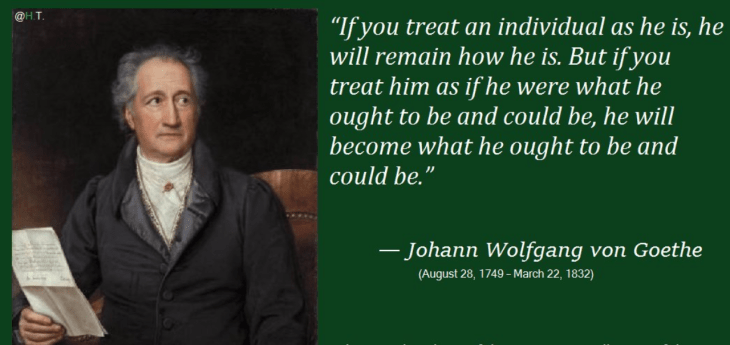
Instead of shooting for a minimum standard, Britain’s government should be empowering all of Britain’s students to become all that they can and should be whether they choose to become an Accountant or a Zoologist, or anything in between.
But whatever path they choose, let’s give them the ability to be the very best Accountant or Zoologist they can be.
That’s what it will take for Great Britain to become the world’s Great Meritocracy.

A Better Immigration Model for Britain
by John Brian Shannon | September 8, 2016
One of two main reasons 17 million Britons gave for voting Brexit was widespread dissatisfaction over the unprecedented immigration levels of recent years.
The question in the UK today is how to go about addressing future immigration loads. I’m looking forward to some mature discussion about the kind of Britain citizens want to live in over the coming years.
Do we want to be a minority in our own country?
That’s a fair question and there are examples of countries where the native population represents only 10% of the total population, while the other 90% are expat workers and retirees.
The thriving Middle Eastern state of Qatar is one such example. Apart from the extraordinarily wealthy Qatar Royal Family and the other native Qataris, everyone else in the country (which represent some 90% of the total population of Qatar) hails from other countries and are often found working for relatively menial wages. Although compared to their home countries, the money they earn in Qatar would be considered exceptional remuneration — and much of their hard-earned wages are sent to their families abroad.
Foreign Remittances
Some south Asian economies receive a significant GDP boost from these so-called ‘foreign remittances’ which is the money that expat workers send home to their families.
Countries like Thailand receive 6% of domestic GDP from such foreign remittances. Each pound sterling that leaves the UK in the form of foreign remittances to family members, is one pound sterling that is added to Thailand’s GDP, and is one pound that will never return to the UK. Some areas of Somalia receive 70% of their GDP from family members working in Britain and in other countries.
The UK has hundreds of thousands of foreign workers from many nations who send home much of the wages they’ve earned, totalling millions of pounds sterling per month.
Note: Personal transfers described above are in addition to the almost 1 percent of GDP (0.71%) that Britain spends on developing nations in the form of government-to-government foreign aid — which means that a minimum of 1.5% of British GDP (including such foreign remittances) is leaving the country every year to assist people in developing nations. Most donor nations contribute much less than 1% of GDP (including foreign remittances) to developing countries. The EU donor average is 0.47% for example.
- Introduction To Remittances (Investopedia)
- Remittances: Funds for the Folks Back Home (IMF)
- Forget foreign aid: British migrants send £11 BILLION back to other countries in a YEAR (The Express)
Obviously, there are many foreign workers who are an asset to Britain and work in occupations that native Britons avoid, usually on account of the low pay involved. And although they send their wages abroad, many of these foreign workers still represent a real, net benefit to Britain.
Therefore, the question becomes; Who should stay and who should go?
Let’s have one standard that covers both present and future immigration and offer all of those people British citizenship after one-year of residency in Britain. (Assuming they don’t commit any criminal act during that probationary period)
Who should stay?
Category I: Professors, Doctors, MBA’s, and other degrees
Category II: Highly skilled workers
Category III: Honourably served in the UK military
Category IV: Immediate family of any of the above
Category V: Workers in segments where there are more jobs available, than British citizen applicants
Who should go?
Any foreigner who commits a crime in the UK should be deported, forthwith, and with no chance of ever returning to Britain. No exceptions except by Royal Pardon.
Making people Part of the Solution, instead of Part of the Problem
In this way, and over time, Britain will accrue the highest concentration of highly educated and highly motivated people, allowing it to prosper as never before, while (continuously) clearing the country of foreign criminal elements.
And all of this will work very well in conjunction with a better British education system — an education system that features tuition-free university for British citizens and continually adjusts to Build a Better Britain.

To BE, or not to BE, that is the Brexit Question
by John Brian Shannon | September 7, 2016
To Be, or not to Be (from Hamlet 3:1)
by William Shakespeare
To be, or not to be: that is the question. Whether ’tis nobler in the mind to suffer the slings and arrows of outrageous fortune, or to take arms against a sea of troubles, and by opposing end them?
To die: to sleep no more, and by sleep we say end the heartache and the thousand natural shocks that flesh is heir to, ’tis a consummation devoutly to be wish’d.
To die, to sleep. To sleep. Perchance to dream. Ay, there’s the rub; For in that sleep of death what dreams may come when we have shuffled off this mortal coil must give us pause. There’s the respect that makes calamity of so long life.
For who would bear the whips and scorns of time, the oppressor’s wrong, the proud man’s contumely, the pangs of despised love, the law’s delay, the insolence of office and the spurns that patient merit of the unworthy takes, when he himself might his quietus make with bare bodkin?
Who would fardels bear to grunt and sweat under a weary life; But that the dread of something after death, the undiscover’d country from whose bourn no traveller returns, puzzles the will and makes us rather bear those ills we have, than fly to others that we know not?
Thus conscience does make cowards of us all; and thus the native hue of resolution is sicklied o’er with the pale cast of thought, and enterprises of great pith and moment with this regard, their currents turn awry and lose the name of action.
Soft you now the fair Ophelia! Nymph, in thy orisons, be all my sins remember’d.
Courtesy of Art of Europe

And so it is with regards to Brexit.
It would be so much easier to not Brexit and to continue along in a substandard life rather than strive to become more — the so much more that Britain is capable of should she decide to shrug-off her complacency and (declining) comforts.
What is a calling more than a science, a search more than a destination, a way of life more than a set of rules issued by others in foreign countries? It’s name? Democracy.
And that’s what the Brexiters are looking for, whether stated or unstated, whether fully reasoned in advance or not.
The same sort of people who threw off the blanket in the time of King George III in search of a more democratic government (“No taxation without representation!”) are the same sort of people who don’t want Brussels to dictate the price of bread or the ingredients in their butter. Let’s be honest, the EU has rules on everything from how many fish in a can of kippers to the price of petrol, and everything in between.
Many of these rules are good and fair rules to be sure. However, they are rules made in Brussels for the benefit of EU corporations and the EU’s 504 million citizens — and Britain’s input is minimal with only 64 million people. To put it succinctly, only the utterly naive Britons think EU membership revolves around them and that the EU was created for Britain’s benefit.
Each year, billions more pounds sterling leave Britain than the country receives in return. The early American settlers railed against “No taxation without representation!” — yet this situation is worse because there is some amount of representation, but it is representation in a foreign capital, by foreigners, and with the demands of 440 million other EU citizens taking priority over British citizens. It is a carefully crafted schadenfreude and almost every EU nation is on the receiving end of it — including Britain and Germany.
Not only that, but those billions of pounds could be better-spent by a British government that dedicates itself to the people of Britain.
The way forward for the well-being of Britain’s people is not by handing billions of pounds sterling and complete authority over their lives to eurocrats in Brussels — the way forward is by increasing trade links with all Anglosphere nations and by forging evermore bilateral trade links around the world with non-Anglo nations.
True Democracy doesn’t require the handing-over of all the money and all of the rights in exchange for whatever allowance Brussels deems to send in return.
That’s not Democracy, that’s Prostitution.
 Letter to Britain